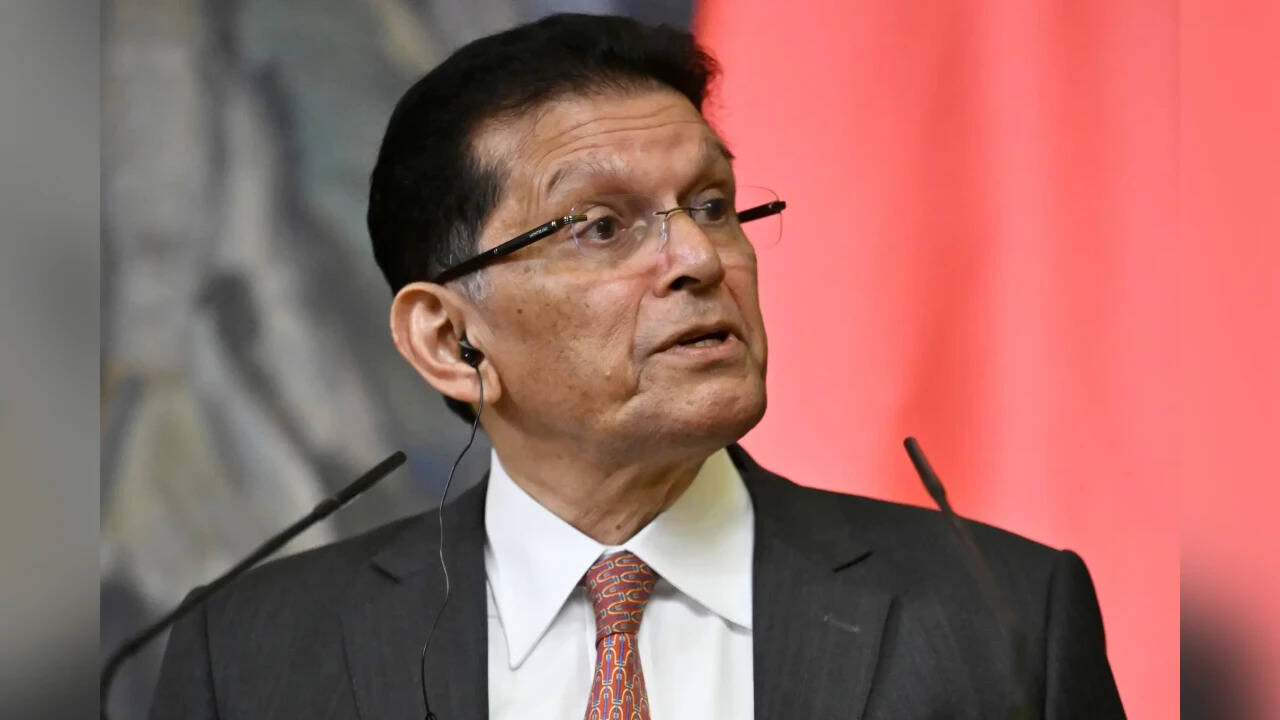
Diplomatic language has a way of turning structural violence into polite phrasing. When Bangladeshi Foreign Minister Dr. Khalilur Rahman recently met with Indian High Commissioner Dinesh Trivedi in Dhaka, he noted that both capitals needed to address "some irritations" in bilateral ties.
That word—irritations—does heavy lifting. It masks a profound geopolitical fracture. Beneath the veneer of diplomatic courtesy lies a severe breakdown in trust between New Delhi and Dhaka, born from shifting domestic landscapes, unaddressed historical grievances, and an uncomfortable collision over sovereignty.
To understand why this relationship is struggling, we have to look past the official communiqués. The friction is not superficial. It is systemic, structural, and deeply rooted in how both nations perceive their mutual security.
The Weight of Asylum and Sovereignty
At the epicenter of the current diplomatic chill is a question of political sanctuary. Since the dramatic ouster of long-serving Prime Minister Sheikh Hasina, her continued presence in India has acted as an open nerve for the interim and newly established administrations in Dhaka.
For New Delhi, offering refuge to a historic ally is a matter of strategic loyalty and regional continuity. For Dhaka, hosting a deposed leader facing intense domestic reckoning is perceived as an unvarnished affront to national sovereignty.
This divergence exposes a foundational vulnerability in bilateral mechanics. For over a decade, Indian foreign policy in the eastern neighborhood hitched its wagon tightly to a single political party rather than building institutional parity across the broader Bangladeshi political spectrum. When that alignment collapsed under the weight of the 2024 mass uprisings, New Delhi was left flat-footed, struggling to recalibrate its approach toward a newly assertive populace that fiercely guards its hard-won political agency.
Water, Borders, and the Security Paranoia
Beyond the political fallout of regime change, concrete material disputes continue to sour the atmosphere. Water-sharing agreements, particularly the renewal timelines for the Ganges Treaty and long-stalled frameworks over transboundary rivers like the Teesta, remain unresolved.
Water is not merely an environmental concern in this region; it is an existential lifeline for millions of agricultural workers. When negotiations stall, suspicion breeds. Dhaka frequently points to unilateral upstream interventions, while New Delhi remains perpetually anxious about its eastern security architecture.
Consider the security matrix. India’s strategic planners obsess over the Chicken's Neck corridor—the narrow Siliguri Corridor connecting mainland India to its northeastern states.
For years, New Delhi relied on active cooperation from Dhaka to suppress regional insurgencies operating along that sensitive frontier. With a new administration charting an independent course, Indian security analysts fear a security vacuum.
Conversely, Bangladesh faces its own border anxieties. Incidents of unauthorized cross-border movements, contentious border guard confrontations, and disputes over transit rights fuel local resentment. When minor skirmishes occur along the frontier, they are immediately weaponized by hyper-polarized digital media ecosystems in both countries, transforming localized border friction into nationalistic firestorms.
The Myth of the Zero-Sum Game
A persistent hazard in South Asian diplomacy is the compulsion to view foreign partnerships through a binary lens. Whenever Dhaka expands its economic or diplomatic footprint with Beijing or other global players, alarms sound instantly in certain strategic circles across the border.
Foreign Minister Rahman explicitly pushed back against this fallacy during his recent briefings, declaring that Bangladesh’s foreign policy is not a zero-sum game. A sovereign nation navigating a multipolar world will naturally diversify its trade, infrastructure investments, and security dialogues. Treating economic diversification as a betrayal guarantees the very alienation that larger regional powers seek to avoid.
The upcoming diplomatic engagements, including potential high-level visits and regional summits, offer a narrow window to reset terms. Yet, cosmetic handshakes will change nothing if the underlying power asymmetry is not addressed.
True stability requires New Delhi to accept a fundamental reality. The era of patron-client politics in South Asia is finished. Bilateral survival depends entirely on treating Dhaka not as a junior security outpost, but as an equal, sovereign partner whose domestic political evolution must be respected rather than resented.