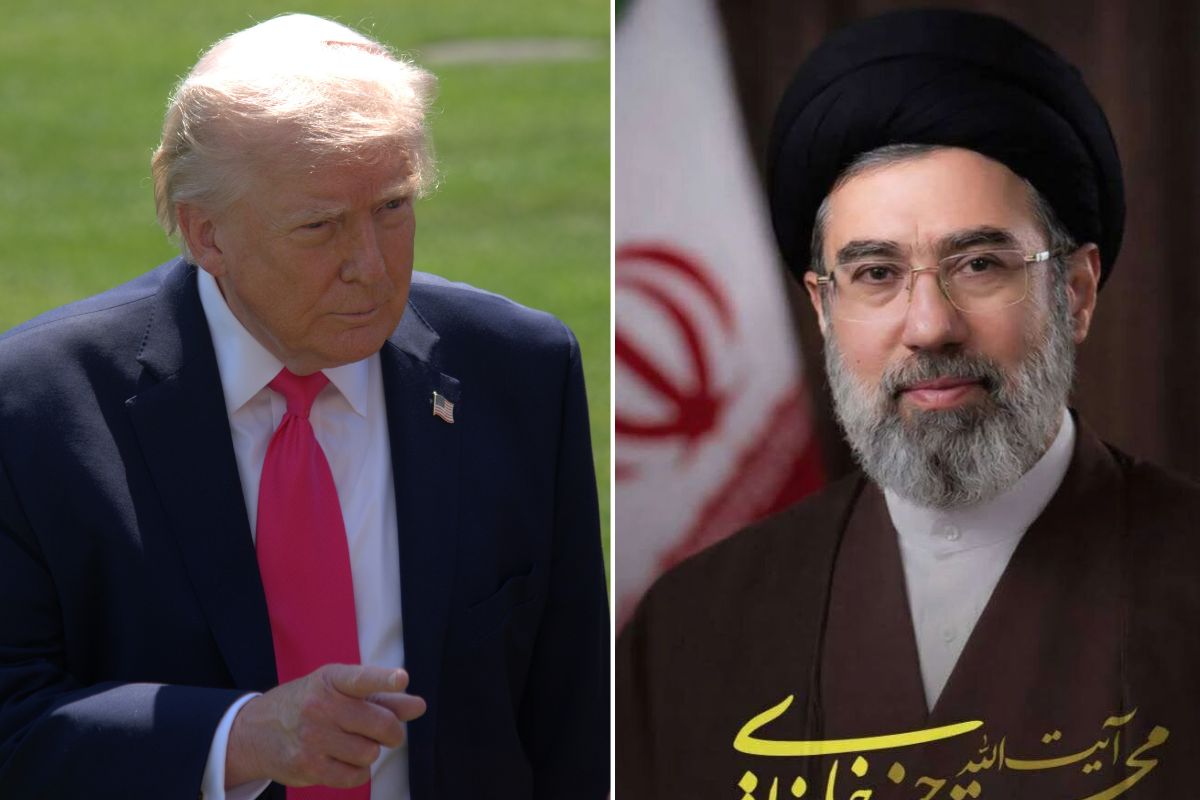
The United States and Iran are actively engaged in quiet, backchannel negotiations to prevent localized Middle East skirmishes from exploding into a full-scale regional war. While public rhetoric from Washington and Tehran remains hostile, Swiss diplomats, Omani intermediaries, and intelligence channels in Doha are working overtime. They are transmitting specific boundaries, red lines, and guarantees. The primary goal is simple: avoid a direct, conventional military confrontation that neither country can afford. This quiet diplomacy operates on a transactional level, separating long-term geopolitical friction from immediate crisis management.
The Secret Mechanics of the Swiss and Omani Channels
Public diplomacy is theatre. The real work happens in quiet rooms in Muscat and through secure Swiss diplomatic cables. For decades, the Swiss Embassy in Tehran has served as the official protecting power for American interests, but its role today is far more functional than merely passing administrative notes.
When an American base is struck by a proxy group or an Iranian commander is targeted, the Swiss channel becomes a literal firebreak. The communication is clinical. Washington specifies the exact origin of an attack and outlines the scale of its impending response, explicitly stating that the retaliation is retaliatory, proportionate, and not aimed at overthrowing the Iranian government. Tehran uses the same channel to signal that certain proxy actions are independent, or conversely, to warn that striking specific high-value assets will trigger an uncontainable reaction.
Oman serves a different, more political function. While the Swiss channel handles immediate tactical de-confliction, Muscat hosts high-level, indirect talks aimed at broader understandings. American and Iranian officials frequently sit in separate rooms while Omani diplomats walk drafts of understandings back and forth. These drafts cover everything from regional maritime security to the unfreezing of sanctioned assets in exchange for compliance on uranium enrichment levels.
Qatar has also carved out a niche as a financial and logistical facilitator. By housing both the political wings of various regional factions and maintaining deep economic ties with Western nations, Doha provides a neutral physical space where messages can be verified in real time. This isn't about building trust. It is about establishing predictable patterns of behavior between two historical adversaries.
The Proxy Dilemma and the Limits of Tehran's Control
A common miscalculation in Western capital cities is the assumption that Iran exercises absolute command and control over its regional network. This network, often called the Axis of Resistance, operates on a franchise model rather than a strict corporate hierarchy.
Tehran provides funding, advanced weaponry, and strategic intelligence. However, local commanders in Iraq, Syria, and Yemen retain significant tactical autonomy. This autonomy creates a dangerous margin for error in backchannel calculations.
The Houthis in Yemen, for instance, possess their own local political agendas that do not always align with Iran’s broader diplomatic maneuvering with the West. When a drone or missile slips through naval air defenses and inflicts mass casualties on Western personnel, the backchannel faces an existential strain.
[Iran's Strategic Core]
       │
       ├─► Strategic Funding & Missile Technology
       │
       ▼
[Regional Franchise Network] (Tactical Autonomy)
       │
       ├─► Houthis (Yemen) ──► Autonomous Maritime Strikes
       ├─► Hezbollah (Lebanon) ──► Calibrated Border Deterrence
       └─► Iraqi Militias ──► Localized Rocket/Drone Operations
The United States holds Iran accountable for every action taken by these groups. Tehran, meanwhile, uses the ambiguity of the franchise model as a diplomatic shield, claiming it cannot dictate every operational decision made by local actors. This creates a volatile environment where a single miscalculation by a low-level commander can outpace the speed of secret diplomacy.
The Economic Realities Driving Pragmatism
Ideology rarely trumps economic survival. For Iran, the motivation to keep the backchannel open is rooted in a domestic economy suffocated by years of international sanctions. Inflation remains stubbornly high, currency devaluation has eroded the purchasing power of the middle class, and domestic unrest is a constant undercurrent.
The Iranian leadership knows that a direct war with the United States would destroy its remaining industrial and oil export infrastructure. By maintaining the backchannel, Tehran seeks to secure incremental sanctions relief, or at least a tacit agreement from Washington to look the other way regarding certain oil shipments to Asian markets.
+------------------------------------+------------------------------------+
| US Strategic Objectives            | Iranian Strategic Objectives       |
+------------------------------------+------------------------------------+
| Contain regional escalation        | Prevent direct attacks on mainland |
| Protect global shipping lanes      | Secure incremental economic relief |
| Limit Iranian nuclear enrichment   | Maintain regional leverage network |
+------------------------------------+------------------------------------+
Washington faces its own constraints. The American political system has little appetite for another protracted conflict in the Middle East. With domestic debt rising and strategic focus shifting toward the Indo-Pacific theater, a war with Iran would derail American long-term foreign policy priorities.
Furthermore, any major disruption to the Strait of Hormuz—through which a significant portion of the world's petroleum passes—would trigger a global energy crisis. Higher oil prices translate directly to inflation at the gas pump, an electoral nightmare for any sitting American administration. Pragmatism, not pacifism, keeps both sides talking.
The Nuclear Clock and the Red Line
Beyond the immediate shadow boxing of regional proxies lies the unresolved issue of Iran's nuclear program. Since the collapse of the formal 2015 nuclear agreement, Tehran has steadily advanced its enrichment capabilities, pushing closer to weapons-grade thresholds.
The backchannel acts as a pressure valve for this specific crisis. Through indirect communication, the United States has communicated a hard red line: enrichment to 90 percent—weapons grade—will trigger direct military action. Iran has used this leverage effectively, fluctuating its enrichment levels between 20 and 60 percent as a bargaining chip to extract diplomatic concessions.
This is a dangerous game of brinkmanship. If Iran calculates that it can cross the threshold undetected, or if the United States misinterprets civilian nuclear research as an active weaponization program, the backchannel will fail. The margin for error is measured in weeks, not months.
Why Complete Escalation Remains Unlikely For Now
A major war requires both sides to believe they can achieve a decisive victory at an acceptable cost. Neither the United States nor Iran holds that belief today.
Washington understands that while it possesses overwhelming conventional military superiority, a war with Iran would not look like the 2003 invasion of Iraq. Iran possesses a massive arsenal of ballistic missiles, cruise missiles, and asymmetric drone capabilities designed specifically to saturate Western defense systems and strike allied nations across the region. The cost of victory would be astronomically high.
Tehran understands that its survival depends on preserving its current position. A direct confrontation with American power would dismantle the regime's infrastructure and potentially trigger internal collapse. Therefore, the status quo—characterized by low-intensity proxy conflict, economic survival tactics, and continuous backchannel communication—remains the most rational path forward for both capitals. They are locked in a hostile embrace, using secret diplomats to ensure they do not accidentally trip over the cliff edge together.