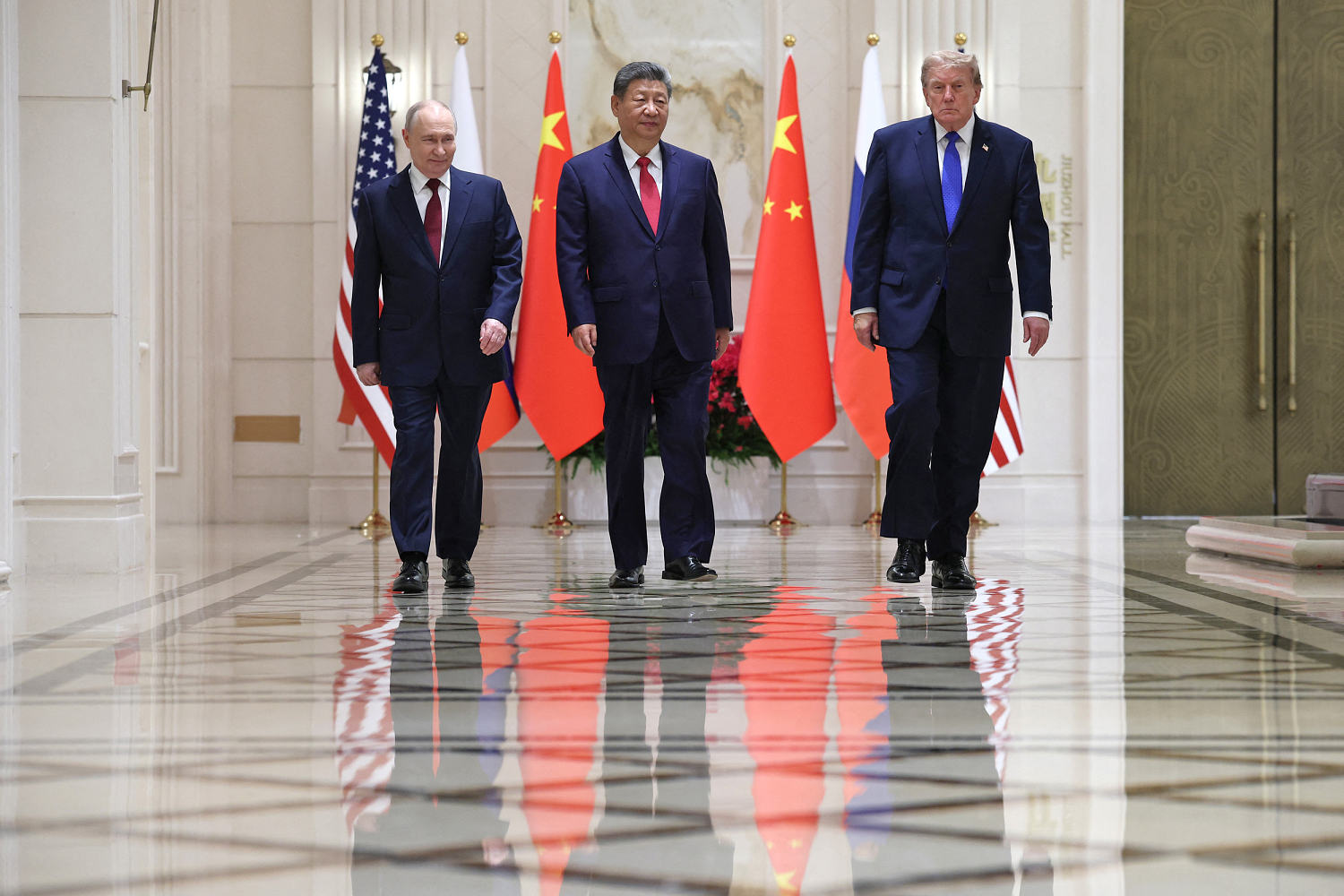
When Beijing greeted a visiting Japanese delegation at an APEC gathering with a musical selection rooted in anti-U.S. protest history, the surface impression looked like a cheeky diplomatic troll. Look closer. A host capital rarely picks a soundtrack by accident at a high-stakes regional forum where protocol officers choreograph every note, seating chart, and camera angle down to the second. By pairing a gesture of hospitality toward Japan with music tied to historical pushback against Washington, Beijing sent a layered signal meant to test Tokyo’s security alignment, court regional sentiment, and remind every delegation in the room that economic diplomacy in the Asia-Pacific never happens in a vacuum.
Anyone who has covered Asian summits for twenty or thirty years knows that music at state functions is never mere background noise. Orchestras, cultural troupes, and ceremonial playlists operate as low-cost signaling tools. They allow a host government to project a mood without issuing a formal demarche or risking an immediate trade retaliation spiral. When China welcomes Japan at an APEC event with a song linked to protests against the United States, the move operates on multiple frequencies at once. To the casual observer, it looks like theater. To a seasoned trade or security analyst, it looks like a calculated probe into how much daylight exists between Tokyo’s commercial pragmatism and its alliance commitments with Washington.
How Ceremonial Music Doubles as Diplomatic Pressure
Protocol at multilateral gatherings like Asia-Pacific Economic Cooperation summits is famously rigid. Host nations spend months vetting cultural performances so nothing offends key guests or derails trade discussions. When an unexpected or historically charged piece enters that mix, it rarely slips past senior officials unnoticed. Instead, it functions as a deniable message. If foreign diplomats bristle, the host can point to cultural heritage, artistic expression, or benign regional solidarity. If they say nothing, the host scores a quiet psychological point in front of regional peers.
Songs tied to anti-U.S. protests carry particular weight in East Asia. In the postwar era, demonstrations against American military presence, basing agreements, or Cold War interventions became recurring flashpoints across several societies, including Japan and South Korea as well as movements across the broader region. When Beijing reaches for that repertoire during an engagement involving Tokyo, it is not pretending Japan was anti-American in some simple historical sense. Rather, it is invoking a shared or recognizable regional trope of resistance to U.S. dominance at a moment when Washington’s industrial policies, export controls, and regional security partnerships are squeezing Beijing.
Consider a hypothetical example of how this plays out in a bilateral meeting room. Suppose two trade ministers sit down after a welcoming reception where a protest-era melody has just echoed through the hall. The visiting delegation has to decide whether to raise the selection in off-record remarks, ignore it to keep semiconductor or seafood talks on track, or leak a complaint to friendly press. Each choice costs something. Raising it makes the visitor look thin-skinned or overly sensitive to symbolism. Ignoring it lets the host frame the atmosphere on its own terms.
In high-stakes diplomacy, symbolism is cheapest when it forces the other side to spend political capital just to react.
👉 See also: Twenty-Nine Pounds of Stubborn Grace
That dynamic explains why Beijing favors layered gestures over blunt ultimatums at forums like APEC. APEC is ostensibly about trade facilitation, supply chain resilience, and digital economy rules rather than hard security alliances. Bringing a historical anti-U.S. protest motif into an APEC setting with Japan blurs that boundary. It reminds Tokyo—and every other economy at the table—that Washington’s strategic push in the Indo-Pacific is a central variable in how Beijing views its neighbors.
Why Japan Sits at the Center of Beijing’s Calculation
Japan is not a marginal player in this equation. It is a major trading partner for China, a critical link in regional manufacturing supply chains, and Washington’s indispensable treaty ally in Northeast Asia. Over the past decade, Tokyo has walked a tightrope that has grown thinner every year. Japanese firms rely heavily on Chinese markets and component networks, yet Tokyo has steadily tightened export restrictions on advanced chipmaking equipment, expanded defense spending, and coordinated more closely with the United States and regional partners on maritime security.
When China welcomes Japan at APEC with a song inspired by protests against the U.S., Beijing is speaking to that exact tension. It is nudging Tokyo to look at its own long-term interests in regional stability and commercial openness rather than treating alignment with Washington as automatic or cost-free. At the same time, offering a "welcome" to Japan alongside that musical cue avoids closing the door on pragmatic engagement. Beijing wants business, investment predictability, and diplomatic channels with Tokyo even while pushing back hard against U.S.-led containment narratives.
Tokyo’s position is complicated by domestic politics and economic realities. Japanese leaders cannot afford to look weak on sovereignty or alliance reliability, especially when security tensions around the East China Sea, Taiwan, and missile activity remain sharp. Yet Japanese exporters and manufacturers also feel the pain whenever bilateral ties sour or customs inspections slow down goods. A musical provocation at a summit puts Tokyo in an awkward spot because it is too subtle to justify a dramatic walkout, yet too pointed to dismiss as pure coincidence.
The Trap of Reading Every Signal as a Master Plan
Analysts sometimes over-read diplomatic choreography and imagine a single grand strategist pulling every string. That is a mistake. Bureaucracies are messy, ministries compete for turf, and cultural or propaganda arms sometimes push edgy ideas that diplomats then have to manage on the fly. A song choice at an APEC event could reflect deliberate top-down messaging, enthusiastic execution by lower-level organizers trying to please superiors, or a mix of both.
Still, intent matters less than effect in international politics. Once the melody is heard and reported, the political effect exists regardless of how many drafts the playlist went through. Journalists pick up the story, regional observers debate the subtext, and rival capitals log it as another data point in Beijing’s soft-power and psychological toolkit.
What Regional Neighbors and Washington Actually See
APEC gatherings draw leaders and ministers from across the Pacific Rim, from Southeast Asian economies hedging between superpowers to Latin American exporters looking for market access. Watching China greet Japan with a song linked to anti-U.S. protests gives every other delegation a window into how Beijing thinks about leverage. Many economies in the region share frustration with unilateral tariffs or heavy-handed pressure from major powers, even when they do not want to be pulled into a Cold War-style bloc.
By wrapping a nod to Japan in anti-U.S. protest resonance, Beijing tests whether that broader regional skepticism can be tapped subtly. If other delegations shrug or view it as routine great-power sparring, Beijing learns that pushback against Washington still resonates as a theme. If regional partners view it instead as heavy-handed grandstanding that injects unnecessary friction into an economic forum, the tactic backfires and makes Beijing look more confrontational than constructive.
| Strategic Angle | What Beijing Hopes to Gain | Where the Tactic Can Backfire |
|---|---|---|
| Alliance Wedge | Highlight friction between Tokyo’s economic needs and U.S. security strategy | Reinforces Tokyo’s sense that it needs strong deterrence and ally coordination |
| Regional Mood | Tap into broader pushback against U.S. unilateralism and trade pressure | Turns a trade-focused APEC setting into an arena of ideological point-scoring |
| Deniability | Keep pressure visible while claiming benign cultural or welcoming intent | Looks petty or theatrical to pragmatic business leaders and investors |
For Washington, the episode is a reminder that competition in Asia plays out in cultural and narrative corners just as much as in naval patrols or tariff schedules. U.S. officials often focus on formal treaties, joint exercises, and summit communiques, while underestimating how much symbolic weight history carries in East Asian capitals. When Beijing invokes anti-U.S. protest motifs during an interaction with a key American ally, it is contesting the moral and historical framing of the regional order.
At the same time, Washington’s leverage in the region does not rest on symbolism alone. It rests on market access, technological depth, defense credibility, and how reliably the United States shows up for partners when real pressure hits. A song at a summit can stir headlines for a week; it cannot replace deep supply chains, security guarantees, or consistent economic policy over decades.
Gray Areas That Make Simple Narratives Misleading
Anyone claiming this move proves a total breakdown or a secret breakthrough between China and Japan is selling simplicity over substance. Real-world diplomacy rarely moves in straight lines. Even as governments trade sharp signals or staged gestures at international meetings, working-level officials keep talking about trade rules, crisis hotlines, environmental cooperation, and consular matters.
There is also a real gray area around how audiences inside different countries interpret the same cultural cue. A song with roots in anti-U.S. protests may evoke pride or defiance for some listeners in China, curiosity or irritation in Japan, and indifference among younger people across the region who have no personal memory of mid-twentieth-century street movements. Symbols lose sharpness when projected across generations and borders that do not share the same historical memory.
Moreover, economic interdependence cuts both ways. Japan faces real vulnerabilities when relations with China sour, yet China also faces severe headwinds when foreign confidence weakens, domestic demand lags, or export markets fragment. Staging a clever musical jab at an APEC event does nothing to fix structural economic pressures at home. If anything, it underscores how much Beijing relies on diplomatic posture and narrative framing when hard economic levers carry steeper costs.
Why APEC Remains a Stage for Shadow Battles
APEC was designed decades ago as a consensus-driven forum to lower barriers and build practical cooperation across the Pacific. Over time, as strategic rivalry between Washington and Beijing hardened, almost every multilateral venue in Asia has absorbed some of that friction. Even when formal agendas stay focused on trade, supply chains, or digital standards, the subtext in the hallways is geopolitical.
That is why a detail as seemingly small as a welcoming song matters to people who track regional affairs closely. It shows how states use atmosphere, memory, and timing to shape perceptions before a single policy paper is signed. Watch not just what leaders say at the podium during the next major regional gathering, but what plays in the room right before they step up to the mic.