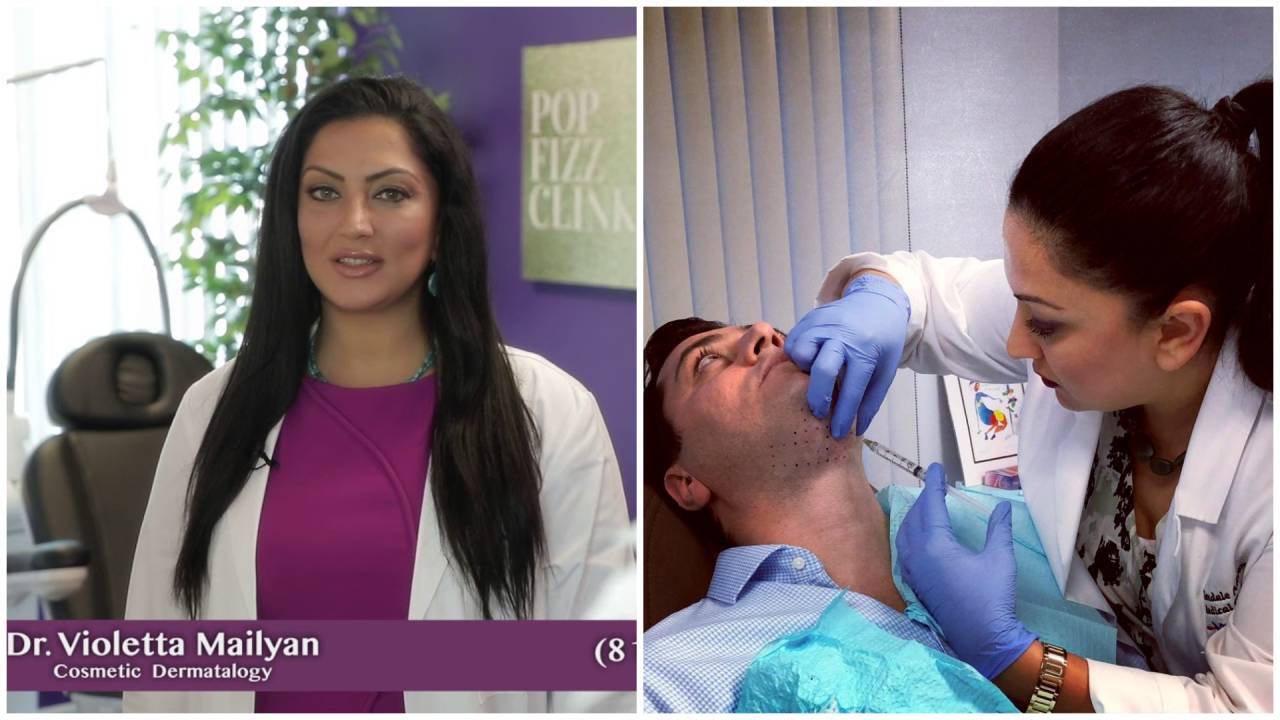
Federal prosecutors secured a 15-year prison sentence against California physician Violetta Mailyan after proving she orchestrated a $45 million Medicare fraud scheme built on phantom medical visits, unnecessary prescriptions, and unapproved cosmetic injections. Operating out of her Glendale, California clinic, Mailyan systematically billed federal healthcare programs for treatments never rendered while administering counterfeit or unapproved versions of Botox to unsuspecting patients. The sentencing marks one of the sharpest crackdowns on outpatient clinic abuse in Southern California, exposing how easily an individual medical license can be converted into a high-volume billing machine.
The mechanics of the case are stark. Between 2014 and 2021, Mailyan submitted tens of millions of dollars in fraudulent claims to Medicare and Medi-Cal, the state’s Medicaid program. In addition to the 180-month federal prison term, the court ordered her to pay massive restitution to the defrauded programs. Yet looking at the sentence alone misses the real story. To understand how a single practitioner extracted $45 million from public coffers over seven years without triggering immediate alarm bells, you have to look at the structural vulnerabilities built directly into American healthcare reimbursement.
How the Glendale Billing Machine Operated
Healthcare fraud rarely looks like a Hollywood heist. It looks like paperwork.
In Mailyan’s operation, the core engine was upcoding and phantom billing—two of the oldest, most persistent exploits in medical reimbursement. Prosecutors demonstrated that her clinic routinely billed Medicare for complex, high-tier office visits and diagnostic procedures that either lasted a few minutes or never happened at all. Patients were cycled through the clinic, sometimes recruited through kickback networks or lured in with promises of routine care, while their Medicare beneficiary numbers were harvested to generate steady streams of electronic claims.
When a physician submits a claim using standard Current Procedural Terminology (CPT) codes, the system operates on an honor code. Medicare’s automated clearinghouses process millions of claims every single day. They are built for speed, not forensic scrutiny. If a licensed doctor submits a valid patient ID paired with a plausible diagnostic code and a standard treatment code, the money moves. By the time human auditors notice statistical anomalies—such as a single doctor billing for more hours of patient care than exist in a 24-hour day—years have often passed, and tens of millions of dollars have already been wired out.
Mailyan’s clinic exploited this exact friction gap. By spreading fraudulent claims across different billing categories—combining fake primary care consultations, unnecessary durable medical equipment referrals, and bogus medication orders—the operation avoided triggering the single-category volume alerts that usually catch amateur fraudsters early.
The Counterfeit Botox Angle and Patient Risk
Billing fraud is often treated by the public as a victimless financial crime against a faceless government bureaucracy. The fake Botox allegations in the Mailyan case shatter that illusion.
Botulinum toxin type A, sold under brand names like Botox, is a potent neurotoxin. When manufactured under strict FDA oversight, dosed accurately, and stored within narrow temperature tolerances, it safely paralyzes targeted muscles for medical or cosmetic relief. When sourced from unregulated foreign suppliers on the gray market, it becomes a biological gamble.
Doctors turn to unapproved, foreign-sourced injectables for one reason. Margin.
Authentic, FDA-approved Botox purchased through authorized domestic distributors carries a steep wholesale cost, cutting deeply into a clinic's profit per syringe. Unapproved versions imported illegally from overseas suppliers cost a fraction of the price. By injecting patients with unapproved or counterfeit neurotoxins while representing them as legitimate, FDA-approved products—or billing insurance programs for expensive legitimate biologics while administering cheap substitutes—a practitioner pockets the spread on every single vial.
What Unregulated Neurotoxins Actually Do
The clinical danger of counterfeit or improperly handled botulinum toxin goes far beyond a failed cosmetic result. Without verified cold-chain logistics, the protein structure degrades, rendering the injection completely useless. Worse, inconsistent potency in illicitly manufactured batches can cause the toxin to migrate beyond the injection site.
Patients exposed to unapproved neurotoxins risk:
- Severe dysphagia (difficulty swallowing) and respiratory distress if the toxin affects throat or chest muscles.
- Localized tissue necrosis or systemic bacterial infections caused by non-sterile manufacturing environments.
- Botulism-like toxicity, leading to blurred vision, slurred speech, and generalized muscle weakness requiring hospitalization.
In cases like Mailyan’s, the violation is twofold. Not only are taxpayers subsidizing a fraudulent enterprise, but patients sitting in the exam chair are also stripped of informed consent, injected with substances whose chemical provenance nobody in the room can verify.
Why Southern California Remains a Hotspot for Medicare Fraud
Anyone who has covered healthcare enforcement over the last two decades recognizes the geography immediately. Los Angeles County—and specifically corridors stretching through Glendale, Burbank, and the San Fernando Valley—consistently ranks alongside South Florida and Brooklyn as an epicenter for Medicare fraud strike forces.
This concentration is not an accident. It is the byproduct of specific market conditions.
First, dense urban areas with high concentrations of Medicare-eligible seniors create a massive pool of valid beneficiary numbers. Fraud rings treat these numbers like raw commodities. Second, Southern California has an exceptionally high density of independent, small-practice medical clinics and compounding pharmacies. Unlike massive hospital networks with layers of internal compliance officers, independent clinics are often controlled by a single owner-operator who dictates both medical decisions and billing software entries.
Third, the cash-heavy aesthetics market in Los Angeles creates natural cover. When a clinic offers both legitimate insurance-billed primary care and cash-pay cosmetic procedures like Botox and dermal fillers, financial streams mingle. It becomes significantly harder for outside observers to distinguish legitimate high-revenue medical practices from fronts running dual-track fraud schemes.
The Structural Blind Spot in "Pay and Chase" Enforcement
The 15-year sentence handed down to Violetta Mailyan sends a clear deterrent signal, yet it also highlights the chronic limitation of federal healthcare enforcement. Regulators still rely heavily on a model known inside the industry as "pay and chase."
Under this framework, the Centers for Medicare & Medicaid Services (CMS) pays claims rapidly to ensure legitimate doctors aren't starved of cash flow, and the Department of Justice investigates anomalies years after the fact. When the DOJ and the HHS Office of Inspector General finally build a criminal case, they bring overwhelming force—wiretaps, undercover patients, forensic accountants, and federal sentencing guidelines that routinely put white-collar medical offenders behind bars for a decade or more.
However, restitution orders in $45 million fraud cases rarely recover the full amount stolen. By the time a physician is indicted, assets have been spent, transferred, or tied up in complex real estate and shell entities. Taxpayers absorb the loss, while Medicare premiums and federal deficits quietly tick upward to cover the leakage.
Where Predictive Analytics Falls Short
Federal agencies have invested heavily in predictive modeling to flag outlier billing before checks go out. Yet sophisticated operators adapt faster than the algorithms.
To understand how fraudsters stay ahead of automated flags, consider a hypothetical example of clinic billing manipulation. Suppose a compliance algorithm flags any primary care physician who bills the highest-level complex visit code (CPT 99215) for more than 30 percent of their patients. A savvy operator simply adjusts their software to bill 28 percent at the highest tier and shifts the remaining phantom volume into mid-tier codes (CPT 99214) paired with routine blood panels or allergy tests. On a spreadsheet, the clinic looks entirely average. In reality, every single claim is padded.
Mailyan’s ability to operate across a multi-year span underscores how easily an insider with a valid National Provider Identifier (NPI) can game compliance thresholds when nobody is physically auditing patient charts in real time.
The Real Cost to Independent Medicine
When a high-profile fraud case like the Mailyan conviction hits the news, the fallout lands squarely on honest independent physicians.
Every time a doctor is sentenced for $45 million in phantom billing or illicit Botox distribution, CMS and private insurers tighten prior-authorization rules and expand prepayment audits across the entire region. Honest small-practice doctors in Los Angeles already spend hours fighting automated claim denials for medically necessary care. High-volume fraud schemes poison the well, prompting regulators to treat every independent clinic as a potential criminal enterprise until proven otherwise.
Meanwhile, patients lose trust in the very institutions meant to protect them. When a licensed physician injects unapproved substances into a patient's face while falsifying their federal medical records, the damage extends far beyond the balance sheet of the U.S. Treasury.
Federal prosecutors got their conviction, and Violetta Mailyan will spend the next decade and a half in federal prison. Until Medicare abandons its reliance on self-reported honor-system billing and enforces real-time verification at the point of care, another clinic in another strip mall is already running the exact same playbook.