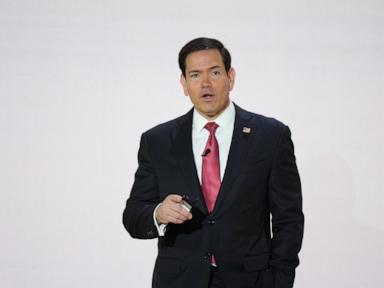
Secretary of State Marco Rubio bypassed congressionally mandated human rights restrictions to release $320 million in Foreign Military Financing to Egypt, utilizing a national security waiver that prioritizes regional stability and border enforcement over domestic political reform in Cairo. By signing off on the tranche, the State Department sidestepped legal benchmarks requiring the Egyptian government to release political prisoners, cease arbitrary detentions, and provide due process, ensuring the uninterrupted flow of American defense dollars to President Abdel Fattah el-Sisi’s administration.
Washington has played this exact hand for decades. Every autumn, as the fiscal year-end deadline approaches on September 30, the State Department faces a statutory ultimatum over roughly $1.3 billion in annual military assistance allocated to Cairo. A portion of that money is fenced off by Congress, legally tied to measurable improvements in Egypt's dismal human rights record. And nearly every year, regardless of which party occupies the White House, the executive branch finds a way to unlock the vault anyway.
The Mechanics of the National Security Override
To understand how $320 million moves from the U.S. Treasury to Egyptian defense accounts without a single major political prisoner walking free, you have to look at the fine print of the annual State, Foreign Operations, and Related Programs appropriations bill.
Congress divides Egypt's $1.3 billion Foreign Military Financing (FMF) package into distinct buckets. The bulk of the funds—typically around $980 million—flows without human rights conditions attached. The remaining $320 million is split into two sub-tranches. One portion is conditioned on general human rights progress, while a smaller slice—historically $85 million to $95 million—is specifically tied to Cairo making clear, consistent progress in releasing political prisoners and providing detainees with fair trials.
Here is the catch. Congress built an escape hatch directly into the law.
The national security waiver allows the Secretary of State to override the broader human rights conditions simply by certifying to the appropriations committees that releasing the cash is vital to the national security interests of the United States. While the smaller political-prisoner tranche traditionally lacked a national security waiver, administrations have repeatedly used creative reprogramming or sweeping policy determinations to maximize the payout. By exercising the waiver, Rubio neutralized the primary legislative lever Capitol Hill possesses to pressure Cairo.
The money itself never actually touches an Egyptian bank account. Under FMF rules, the funds remain in the United States, held in trust at the Federal Reserve Bank of New York, and are wired directly to American defense contractors like Lockheed Martin, Boeing, and General Dynamics to pay for F-16 fighter jet maintenance, M1A1 Abrams tank upgrades, and coastal patrol vessels.
That financial architecture creates a self-reinforcing lobbying loop in Washington. Cutting aid to Egypt does not just punish Cairo; it immediately threatens manufacturing lines and sub-contracts across dozens of congressional districts in the United States.
The Gaza Factor and the Suez Calculus
If you ask current and former State Department officials why the waiver gets signed despite bipartisan outrage on the Senate Foreign Relations Committee, they will point to a map of the Middle East.
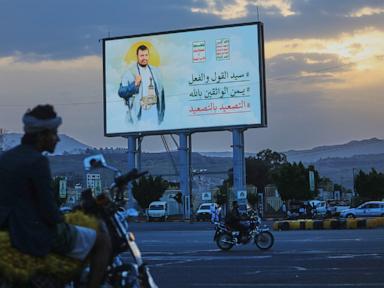
Egypt occupies an irreplaceable geographic chokepoint. It controls the Suez Canal, through which roughly 12 percent of global trade—and critical U.S. naval assets—must pass to move between the Mediterranean and the Red Sea. When Houthi militants in Yemen began attacking commercial shipping lanes, the strategic value of Egyptian cooperation in Red Sea security skyrocketed overnight.
Then there is the border with Gaza.
The Rafah crossing and the Philadelphi Corridor remain the single most volatile diplomatic flashpoints in the region. Washington relies entirely on Egyptian intelligence chief Abbas Kamel and Cairo's security apparatus to mediate ceasefire negotiations, manage humanitarian aid bottlenecks, and prevent a catastrophic spillover of refugees into the Sinai Peninsula. Threatening to withhold $320 million while asking Cairo to police the Sinai and host high-stakes hostage talks is a non-starter for national security realists at Foggy Bottom.
"You cannot simultaneously ask Cairo to act as the indispensable mediator in Gaza, secure the Suez Canal, and maintain the 1979 Camp David peace treaty, and then kneecap their military budget over domestic judiciary reforms," a former senior Pentagon official familiar with Near Eastern affairs explained during a background briefing on previous aid cycles. "The math simply doesn't work for the National Security Council."
From Rubio’s perspective—having transitioned from a hawkish senator who previously scrutinized foreign aid to the nation's top diplomat—the calculation is starkly transactional. His foreign policy doctrine centers on countering Iranian proxies, securing maritime trade routes, and keeping Israel’s southern border stable. In that hierarchy of interests, the plight of Egyptian dissidents sits firmly at the bottom.
Cairo's Revolving Door of Political Prisoners
The human rights community views the waiver as a catastrophic validation of authoritarian impunity. And the data backs up their frustration.
For years, the el-Sisi government has operated a cynical "revolving door" policy regarding political detainees. Ahead of the annual September aid deadline, Cairo routinely pardons a handful of high-profile activists, journalists, or dual citizens through its Presidential Pardon Committee. These releases generate splashy headlines in Western media and give the State Department just enough diplomatic cover to claim "incremental progress."
Behind the scenes, the numbers tell a radically different story.
Independent Egyptian human rights monitors—including the Egyptian Initiative for Personal Rights (EIPR) and the Arabic Network for Human Rights Information—have documented that for every detainee released under presidential pardon, Egyptian security forces arrest two or three more. Tens of thousands of political prisoners remain crammed into notoriously brutal facilities like Badr 3 and Wadi el-Natrun, often held for years in pretrial detention on sweeping, unsubstantiated charges of "spreading false news" or "joining a terrorist group."
Consider a hypothetical scenario illustrating how the system operates in practice. A young software engineer in Alexandria posts a thread on social media criticizing inflation and the devaluation of the Egyptian pound. Within forty-eight hours, plainclothes officers from the National Security Agency raid his apartment without a warrant. He disappears into an undisclosed detention facility for three weeks—a practice known as enforced disappearance—before surfacing before a Supreme State Security Prosecution panel. He is slapped with a fifteen-day detention order that gets automatically renewed every two weeks for two years without a shred of physical evidence ever being presented in an open court.
By signing the waiver, the State Department effectively signals to Cairo that this machinery of repression carries zero financial penalty.
A History of Broken Leverage
Rubio is hardly the first Secretary of State to fold when faced with the Egypt aid dilemma, though the political theater surrounding the decision shifts with every administration.
| Administration | Action Taken on Conditioned Aid | Primary Strategic Justification |
|---|---|---|
| Obama (2013–2015) | Temporarily froze delivery of F-16s, Apache helicopters, and cash after the Rabaa massacre, then lifted the hold in 2015. | Counterterrorism operations against ISIS affiliates in the Sinai Peninsula. |
| Trump (2017–2020) | Withheld $195 million briefly in 2017 over an NGO law, then waived conditions consistently from 2018 onward. | Strengthening bilateral defense ties and countering Iranian influence. |
| Biden (2021–2024) | Withheld $130 million in 2021 and $85 million in 2023, before waiving all conditions for the full $1.3 billion in 2024. | Securing Cairo's cooperation on Gaza ceasefire talks and humanitarian aid access. |
| Trump / Rubio (2025–2026) | Issued national security waiver to unlock $320 million in restricted FMF funds. | Border security, maritime stability in the Red Sea, and regional containment. |
Look at that pattern. Across four distinct presidential terms, the institutional gravity of the Pentagon and the State Department's Bureau of Near Eastern Affairs has consistently overpowered congressional attempts to enforce human rights benchmarks.
When the Biden administration withheld $85 million in 2023 and redirected it to Taiwan and Lebanon, Senator Ben Cardin, then-chairman of the Senate Foreign Relations Committee, initially placed a hold on another $235 million in military aid, vowing not to let a single dime move until Cairo made concrete reforms. Yet within a year, the geopolitical pressure of the Gaza war forced the administration to issue a full waiver for the entire $1.3 billion package, rendering Cardin’s stand moot.
Rubio’s move follows that exact blueprint, stripped of any apologetic rhetoric. Rather than agonizing publicly over the tension between American values and American interests, the current State Department treats the waiver as a straightforward instrument of statecraft.
The Hidden Costs of Unconditional Cash
Realists argue that withholding $320 million would accomplish nothing except driving Cairo further into the arms of Moscow and Beijing. That argument deserves scrutiny, because it rests on a shaky premise.
Russia’s defense industry is currently cannibalizing its own stockpiles to sustain its war effort in Ukraine; Moscow cannot reliably deliver advanced fighter jets or air defense systems to North Africa right now. China offers infrastructure loans and surveillance technology, but Beijing has zero appetite to underwrite the Egyptian military's massive, aging arsenal of American-made hardware. Eighty percent of Egypt’s high-end military equipment is American. You do not swap out an entire fleet of F-16s and Abrams tanks overnight.
Furthermore, throwing unconditional military hardware at an economically brittle regime does not guarantee stability—it often accelerates decay.
Egypt’s economy is teetering under a crushing external debt burden exceeding $160 billion, rampant inflation, and a currency that has lost more than half its value over the last few years. Crucially, the Egyptian military is not merely a fighting force; it is a sprawling, tax-exempt economic conglomerate that dominates everything from cement production and bottled water to toll roads and luxury real estate. This military-industrial monopoly crowds out private sector investment, suffocates foreign direct investment, and fuels deep public resentment among ordinary Egyptians struggling to afford basic staples.
By pouring $320 million in subsidized weaponry into the Egyptian armed forces without demanding accountability, Washington insulates the military establishment from the economic consequences of its own mismanagement. It reinforces the exact institutional arrogance that makes Egypt fragile in the first place.
Capitol Hill's Paper Tiger
Members of Congress will inevitably issue furious press releases condemning Rubio’s waiver. Lawmakers like Senator Chris Murphy and Representative Gregory Meeks have spent years arguing that unconditional aid makes a mockery of the Leahy Law—the statutory prohibition against providing U.S. military assistance to foreign security force units credibly implicated in gross violations of human rights.
Yet Congress itself is complicit in the charade.
If lawmakers truly wanted to stop the executive branch from bypassing human rights conditions on Egypt, they could strip the national security waiver language out of the appropriations bill tomorrow. They have never done it. Every year, the Appropriations Committees write the waiver back into the text because leadership on both sides of the aisle quietly agrees with the Pentagon that cutting off Cairo is too risky.
The annual fight over the $320 million tranche has devolved into a predictable Washington ritual. Congress passes tough-sounding conditions to appease human rights advocates and constituents. The Egyptian government ignores the conditions while lobbying defense contractors and think tanks. The Secretary of State signs the waiver just before the deadline. The defense contractors get paid, Cairo keeps its hardware, and the cells in Badr 3 remain full.