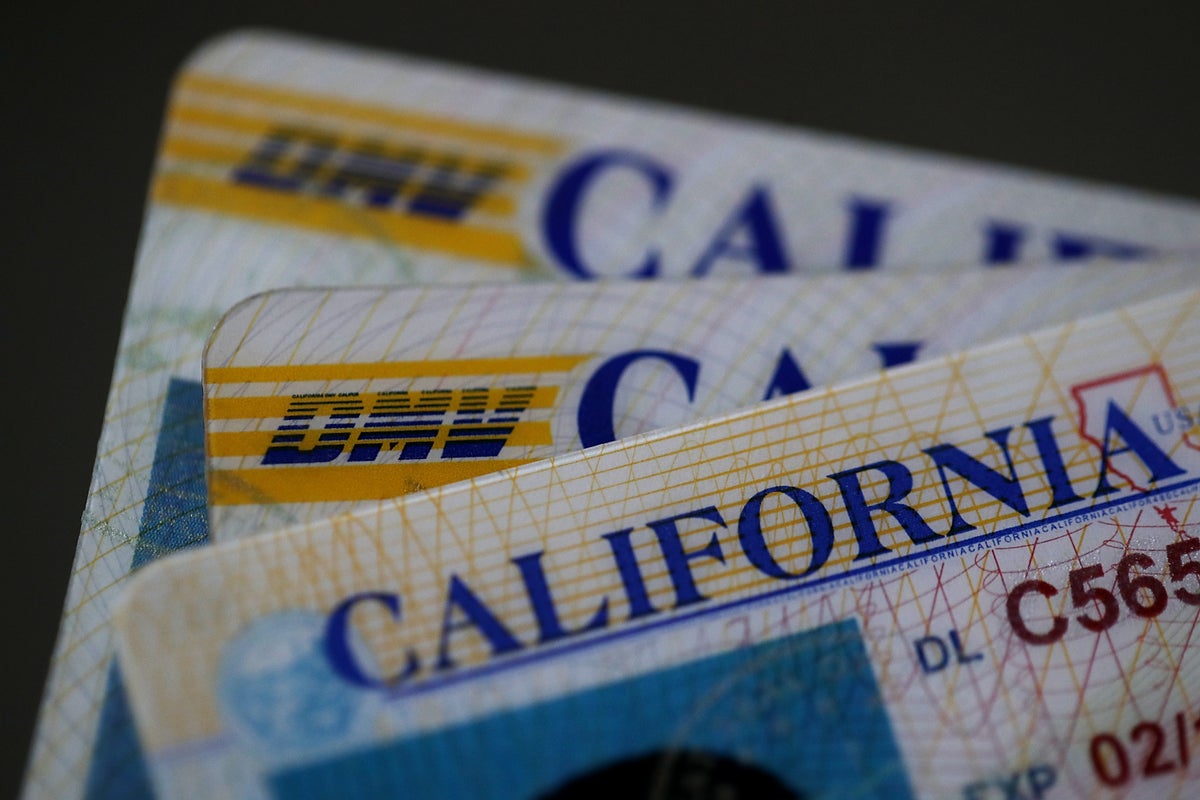
The Federal Bureau of Investigation is quietly probing a catastrophic dark web leak that exposed digital scans of more than 153 million driver licenses and state identification cards belonging to residents across the United States and Canada. The repository, traded under the banner of a dark web service called Nexus, surfaced on a Russian-language cybercrime forum, offering granular, multi-layered optical scans that include infrared and ultraviolet captures of official government credentials.
This is not a conventional password leak. It is a systematic expropriation of biometric-adjacent identity assets. Among the records indexed in the database—which also spans over 10 million non-driver identification cards and hundreds of thousands of medical certificates—are credential files belonging to high-ranking officials, including United States Defense Secretary Pete Hegseth. The emergence of Nexus lays bare the structural fragility of third-party identity verification architectures, exposing how corporate data accumulation practices have transformed routine credential checks into massive honey pots for international threat actors.
The Architecture of the Breach
Operating on the cybercrime forum Exploit, the Nexus portal did not function like standard dump sites that distribute raw text files or credential stuffing lists. Instead, it operated as a searchable database. An individual querying the system could retrieve front and back imagery of specific identification documents. The inclusion of specialized spectrum captures—specifically infrared and ultraviolet scans—indicates that the source material originated from industrial-grade hardware rather than casual smartphone captures or flatbed office scanners.
Commercial identity verification terminals utilize these exact light spectrums to authenticate holograms, ghost images, and security inks embedded by provincial and state motor vehicle departments. When a database accumulates these precise forensic layers, it bypasses basic digital security checkpoints. Threat actors possessing infrared and ultraviolet credential files can construct highly convincing synthetic identities or feed high-fidelity assets directly into automated account creation pipelines.
Initial investigations by independent security researchers point toward a Louisiana-based identity verification provider, IDScan.net, as the primary pipeline for the leaked records. The firm supplies authentication technology to a sweeping spectrum of commercial sectors, ranging from car rental agencies and hospitality chains to cannabis dispensaries and financial services. Timestamps appended to the file names of specific leaked records heavily correlate with real-world interactions where individuals handed their physical cards over for scanning, such as vehicle rentals or age-verification checkpoints.
The operators of Nexus claimed in their forum manifestos that data exfiltration had been running continuously for over a year. A systematic review of the database growth revealed an influx of nearly 400,000 new records within a single twenty-four-hour window, suggesting that the extraction pipeline remained active right up until public disclosure forced the site offline.
The Accumulation Economy
To understand how 153 million North Americans had their identity documents siphoned into a criminal repository, one must examine the modern friction economy. Over the past decade, regulatory compliance, corporate risk mitigation, and automated age-gating requirements have driven an exponential surge in credential collection. Entities that historically required nothing more than a verbal confirmation of age or a quick visual glance now demand a full digital scan of a government-issued license.
This practice is ostensibly defended as a security measure against fraud. In practice, it creates a distributed network of massive, poorly guarded data repositories held by private vendors. Every retail outlet, dispensary, hotel desk, and car rental counter utilizing third-party verification software becomes a node in a vast data harvesting apparatus. These vendors retain digital copies for analytics, troubleshooting, or algorithmic training, transforming temporary authentication events into permanent, centralized vulnerabilities.
Privacy researchers have repeatedly warned that third-party vendors rarely maintain the infrastructural defense standards required for high-value government documents. When a major enterprise experiences a breach, the fallout extends far beyond corporate liability. It compromises the fundamental root documents that individuals rely on to prove who they are to banks, healthcare providers, and government agencies.
The Nexus incident highlights a profound systemic contradiction. The very mechanisms deployed to protect systems against fraud are turning into the primary vectors for mass identity compromise. By compelling citizens to surrender high-resolution scans of their driver licenses to countless commercial entities, the digital ecosystem has manufactured a single point of catastrophic failure spread across thousands of distinct corporate networks.
The Lifespan of Stolen Biometric-Adjacent Data
Traditional password leaks have a measurable half-life. Users change credentials, salts are updated, and systems force rotations. A stolen driver license, however, cannot be easily changed. An individual retains the same license number for years, and while physical card numbers or expiration dates can theoretically be reissued by a department of motor vehicles, the underlying data points and high-resolution optical scans remain permanently circulating in underground data markets.
The longevity of these assets makes them extraordinarily lucrative for cybercriminal syndicates. High-resolution scans allow bad actors to bypass remote know-your-customer protocols used by digital banks, cryptocurrency exchanges, and fintech platforms. When combined with previously leaked credential sets from corporate data breaches—such as social security numbers, past addresses, and phone histories—these driver license scans complete the puzzle required to execute full account takeovers.
Furthermore, security experts point to the rising threat of artificial intelligence integration. High-fidelity image files of identification cards serve as foundational training inputs for advanced deepfake models and digital impersonation vectors. As automated video verification becomes more prevalent for remote employment and financial onboarding, stolen optical scans provide the raw biometric-adjacent material needed to spoof real-time identity checks.
Vulnerable populations face disproportionate risks from this exposure. Individuals fleeing domestic violence, confidential informants, and those under government witness protection programs rely on strict compartmentalization of their personal documentation. When millions of records are scraped and indexed into searchable dark web portals, the safety margins protecting these individuals evaporate.
Regulatory Reckoning and Institutional Blind Spots
The federal response, centered primarily around the Federal Bureau of Investigation's New Orleans field office, underscores the jurisdictional difficulties of policing cross-border cybercrime infrastructure. Although the Nexus portal abruptly vanished from the dark web, replacing its login interface with a terse notification stating that the service was no longer operational, security analysts emphasize that disappearance does not equal eradication. The underlying database has likely already been downloaded, archived, and redistributed among private privateer networks and broker syndicates across international forums.
Legislative bodies in both the United States and Canada have been slow to establish strict data minimization frameworks for commercial identity verification. Frameworks proposed by agencies like the National Institute of Standards and Technology explicitly recommend that verification providers collect only the absolute minimum data necessary for a transaction and purge those records immediately after validation. Yet, these guidelines remain largely voluntary across the private sector.
Commercial entities continue to prioritize data retention, treating personal identity documents as corporate assets to be stored, monetized, and analyzed indefinitely. Until statutory penalties for unnecessary data hoarding match the severe societal cost of mass identity theft, third-party verification providers will operate with minimal oversight.
The Nexus leak is not an isolated anomaly. It is the logical destination of an ecosystem that demands total visibility from citizens while offering zero accountability for the security of the data it hoards. As the investigation proceeds, the millions of affected Americans and Canadians are left with little recourse beyond freezing their credit reports and managing the permanent fallout of a system designed to protect them, which instead delivered them directly to the dark web.
FBI Probes Service Selling 153M+ Drivers Licenses
This video provides additional context and reporting regarding the unfolding federal investigation into the massive dark web data leak.
http://googleusercontent.com/youtube_content/1