Ink runs deep in Los Angeles, but purple and gold usually stain the fingers first. For decades, the name Buss has been synonymous with the hardwood of the Forum and the neon glare of Staples Center—now Crypto.com Arena. Dr. Jerry Buss built an empire out of Hollywood glamour, Showtime fast breaks, and an unyielding family trust that kept the crown jewel of the NBA firmly within arm's reach of his children.
Then came a shift. You might also find this connected story insightful: How Kylian Mbappe Made Jose Mourinhos Bernabeu Homecoming Look Effortless.
Joey and Jesse Buss, the youngest sons of the late patriarch, stepped out from under the storied Laker banners and across the county line. They didn't just visit Petco Park. They bought a piece of it. By joining the San Diego Padres ownership group, these lifelong basketball scions did something radical. They diversified their sporting bloodlines.
To understand why this matters, you have to remember what it feels like to inherit an institution. As reported in detailed coverage by Sky Sports, the effects are worth noting.
Imagine growing up in a house where your father owns the town's most beloved dynasty. Every dinner table conversation is a scouting report. Every family vacation is interrupted by a trade rumor. You don't just watch sports; you breathe the anxieties of a fan base numbering in the millions. When Dr. Jerry Buss passed away in 2013, he left his children a legacy that felt heavier than gold. Jeanie took the wheel of the Lakers, steering the franchise through turbulent free-agent summers and championship parades alike. Jim and Johnny navigated the executive suites. And Joey and Jesse spent years quietly grinding in the trenches of player personnel and player development, finding gems in the G-League and scouting the edges of the draft board.
Yet, loyalty to one kingdom can quietly become a cage.
For Joey and Jesse, the Padres represent more than a smart portfolio expansion. They represent air. Baseball operates on a different clock. It is slow, methodical, sun-drenched, and agonizingly patient. While basketball is a sport of kinetic sprints and sudden explosions, baseball is a war of attrition played across a grueling one-hundred-and-sixty-two-game summer.
When the news broke that the younger Buss brothers had acquired a stake in San Diego's Major League Baseball franchise, the initial reaction from traditionalists was sheer confusion.
How can Los Angeles royalty cross enemy lines?
The question misunderstands the modern landscape of high-net-worth sports ownership. Families with generational wealth do not merely hoard their ancestral trophies; they build syndicates. They hedge their bets across different stadiums, different fan bases, and different economic models. San Diego, under the aggressive, star-studded stewardship of the Peter Seidler era, transformed from a quiet small-market afterthought into a juggernaut of swagger and high-priced talent. Padres baseball became cool. It became a destination.
And Joey and Jesse saw it happening from right down the interstate.
Let us be entirely clear about the mechanics here. This is not a hostile takeover or a betrayal of purple and gold bloodlines. The Buss family remains anchored to the Lakers. Jeanie remains the face and controlling voice. But Joey and Jesse's investment in San Diego speaks to a broader, unspoken truth about modern sports business: legacy is no longer enough to sustain multi-generational ambition. You have to expand the map.
Consider the anatomy of a modern sports investor. They are not merely fans with checkbooks. They are risk managers. Basketball valuations have skyrocketed to astronomical heights, making sole ownership nearly impossible for anyone outside of tech billionaires and sovereign wealth funds. Syndicate ownership—pooling resources, sharing insights, and spreading risk across multiple leagues—is the new playbook.
By stepping into the Padres ownership group, Joey and Jesse are doing something their father would likely have applauded. Dr. Buss was a gambler by trade, a man with a Ph.D. in physical chemistry who understood probabilities, risk curves, and the power of entertainment. He bought the Lakers in 1979 when professional basketball was broadcast on tape delay. He saw a canvas that others ignored.
Now, his sons are looking at San Diego through that exact same lens.
The Padres are a fascinating cultural experiment. They play in a city that famously loves the beach more than the scoreboard, yet Petco Park sells out night after night to a sea of brown and gold. There is a palpable hunger in San Diego, an underdog chip-on-the-shoulder energy that stands in direct contrast to the Hollywood glitz of Los Angeles.
When you spend your entire life inside the Laker ecosystem, you live under a microscope. Every missed free throw is a tragedy. Every coaching change sparks a crisis on local radio. In San Diego, the pressure is different. It is fierce, deeply passionate, but untethered from the oppressive weight of sixteen championship banners.
Perhaps that was the real draw.
Think about the quiet moments after a game ends. The lights in the arena dim. The popcorn sweepers move through the rows. For years, for Joey and Jesse Buss, those quiet moments always smelled like popcorn and Laker parquet. Now, they smell like ocean salt drifting in from the Pacific over the left-field wall at Petco.
They are still Lakers. That will never change. Their blood is dyed in the traditions of Inglewood and downtown Los Angeles. But sports are no longer just about territorial feuds. They are a sprawling, interconnected web of entertainment empires.
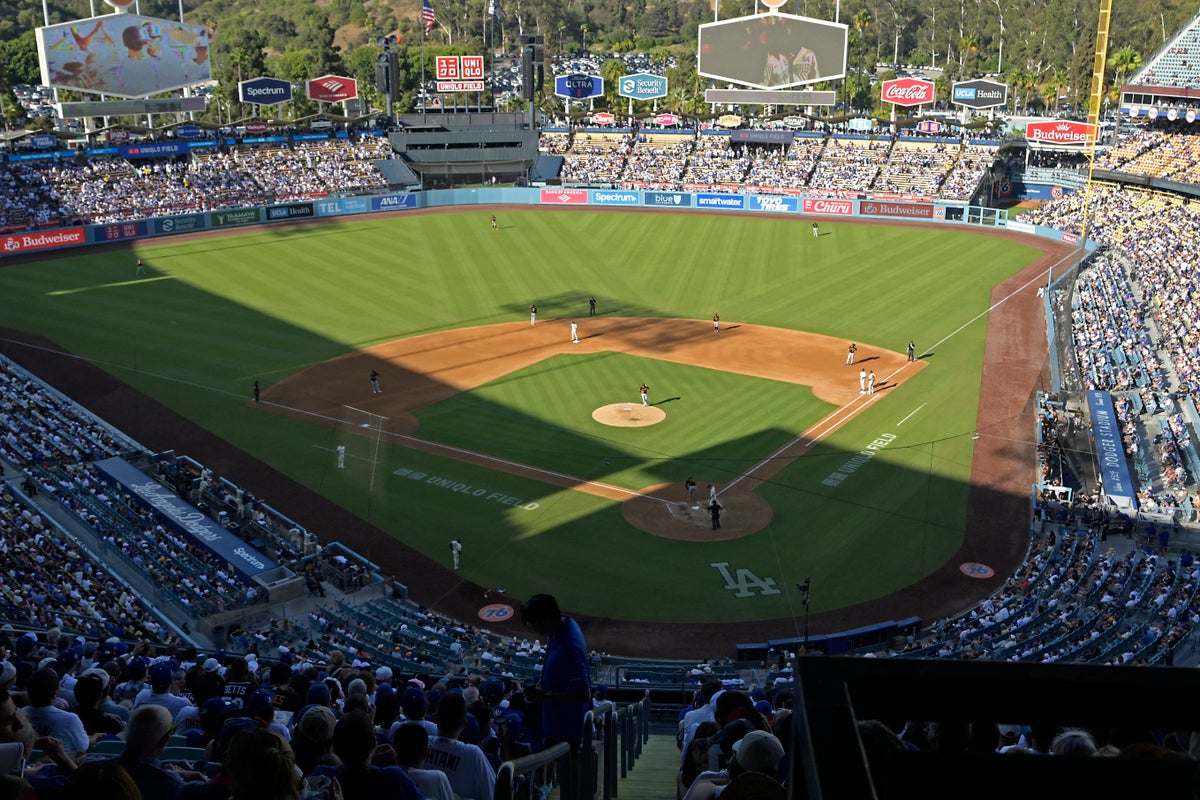
As the sun sets over San Diego Bay, casting long shadows across the immaculate green grass of the infield, the youngest sons of Jerry Buss are no longer just watching their father's legacy. They are writing the opening chapter of their own.
And somewhere, high above the clouds, a legendary poker player with a penchant for fast breaks and big bets is smiling at the deal.