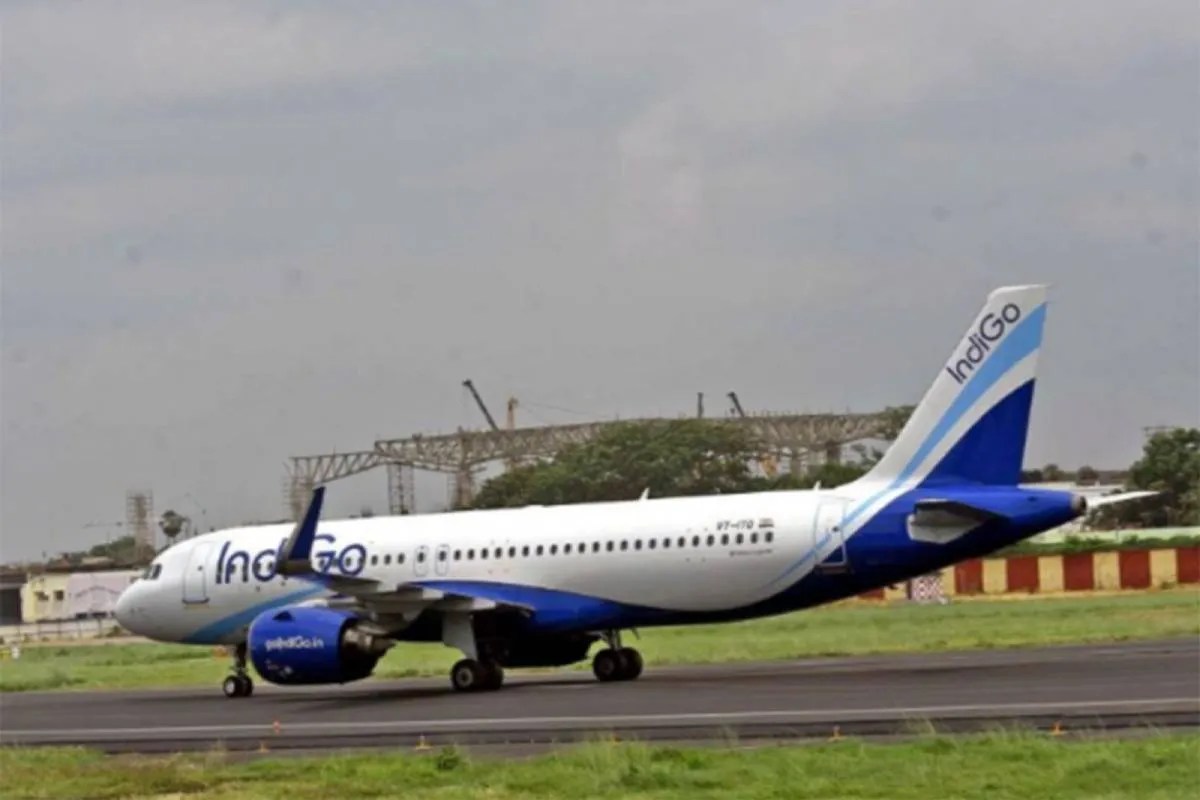
IndiGo’s expansion into Navi Mumbai International Airport (DB Patil International Airport) represents a structural realignment of Indian domestic aviation, shifting from a model of resource scarcity at the landlocked Chhatrapati Shivaji Maharaj International Airport (BOM) to a model of high-frequency capacity at a greenfield hub. The carrier’s decision to initiate 30 new routes and establish a direct link to Bhavnagar is not merely a geographic expansion; it is a calculated play to capture the burgeoning industrial and residential demand in the Mumbai Metropolitan Region (MMR) while simultaneously de-risking its operations from the slot constraints that have historically capped growth in the region.
The Infrastructure Arbitrage Framework
The deployment of aircraft to Navi Mumbai is a response to the "BOM Bottleneck," where the single-runway operation (effectively, due to intersecting runways) has reached peak saturation. IndiGo is applying a dual-hub strategy to the MMR, utilizing the new airport as a relief valve. The economic logic follows three specific drivers:
- Lower Operating Costs via Efficiency: Greenfield airports typically offer more efficient taxi times and modern ground-handling layouts. For a Low-Cost Carrier (LCC) like IndiGo, saving five minutes of taxi time per flight across 30 routes translates into significant fuel burn reduction and higher aircraft utilization rates.
- Catchment Area Capture: The Navi Mumbai site serves a distinct demographic—specifically the IT corridors of Thane, the industrial belts of Panvel, and the residential growth in Raigad. This bypasses the 2-to-3-hour transit time required to reach the old airport from these zones, effectively creating a "captured market" with higher price elasticity for convenience.
- Slot Dominance: By being an early mover, IndiGo secures the most favorable early-morning and late-evening slots, which are essential for high-yield business travel.
The Bhavnagar Direct Link and Tier-2 Connectivity Logic
The introduction of a direct flight to Bhavnagar illustrates IndiGo’s "Spoke-to-Secondary-Hub" model. Most analysts view these routes through the lens of simple connectivity, but the underlying mechanism is a Network Effect Optimization.
Bhavnagar, a center for diamond polishing and ship-breaking, possesses a high "Business-to-VFR" (Visiting Friends and Relatives) ratio. Previously, this traffic flowed through Ahmedabad or required long rail journeys. By removing the friction of a connecting flight, IndiGo induces demand that did not previously exist in the data. This is a supply-led growth strategy: the presence of the flight creates the market, rather than the market demanding the flight.
The 30 new routes serve as a defensive perimeter. By saturating the new airport’s initial capacity, IndiGo prevents competitors from establishing a dominant foothold. This is a classic "Moat Building" exercise through fleet scale. With over 300 aircraft in their fleet and hundreds more on order, IndiGo can afford to deploy capacity to Navi Mumbai that would bankrupt a smaller competitor during the initial "burn" phase of the airport's lifecycle.
Operational Complexity and the Cost of Dual-Base Management
Operating out of two airports in the same metropolitan area introduces a "Complexity Tax." IndiGo must now manage two sets of ground crews, two maintenance inventories, and separate crew scheduling rotations within the MMR.
- Crew Optimization: The proximity of the two airports allows for some "co-terminal" scheduling, where crews might start at BOM and end at the new airport. However, the logistical friction of moving personnel between the two sites in Mumbai traffic remains a persistent operational risk.
- Maintenance Distribution: Critical spares must be duplicated. If an A320 Neo experiences an AOG (Aircraft on Ground) situation at Navi Mumbai, the parts must either be stocked on-site or shuttled from the existing BOM hub, potentially leading to longer delays in the first 24 months of operation.
The Revenue Management Shift
The shift to Navi Mumbai will likely lead to a bifurcated pricing strategy. We can expect IndiGo to utilize Dynamic Price Discrimination based on the point of origin:
- Premium for Proximity: Flights from Navi Mumbai to major metros (Delhi, Bangalore, Hyderabad) may initially carry a slight premium due to the time-saving value for local residents.
- Aggressive Yield Hunting: On the 30 new routes, especially those to Tier-3 cities, IndiGo will likely use "Load Factor Pricing," keeping fares low to ensure 85%+ occupancy, thereby starving the rail and bus alternatives of their passenger base.
The "30 routes" figure is a signal of intent to reach Critical Mass immediately. In aviation, a route network is only valuable if it offers "Frequency Relevance." A single flight a day is a commodity; four flights a day is a utility. By launching with such a high volume, IndiGo is positioning itself as the default utility for the eastern half of the Mumbai megalopolis.
Risk Factors and Infrastructure Dependencies
The success of this expansion is not entirely within IndiGo’s control. The airline faces three primary exogenous risks:
- Last-Mile Connectivity: If the planned metro links and highway expansions to the Navi Mumbai airport are delayed, the "convenience" factor evaporates. The airport risks becoming a "stranded asset" for passengers who find the trek across the harbor too arduous.
- Intermodal Competition: The Vande Bharat express trains and the upcoming High-Speed Rail (HSR) projects target the same 300-to-500-kilometer routes that IndiGo is launching. On routes like Mumbai-Ahmedabad or Mumbai-Pune, the airline is competing with a rail product that offers city-center to city-center transit.
- Fuel Price Volatility: High-frequency, short-haul routes are the most sensitive to ATF (Aviation Turbine Fuel) price spikes. The takeoff and climb phases are the most fuel-intensive; if oil prices rise, these 30 new routes will be the first to face margin compression.
The Strategic Recommendation for the MMR Market
IndiGo’s move suggests that the future of Indian aviation is no longer about connecting the "Top 6" metros, but about creating Regional Multi-Nodes. For businesses and travelers, the play is clear: move operations toward the Navi Mumbai corridor now. The logistical gravity of the region is shifting.
To capitalize on this, the airline must transition from a "Low-Cost" identity to a "High-Efficiency" identity. This involves integrating digital check-in and biometric boarding more aggressively at the new terminal than they have at BOM, ensuring that the ground experience matches the time-saving promise of the new location.
The launch of the Bhavnagar route should be viewed as a pilot program for other underserved industrial hubs. If the yield on this route stabilizes within six months, expect an immediate rollout of similar "Industrial Spoke" routes to cities like Jamnagar, Coimbatore, or Ludhiana, bypassing the traditional hub-and-spoke delays of the major metros.
Final strategic move: Monitor the slot-sharing agreements between IndiGo and its international partners. The new airport is likely to become the primary gateway for IndiGo’s narrow-body international flights to the Middle East and Southeast Asia, freeing up BOM for long-haul wide-body operations from partner airlines. The 30 domestic routes are the "feeder" foundation for a future international hub.