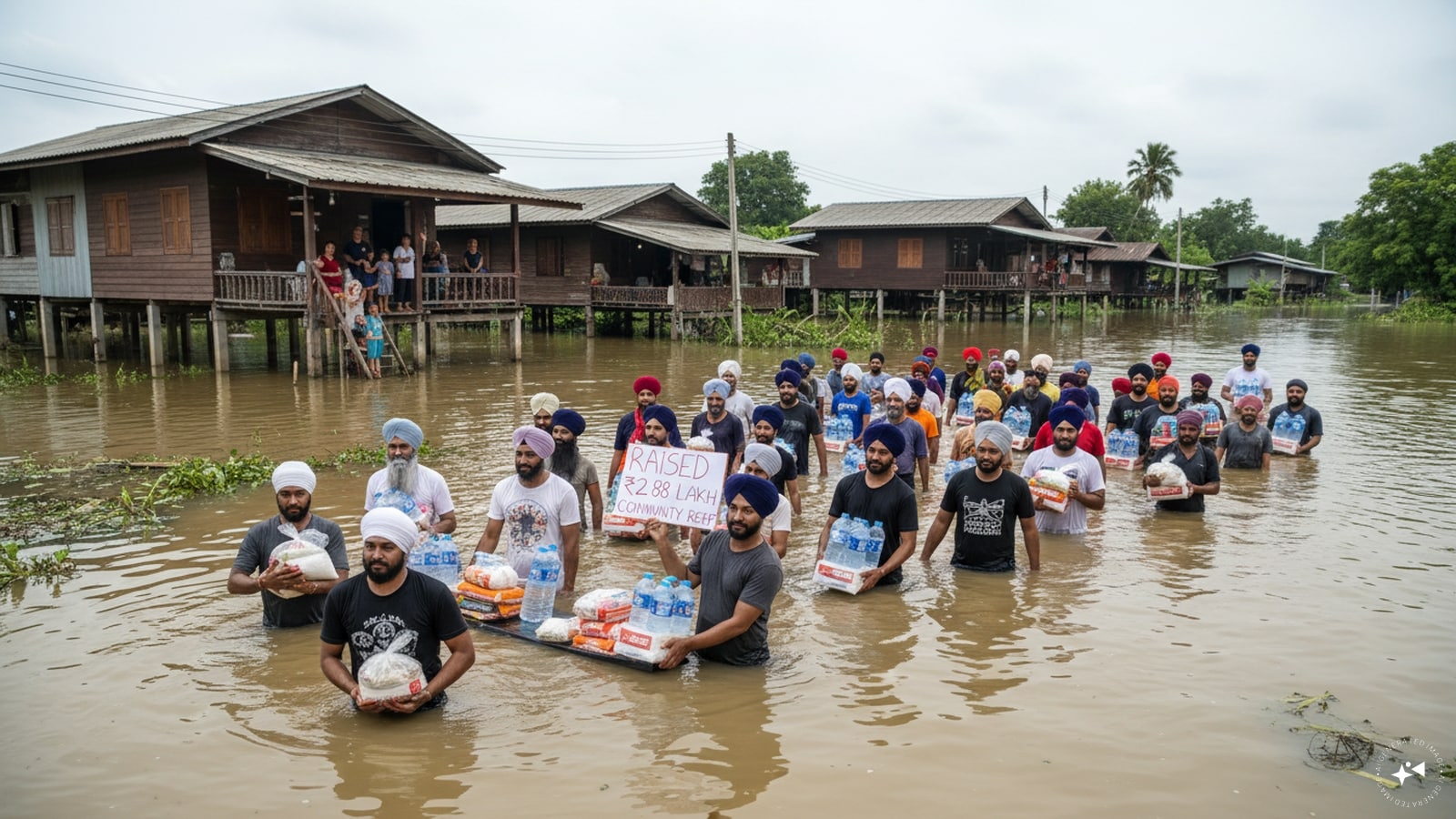
When floodwaters swallow a street in Thailand, official relief convoys often hit bottlenecks before they reach the people who need them most. Local volunteers step into that gap. And among them, Thai-Indian communities bring a distinct mix of cultural tradition, local language fluency, and neighborhood trust that makes a real difference on the ground.
Think about what happens during severe flooding across Thailand. Heavy monsoon rains, river overflow, and dam discharges can turn roads into canals across dozens of provinces at once. In late September 2026, for instance, heavy rain and cumulative runoff affected 28 provinces and all 50 districts of Bangkok, impacting roughly 921,488 households—about 2.55 million people—according to Thailand's Department of Disaster Prevention and Mitigation (DDPM). Meanwhile, multi-generation Thai-Indian families and faith groups have repeatedly shown up with food, drinking water, medicine, and practical support.
Why Indian-Origin Volunteers Show Up Every Monsoon
If you look closely at how Indian-origin volunteers mobilize in Thailand, you'll notice it isn't random charity. It's rooted in seva—selfless service—which sits at the heart of Sikh, Hindu, and broader Indian community life.
In October 2026, more than 40 volunteers from the Thai-Indian Namdhari Sikh community raised around ₹288,000 and drove trucks into flooded, hard-to-reach areas to deliver food, water, and medicine to stranded families. Volunteer Paiboon Sethi noted that stepping up honors their Indian heritage while standing beside fellow Thais during hard times. Earlier, during severe flooding in northern provinces like Chiang Mai and Chiang Rai in September 2024, Sikh organizations also mobilized volunteers and planned post-flood cleanup alongside immediate aid.
Real disaster response isn't won in press conferences. It happens when someone with a truck, clean water, and local contacts knows which lane isn't washed out yet.
Honesty matters here, though. Community volunteers don't replace national agencies or international humanitarians. Large-scale recovery still depends on formal funding, infrastructure repair, and coordinated emergency systems—such as government emergency relief budgets, debt and tax measures rolled out for affected households and businesses, and response frameworks run by the Thai Red Cross Society and international networks like the IFRC and ACT Alliance. Yet hyper-local volunteers move fast. They already live in these towns and cities, understand local dialects and street layouts, and can pivot in hours rather than weeks.
What Works on the Ground vs. What Sounds Good in Theory
People outside a disaster zone often assume flood aid is just about shipping boxes of canned food and clothes. Anyone who has helped with flood response—or watched real relief operations unfold—knows that's kinda naive.
Here is what actually separates useful help from well-meaning clutter when water rises:
- Timing shifts fast: During acute flooding, stranded households need ready-to-eat meals, clean drinking water, basic medicines, and dry supplies. Once waters recede, the bottleneck shifts to hygiene kits, cleaning gear, mud removal, and repairs for homes and small shops.
- Access beats volume: A pallet of supplies sitting at a depot helps nobody if flooded roads or damaged bridges block trucks. Smaller vehicles, local boats, and neighborhood runners often reach pockets that big convoys miss.
- Health risks lag behind the rain: Stagnant water brings skin irritation, respiratory issues, mosquito-borne illnesses, and water contamination. Basic first aid, clean water access, and sanitation items matter just as much as calories.
- Coordination prevents waste: Uncoordinated drop-offs can overwhelm local shelters with items nobody asked for. Working directly with municipal authorities, Red Cross chapters, schools, or established community foundations keeps supplies matched to actual needs.
Beyond Headlines: The Quiet Work After Waters Recede
Media coverage usually peaks when water is waist-deep and rescue boats are front and center. That's understandable—dramatic visuals draw attention. Still, the hardest stretch often starts days or weeks later when families return to damp walls, ruined appliances, lost stock, and mud-clogged streets.
In northern and central Thailand alike, recovery has repeatedly required long, unglamorous work: clearing thick mud, sorting damaged goods, supporting elderly neighbors and vulnerable households, and helping small traders get back on their feet. Thai-Indian business owners, families, and temples or gurdwaras frequently stay plugged into those neighborhoods because those neighborhoods are home.
At the same time, it's worth keeping perspective on numbers and scope. Public reports on volunteer drives sometimes highlight specific community fundraisers or headcounts—like the Namdhari Sikh volunteer group's relief push—while broader national and international reports track hundreds of thousands of affected households across multiple provinces. Those figures measure different layers of the response, not competing efforts. Seeing both side by side gives a truer picture of how a country weathers recurring monsoon extremes.
Practical Ways to Support Flood Relief Without Getting in the Way
If you want to help when floods hit Thailand—whether you live locally, belong to the diaspora, or are donating from abroad—skip impulse shipping and focus on high-leverage support:
- Back established local responders: Channel funds or goods through verified groups already operating on the ground, such as the Thai Red Cross Society, local provincial relief networks, or active community and faith-based volunteer teams coordinating with local officials.
- Ask before you buy: Check real-time needs lists before purchasing supplies. Cash or targeted procurement on the ground usually beats sending bulky items from overseas that face customs delays or transport costs.
- Stay for the cleanup phase: If you're volunteering in person, don't only show up on day one. Safe post-flood cleanup, supply sorting, and shelter support remain vital after the initial emergency wave passes.
- Prioritize safety first: Never drive or wade into fast-moving or unknown floodwater, and follow guidance from local disaster agencies like the DDPM and provincial authorities.
Sikh organizations mobilize volunteers and relief efforts for flood-affected provinces in northern Thailand provides useful background on how Sikh groups have organized volunteer relief across northern Thai provinces.
Note: Signing in to a Google Account lets you save your chat history and return to conversations like this one whenever you need them.
Thailand Floods Bangkok Volunteers Provide Multidimensional Aid shows how local volunteers mobilize on the ground during severe flooding in Thailand to deliver food, supplies, and shelter support to affected residents.


