Every six months, a defense ministry press release rolls out of Moscow and New Delhi about deepening defense ties and expanding joint production. Analysts nod along. Headlines celebrate the unbreakable friendship. It is comforting, entirely predictable, and completely divorced from the messy reality of industrial economics.
The lazy consensus says that India and Russia are building an unstoppable manufacturing alliance to bypass Western sanctions and secure strategic autonomy. This narrative assumes that shared geopolitical friction automatically translates into frictionless factory floors. It ignores currency convertibility nightmares, intellectual property protection deadlocks, and the stubborn physics of modern supply chains.
I have watched defense procurement programs bleed billions of dollars because policymakers mistook diplomatic proximity for engineering compatibility. You cannot weld a T-90 tank together with a handshake, and you certainly cannot manufacture advanced avionics when your primary financial conduit is crippled by international banking blockades.
Let us dismantle the core assumptions driving this perpetual motion machine of unfulfilled memoranda of understanding.
The Currency Conundrum Nobody Wants To Solve
The first illusion is the bilateral trade mechanism. For years, headlines touted the transition to national currencies—rupees and rubles—to bypass dollar dominance. It sounds neat in a seminar room. In practice, it is a financial trapdoor.
India runs a massive trade deficit with Russia, driven largely by discounted crude oil imports. Russia accumulates billions of rupees sitting in Indian banks that Moscow cannot easily repatriate or deploy globally without facing heavy restrictions or currency volatility risks. When you cannot convert your profits into hard currency or reinvest them freely across global markets, commercial incentive dies.
Joint production requires a predictable capital flow. If Russian defense contractors cannot extract their profits or pay their sub-tier suppliers in stable liquidity, the joint venture exists only on paper. Defense manufacturing is not a barter economy. It requires precision capital allocation, reliable insurance networks, and transparent hedging instruments. None of those exist between New Delhi and Moscow right now.
Transfer Of Technology Is A Polite Fiction
Ask any defense bureaucrat in South Block about the real state of Transfer of Technology from Russia, and watch them wince.
Moscow has historically been willing to sell completed platforms or knock-down kits for local assembly. Assembly is not manufacturing. Screwing together components shipped in from a Siberian depot does not build an indigenous defense industrial base. When India pushes for true deep-level manufacturing, source code access, and metallurgical independence, negotiations grind to a halt.
Russia guards its proprietary manufacturing processes jealously, and for valid commercial reasons. Their defense sector relies on export volume to subsidize domestic procurement. Handing over the crown jewels of missile guidance or turbine metallurgy to a partner who wants to export competing variants to third-world markets is a non-starter for Moscow.
Simultaneously, India’s Make in India mandate demands local value addition that climbs past sixty percent. These two objectives pull in opposite directions. Russia wants a captive assembly market; India wants a sovereign manufacturing ecosystem. Pretending these goals are aligned is geopolitical gaslighting.
The Maintenance Quagmire And The Spare Parts Bottleneck
Look at the operational readiness of India's existing Russian-origin hardware fleet—Sukhoi jets, T-90 tanks, Kilo-class submarines. The bottleneck is not patriotism; it is logistics.
Sanctions and export controls have choked Russia's domestic supply chains for high-end microelectronics, specialized lubricants, and optic sensors. If Moscow is struggling to source Western sub-components for its own front-line armor, it has precious little surplus capacity to supply robust, timely life-cycle support to New Delhi.
Joint production was supposed to fix this by localizing spare parts manufacturing inside India. But localizing a high-precision turbine blade or a radar chip requires an industrial tier-two and tier-three ecosystem that takes decades to mature. You cannot magic precision casting foundries into existence by signing a bilateral treaty.
When a joint venture takes seven years to approve a routine component substitution, the military capability of the end-user degrades. Wars are not won by press releases celebrating future cooperation; they are won by operational readiness today.
What Real Strategic Autonomy Actually Looks Like
True strategic autonomy does not mean finding a new patron when your old supplier gets sanctioned. It means building supply chain redundancy that is agnostic to geopolitical shocks.
India’s insistence on diversifying its defense acquisitions—procuring from France, Israel, the United States, and domestic private firms—is not a betrayal of historic ties. It is a survival strategy. Defense procurement is a cold, mathematical calculus of utility, cost, and deliverability. Sentimentality gets soldiers killed.
If New Delhi and Moscow want to salvage any credibility for their joint production rhetoric, they need to stop signing vague frameworks and start fixing the plumbing. That means independent arbitration mechanisms for currency disputes, ironclad legal protections for intellectual property, and real equity-sharing models where Indian private industry—not sluggish state-owned behemoths—takes the wheel.
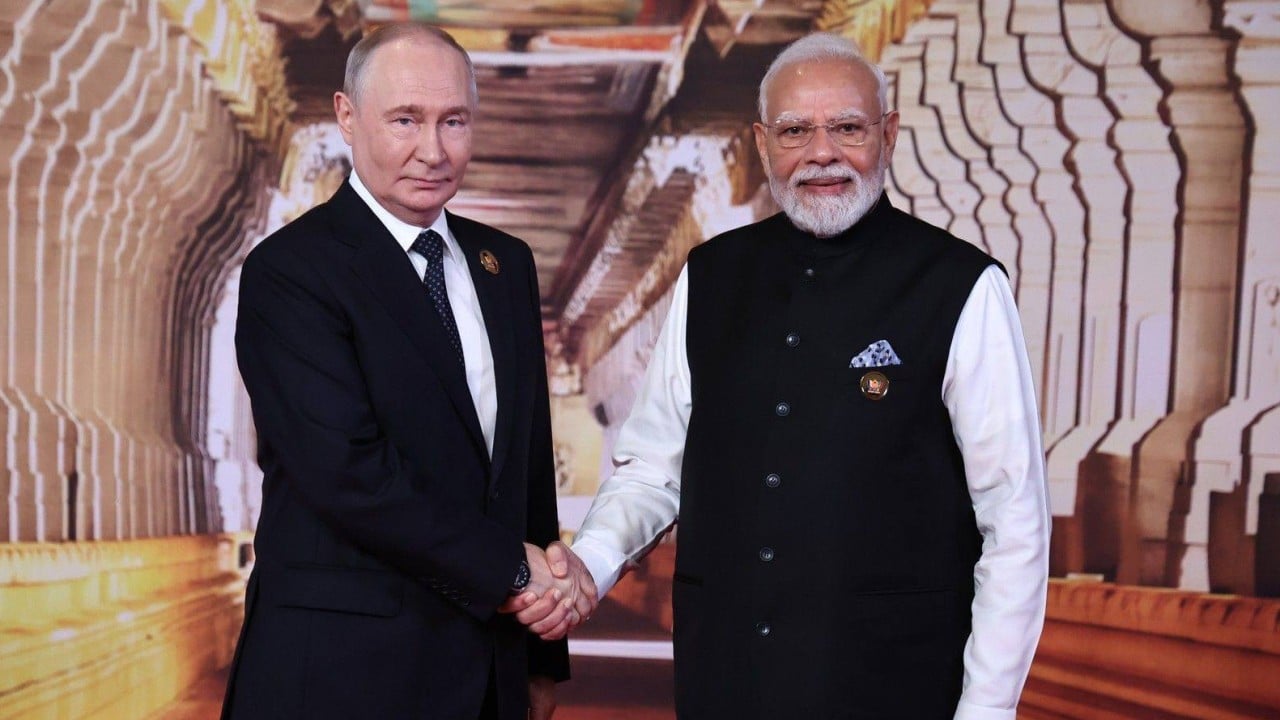
Until then, expect more grand announcements, more ceremonial handshakes, and identical supply chain headaches next quarter.
Stop waiting for a diplomatic miracle to substitute for industrial hard work.