India is aggressively expanding its diplomatic and economic footprint in Panama to secure alternative trade corridors and counter supply chain vulnerabilities. External Affairs Minister S. Jaishankar’s recent high-level engagements with Panamanian Foreign Minister Janaina Tewaney Mencomo—and subsequent bilateral follow-ups with the current administration of Javier Martínez-Acha—signal a calculated pivot. New Delhi is no longer treating Latin America as a distant diplomatic afterthought. Instead, India is positioning Panama as its primary logistical anchor in the Americas to safeguard billions in trade from volatile global chokepoints like the Red Sea.
For decades, Indian foreign policy viewed Central America through a lens of quiet neglect. Trade routes were predictable. The maritime highways through Suez and Panama functioned without systemic disruption.
That era is over. Weaponized drone strikes in the Middle East, intensifying geopolitical rivalries, and climate-induced draft restrictions at the Panama Canal have turned predictable shipping lanes into high-stakes gambles. New Delhi’s sudden courtship of Panama City is a direct response to this instability. It is a calculated move to secure a commercial beachhead in a region historically dominated by Washington and increasingly courted by Beijing.
The Hidden Architecture of the India Panama Axis
On paper, bilateral talks focus on standard diplomatic talking points like pharmaceutical cooperation, technology transfers, and capacity building. The real story unfolds beneath the surface of the official communiqués.
India is eyeing the Colón Free Trade Zone and Panama’s expansive logistics network to establish a permanent warehousing and distribution hub for Indian goods. By manufacturing or assembling products within Panamanian special economic zones, Indian conglomerates can bypass punitive tariffs and drastically cut transit times to the United States, Canada, and South America.
Consider the pharmaceutical sector. India is the world’s largest provider of generic medicines, yet its supply chains to Latin America remain inefficient. Shipping critical therapeutics from Mumbai to São Paulo or Mexico City via traditional routes takes weeks and leaves cargo vulnerable to port delays.
Establishing a centralized, temperature-controlled distribution node in Panama changes the entire equation. Indian drug manufacturers can ship bulk active pharmaceutical ingredients (APIs) to Panama, handle final packaging and quality control locally, and distribute them across the Western Hemisphere within days.
This is not just about commercial efficiency. It is about strategic autonomy.
Decentralizing the Supply Chain
Relying on a single manufacturing base leaves Indian exporters vulnerable to sudden geopolitical shocks. By spreading the logistical footprint across to the Central American isthmus, New Delhi creates a buffer. The strategy mimics the "China Plus One" model that Western corporations adopted to reduce their reliance on Beijing, though India is deploying it to insulate its own export economy.
Navigating the Shadow of Great Power Competition
India’s entry into Panama is complicated by the presence of two heavyweights: the United States and China. Panama is a critical node in global logistics, making it a primary arena for geopolitical influence.
+-----------------------------------------------------------------+
|               THE TRIANGULAR INFLUENCE IN PANAMA                |
+-----------------------------------------------------------------+
|  UNITED STATES           |  CHINA                  |  INDIA                 |
|  • Historical Hegemon    |  • Infrastructure       |  • Logistical Anchor   |
|  • Canal Security        |  • Port Management      |  • Pharma & Tech Hub   |
|  • Financial Oversight   |  • Trade Dominance      |  • Strategic Autonomy  |
+-----------------------------------------------------------------+
Washington views the Panama Canal as an extension of its domestic maritime security infrastructure. Meanwhile, Chinese state-owned enterprises have quietly secured massive footprints at both ends of the canal, managing critical port facilities in Balboa and Cristóbal.
New Delhi must thread a needle. If India pushes too aggressively, it risks alarming Washington, which watches foreign infrastructure investments in the region with intense suspicion. Conversely, if India hesitates, Chinese firms will lock up the remaining logistics and industrial capacity along the canal zone.
Jaishankar’s diplomatic playbook relies on offering an alternative model. India does not arrive with the heavy-handed infrastructure loans that characterize Beijing’s Belt and road initiatives. Instead, it offers digital public infrastructure, expertise in space technology, and high-value manufacturing partnerships. It is a soft-power play backed by hard economic incentives, designed to make India an indispensable partner without triggering the geopolitical alarm bells that accompany Chinese investments.
The Shipping Dilemma and the Canal Crisis
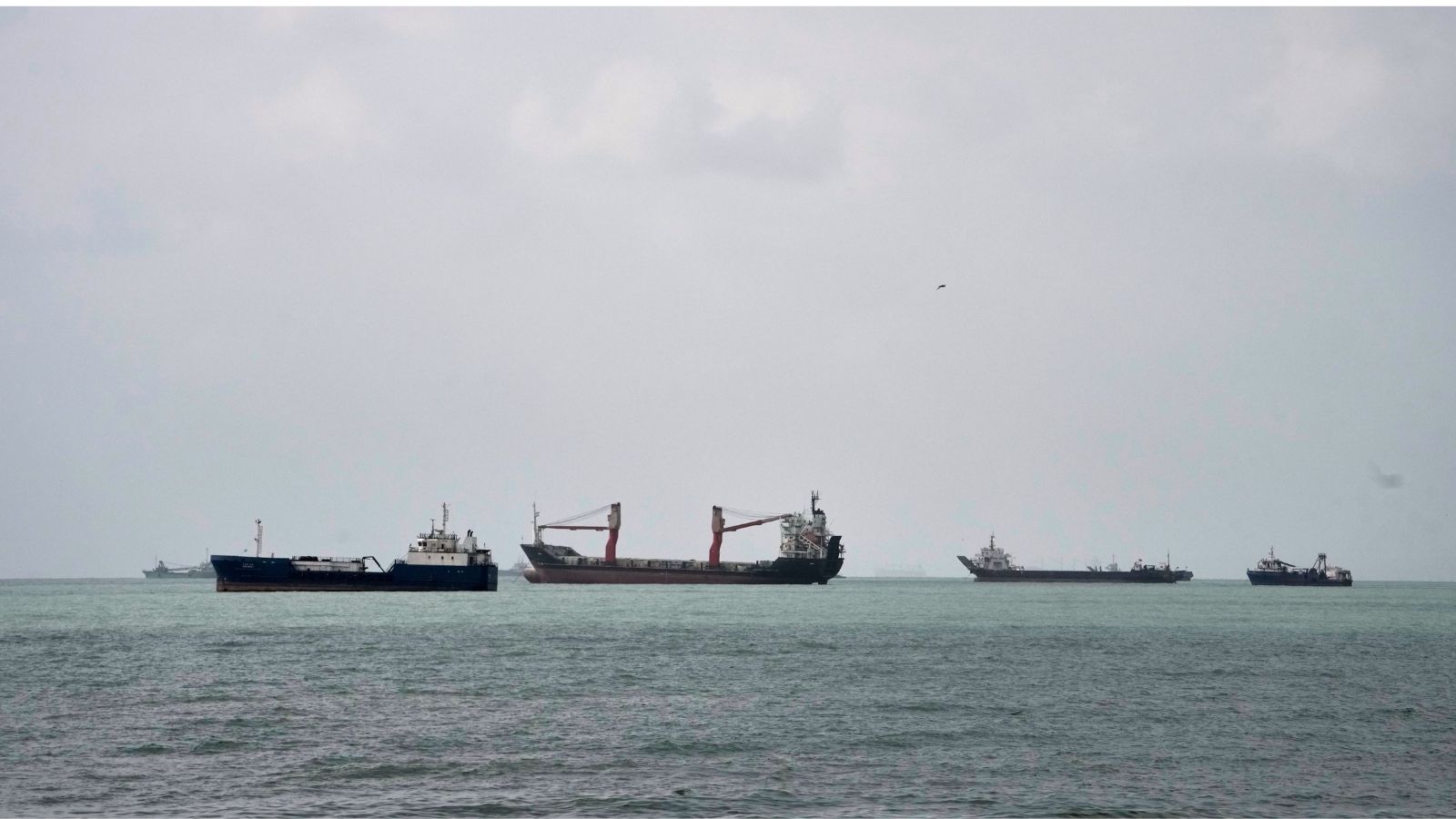
The physical constraints of the Panama Canal itself add another layer of urgency to these diplomatic maneuvers. Recent severe droughts, exacerbated by El Niño patterns, forced the Panama Canal Authority to slash daily vessel transits and impose strict draft restrictions. At its worst, the backlog forced global shipping lines to pay millions of dollars in auctions just to skip the line, or abandon the canal entirely in favor of lengthy detours around Cape Horn.
For Indian exporters, these disruptions are financially devastating. When the Panama Canal chokes, the cost of moving Indian textiles, automotive components, and engineering goods to the US East Coast skyrockets.
[Indian Exporters] ---> (Suez / Red Sea Vulnerabilities)
                       (Panama Canal Draft Restrictions) ---> Cost Spikes & Delays
By deepening ties with Panama, India seeks to embed its logistics firms directly into the country's overland alternatives. The Panama Canal Railway, which moves containers between the Atlantic and Pacific oceans via a land bridge, is becoming an essential release valve for shippers looking to avoid canal congestion. Indian logistics giants are actively exploring joint ventures to manage dry-canal operations, ensuring that Indian freight receives priority handling even when water levels drop.
Tech and Digital Diplomacy as a Foot in the Door
To secure these maritime and logistical advantages, India is leveraging its dominance in information technology and digital public infrastructure. Panama wants to modernize its financial services and government administration. India wants to export its digital architecture.
The deployment of Indian technology standards in Central America creates a subtle but powerful form of long-term alignment. When a country adopts Indian frameworks for digital payments, identity verification, or healthcare management, it naturally tilts its regulatory and commercial ecosystem toward New Delhi.
This digital diplomacy serves as the opening move. It builds administrative trust, trains local workforces on Indian platforms, and opens the door for deeper discussions regarding maritime security, port access, and trade reciprocity.
The Fragile Reality of the Central American Pivot
The strategy is ambitious, but it is far from bulletproof. Bureaucracy in both New Delhi and Panama City remains notoriously sluggish. Diplomatic declarations of "closer ties" frequently stall when confronted with the realities of regulatory compliance, local labor laws, and infrastructure deficits.
Furthermore, Panama's domestic politics can shift rapidly. A change in administration can bring a reassessment of foreign partnerships, occasionally resetting years of diplomatic legwork. India’s challenge is to institutionalize these agreements so they survive the political lifecycles of individual governments.
The success of this geopolitical pivot depends on the speed of execution. If India’s private sector fails to follow the blueprint laid out by the Ministry of External Affairs, the initiative will amount to little more than a collection of forgotten memos and high-level photo opportunities.
The commercial corridors are being redrawn right now. Indian corporations must move quickly to establish physical footprints in the Colón Free Trade Zone, commit capital to local joint ventures, and lock in long-term transit agreements before competing global powers crowd them out of the market entirely.