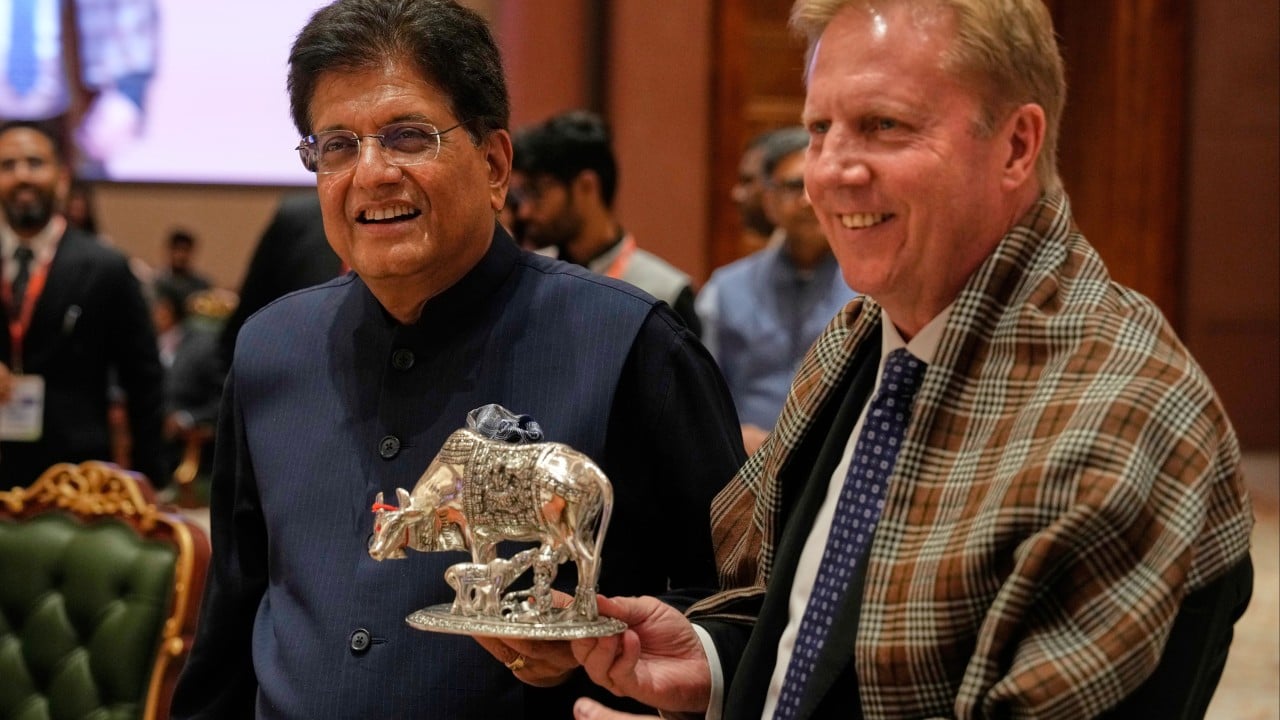
The ink is barely dry on the India-New Zealand Free Trade Agreement, signed in New Delhi on April 27, 2026. Official statements paint a picture of a seamless economic marriage. Politicians from Wellington to New Delhi speak of doubled bilateral trade and a $20 billion investment horizon. Behind these proclamations, however, lies a much colder, more calculated maneuver. This is not merely an expansion of commerce. It is a desperate hedge against an increasingly volatile Indo-Pacific.
Nations are pulling back from globalized dependencies. They are forming smaller, more reliable clusters. This agreement functions as a defensive wall for both sides. For New Zealand, the reliance on a single, massive export destination—China—has become a structural liability. For India, the need to secure reliable, non-hostile supply chains for manufacturing inputs has reached a critical intensity.
The Architecture of Necessity
To understand why this pact matters, look at the tariff schedule. India has secured 100 percent duty-free access for its exports to the New Zealand market. This is a massive win for India’s labor-intensive sectors, including textiles, leather, and engineering goods. These industries have struggled to remain competitive as production costs elsewhere have fluctuated.
The reality of these numbers is stark. New Zealand is an economy of five million people. It is a drop in the ocean compared to the domestic demands of India. The primary value for Delhi here is not consumer volume. It is the ability to standardize trade relations with a developed economy that serves as a geopolitical anchor in the South Pacific. By securing this path, India gains a foothold in an area that has been largely dominated by regional powers.
For New Zealand, the math is equally ruthless. Wellington is attempting to diversify its export reliance. By gaining preferred access to the Indian market—a nation of 1.4 billion people currently tracking to be the world’s third-largest economy—New Zealand is buying insurance. Should diplomatic relations with Beijing degrade further, or should trade barriers rise, the Kiwi economy requires a secondary engine. India is that engine.
The Friction in the Fine Print
Despite the celebratory headlines, significant friction remains. Look at the exclusion list. India refused to budge on dairy, agricultural products, and several other sensitive sectors. These are the lifeblood of rural political support in India. If the government allowed cheap New Zealand dairy to flood the market, the domestic backlash would be immediate and severe.
New Zealand negotiators accepted these exclusions because they lacked leverage. They are the smaller player. This leads to a common misconception about the agreement: that it is a balanced exchange. It is not. It is a prioritized exchange. New Zealand gains market space in professional services, education, and forestry, while shielding its own most vital sectors from Indian industrial competition.
Consider the $20 billion investment figure touted by officials. That is a projection over 15 years. It is not a liquid deposit. It is a target. It relies on the assumption that the Indian business environment will simplify its regulatory burdens, minimize the bureaucracy of its state agencies, and provide sufficient infrastructure to host foreign capital at scale. History shows that these goals are difficult to achieve. If India fails to modernize its logistical and legal frameworks, that $20 billion will remain on paper, a theoretical sum that never manifests in actual factory floors or service centers.
Beyond the Bilateral
The most intriguing aspect of this agreement is the mobility of human capital. The pact includes a new Temporary Employment Entry visa pathway, capping at 5,000 skilled Indians per year. This is a deliberate nod to the shortages in New Zealand’s technical and healthcare sectors. It is also a way for India to export its most valuable resource: skilled, educated labor.
This strategy serves two purposes. It helps New Zealand plug the gaps in its own workforce. Simultaneously, it creates a diaspora pipeline that, over time, will facilitate deeper business connections. This is how trade dominance is built. It is not done through shipping containers alone. It is done through the movement of people who understand both sets of regulations, both cultures, and both sets of market expectations.
Hypothetically, consider an Indian tech firm specializing in agricultural software. Before this agreement, the barrier to entry in New Zealand would be high, consisting of visa hurdles, trade tariffs, and a lack of institutional trust. Now, an engineer from Bengaluru can move to Wellington on a dedicated visa, establish the office, and access the local market with reduced friction. This creates a bridge that is much stronger than a simple reduction in tariffs on sheep meat or wool.
The Risk of Stagnation
The true test of this deal will not happen this year. It will happen when the first major dispute arises. The agreement includes mechanisms for settling trade friction, but legal frameworks are only as effective as the political will behind them. If New Zealand’s exporters find themselves frustrated by persistent Indian bureaucratic delays, or if Indian manufacturers find their goods sidelined by changing regulatory standards in Wellington, the goodwill behind this signing ceremony will evaporate.
There is also the matter of timing. Global trade is becoming increasingly regional. If this pact does not generate tangible, visible growth for small and medium-sized enterprises (MSMEs) in both countries within the next 36 months, it will be labeled a failure by the very business communities it claims to represent.
The focus must shift from the signing ceremony to implementation. The ministers have done their part by creating the structure. Now, the private sector must navigate the reality of a relationship that is fundamentally lopsided in size but highly complementary in strategic need. If you are a business leader, stop looking at the press releases. Look at the specific tariff codes for your product line and the timeline for implementation in the sectors where India has kept its market protected. That is where the actual money will be made or lost. The diplomatic theater has finished. The economic hard work begins now.