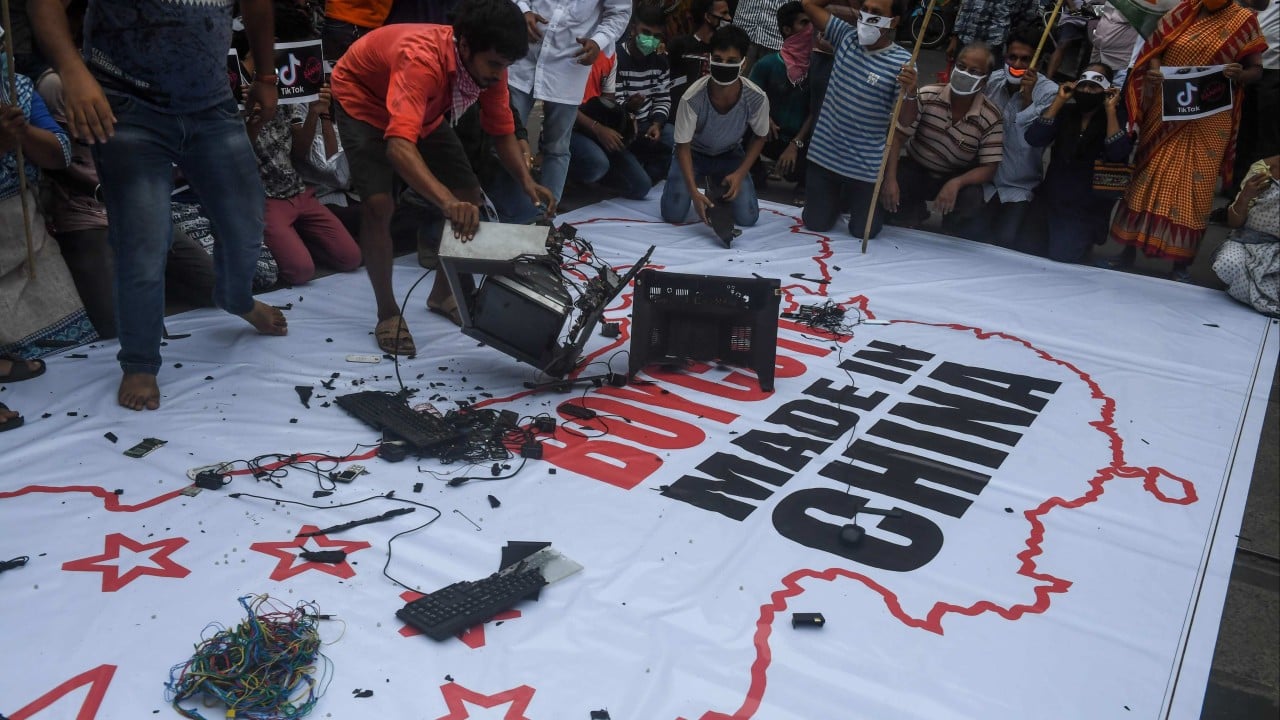
Foreign policy columnists love a good romance gone wrong. They look at New Delhi and Beijing through the lens of a failed high school prom, wringing their hands over why two giants cannot simply shake hands, swap cultural festivals, and sing kumbaya across the Himalayas. Every diplomatic thaw brings another batch of hand-wringing opinion pieces claiming Beijing is failing to win Indian hearts and minds.
It is a lazy, comforting fairy tale. It assumes hearts and minds are the currency of modern statecraft. They are not.
I spent a decade watching corporate boardrooms and geopolitical strategy desks obsess over public diplomacy, mutual affection, and soft power optics. I have seen governments blow millions on Confucius Institutes, youth exchanges, and cultural galas while missing the entire point of the chessboard. Nations do not need to love each other to do business, and they certainly do not need cultural affinity to rewrite the global order.
Beijing is not failing to win Indian hearts and minds because Beijing is clumsy at public relations. Beijing is failing because Beijing stopped trying, and New Delhi never asked.
The Soft Power Delusion
The standard pundit playbook relies on a fundamental misconception: that national alignment requires popular affection. You read it in every think-tank paper. Analysts point to border skirmishes, historical baggage, and public suspicion in India as proof of a broken diplomatic strategy. They assume that if only China ran better media campaigns or sponsored more cricket tournaments, the geopolitical friction would melt away.
This is psychological projection by people who spend too much time in university seminar rooms.
Geopolitics is cold, transactional, and entirely driven by structural imperatives. India does not distrust China because of a lack of cultural exchange. India distrusts China because their borders touch, their economies compete for manufacturing dominance in the Global South, and their security architectures point directly at each other. No amount of panda diplomacy or Bollywood screenings in Shanghai is going to erase a disputed line of actual control in Ladakh.
When commentators ask why Beijing cannot win over the Indian public, they are answering the wrong question entirely. The question is not why China fails to charm India. The question is why anyone expects charm to matter in a zero-sum territorial and economic rivalry.
Look at the trade numbers. Despite political freezes, border standoffs, and aggressive national security crackdowns on Chinese apps in India, bilateral trade remains stubbornly, massively high. Indian manufacturers depend on Chinese active pharmaceutical ingredients, electronic components, and heavy machinery parts. Money flows where efficiency dictates, completely indifferent to what television pundits say about national sentiment.
The Reality of Transactional Coexistence
Let us look at how actual statecraft operates behind the polished veneer of joint communiques.
Imagine a scenario where a New Delhi industrialist needs critical semiconductor components to keep an electronics assembly line moving. Does that industrialist care whether the supplier in Shenzhen loves India? Of course not. They care about unit economics, delivery times, and customs clearance.
Beijing understands this transactional reality far better than its Western critics give it credit for. China’s foreign policy apparatus does not measure success in India by favorable opinion poll numbers. It measures success in supply chain dominance, infrastructure leverage across South Asia, and the prevention of a hard, unyielding security encirclement by Western alliances.
If you judge Beijing by the metric of public popularity in Mumbai or Delhi, it looks like a failure. If you judge Beijing by the metric of commercial gravity and strategic independence, it is playing a ruthlessly pragmatic long game.
The honest truth that nobody in diplomatic circles wants to admit is that India does not want Chinese cultural influence anyway. India is fiercely nationalistic, fiercely protective of its own domestic market, and currently riding a wave of civilizational self-assertion. New Delhi’s policy establishment is not waiting around for Beijing to win its heart. It is actively trying to decouple critical tech supply chains while quietly buying the cheap inputs it needs to fuel its own domestic GDP growth.
It is a marriage of profound convenience and mutual suspicion. Both sides know it. Pretending otherwise is just performance art for foreign policy junkies.
Dismantling the People-to-People Myth
We are constantly told that people-to-people ties are the bedrock of stable international relations. This is romantic nonsense.
History is littered with nations whose populations loved each other while their governments went to war, and conversely, nations whose citizens despised one another while their merchants traded billions. Public opinion is a lagging indicator, manufactured by domestic media cycles and political expediency. It can be whipped into a nationalist frenzy in forty-eight hours on cable news.
Beijing knows that investing political capital into changing Indian public sentiment is a negative-return investment. Every yuan spent on cultural outreach in a deeply skeptical market like India is capital wasted. Instead, that capital goes into port developments in the Indian Ocean, digital infrastructure standards in developing nations, and securing raw material corridors across Central Asia.
India’s strategic planners are equally clear-eyed. They ban TikTok, restrict direct foreign investments from bordering nations, ramp up domestic production incentives, and simultaneously import record volumes of industrial goods from the very neighbor they view as their primary long-term threat.
This is not a failure of diplomacy. This is peak realism.
Stop Waiting for the Thaw
The obsession with diplomatic thaws misses the structural reality of the Asian century. Two rising continental heavyweights with demographic bulges, industrial ambitions, and unresolved borders are not going to become best friends because of a successful summit or a cultural festival.
The sooner we stop evaluating Asian geopolitics through the sentimental framework of winning hearts and minds, the sooner we can look at the actual mechanics of power.
China does not need India to love it. China needs India to remain manageable, commercially accessible, and strategically distracted. And India does not need to forgive 1962 or the Himalayas to buy the intermediate goods that keep its factories humming.
Stop looking for romance where there is only raw, unadulterated interest. The cold reality is the only game in town.