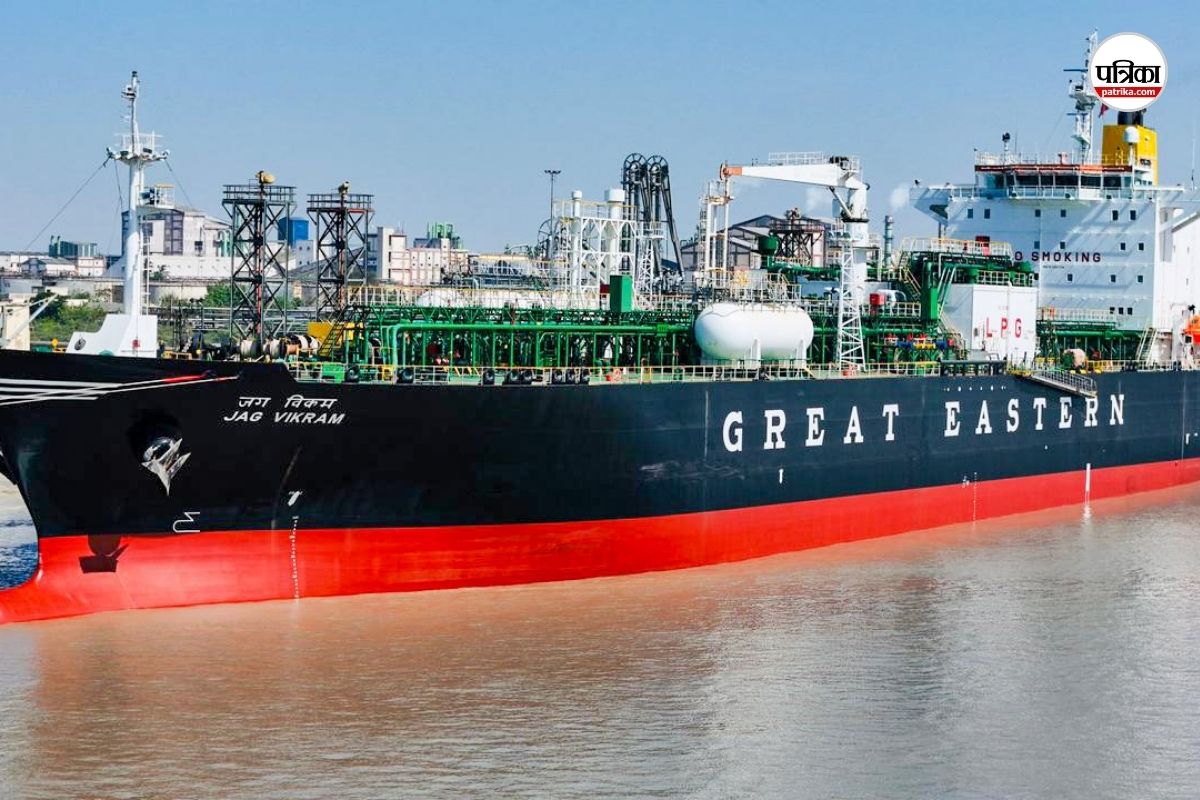
The maritime artery of the Middle East is pulsing with a dangerous rhythm, and New Delhi has decided it can no longer afford to watch from the sidelines. By explicitly condemning the targeting of commercial vessels in the Strait of Hormuz, India has shifted from its traditional stance of "strategic silence" to a posture of active demand. This is not merely a diplomatic courtesy. It is a survival reflex. For a nation that relies on the Persian Gulf for nearly two-thirds of its crude oil imports and a massive portion of its liquefied natural gas, any disruption in these waters is an immediate threat to the Indian kitchen and the national exchequer.
India’s recent communication on the matter serves as a direct message to both state and non-state actors operating in the Gulf of Oman and the Red Sea corridor. The message is blunt: the freedom of navigation is non-negotiable. While the world tracks the geopolitical chess match between Tehran and Washington, India is looking at the insurance premiums on its tankers and the safety of its seafarers. The time for nuanced ambiguity has passed. If you liked this article, you might want to read: this related article.
The Economic Chokehold on New Delhi
The Strait of Hormuz is the world's most important oil transit point. It is a narrow stretch of water where the tankers are heavy and the political tensions are heavier. When a missile or a drone strikes a commercial vessel, the ripple effect reaches the Bombay Stock Exchange within minutes. India is particularly vulnerable because its energy security is tied to the stability of this specific geography.
We are seeing a shift in how New Delhi calculates risk. In previous decades, India might have relied on "quiet diplomacy" to ensure its interests were protected. Now, the Ministry of External Affairs is being forced to use more muscular language. This change stems from the realization that the "wait and see" approach only emboldens those who use maritime disruption as a political lever. If the tankers stop moving, or if the cost of moving them becomes prohibitive due to war-risk surcharges, the Indian government faces a domestic crisis that no amount of diplomatic maneuvering can fix. For another perspective on this event, refer to the recent coverage from USA Today.
The Cost of Insecurity
When maritime security breaks down, the primary victim is the global supply chain. For India, this manifests in several ways:
- Freight Rates: Shipping companies hike prices to cover the danger.
- Insurance Premiums: The "war risk" add-on can make a single voyage millions of dollars more expensive.
- Operational Delays: Ships are forced to take longer routes or wait for naval escorts, leading to inventory shortages.
These are not abstract concerns. They are line items on a balance sheet that eventually dictate the price of petrol at a station in Noida or Bengaluru.
A New Doctrine of Maritime Assertion
India’s refusal to accept the targeting of ships marks the birth of a more assertive maritime doctrine. For years, the Indian Navy has been the "preferred security partner" in the Indian Ocean Region. However, that role was often confined to anti-piracy operations off the coast of Somalia. The current crisis in the Strait of Hormuz and the contiguous waters requires a different kind of naval diplomacy.
The Indian Navy has already deployed destroyers and frigates to the region under "Operation Sankalp." This isn't just about showing the flag. It is about providing a physical deterrent. By maintaining a presence, India is signaling that it will protect its own, regardless of the broader ideological battles being fought in the Middle East. It is a pragmatic, "India First" approach to international waters.
Beyond the Horizon
The challenge is that the threats are evolving. We are no longer dealing solely with traditional naval encounters. The proliferation of low-cost drones and anti-ship missiles has democratized maritime disruption. A small group can now threaten a multi-billion dollar shipping lane. India’s stance is a recognition that the old rules of engagement are being rewritten by technology.
The government is also navigating a delicate path with Iran. India and Iran have historically shared a functional relationship, centered around the development of the Chabahar Port. Yet, India's insistence on the safety of shipping lanes places it in direct opposition to any activity—whether sanctioned by Tehran or carried out by its proxies—that destabilizes the Strait. This is a high-wire act. New Delhi is essentially telling Iran that while it values their bilateral ties, those ties do not grant a license to jeopardize India's energy lifeline.
The Human Element in the Crosshairs
Behind the talk of geopolitics and oil barrels lies a reality that often gets ignored: the Indian seafarer. India provides a massive percentage of the global seafaring workforce. When a ship is hijacked or hit by a drone in the Middle East, there is a high probability that Indian citizens are on board.
The safety of these citizens has become a domestic political priority. The government cannot afford the optics of Indian sailors being held hostage or killed in a conflict that is not theirs. This adds a layer of moral urgency to India's "two-to-the-point" (do-took) messaging. It is about protecting lives as much as it is about protecting the economy.
Strategic Autonomy Under Pressure
Critics often argue that India’s refusal to join Western-led maritime coalitions, like "Operation Prosperity Guardian," shows a lack of commitment. That view misses the point of Indian foreign policy. India prefers to operate independently or through bilateral arrangements because it does not want to be seen as a junior partner in a Western military bloc. By issuing its own firm warnings and deploying its own ships, India maintains its strategic autonomy while still working toward the same goal: an open and safe Strait of Hormuz.
This independent streak is a hallmark of the current administration. It allows India to talk to all sides. It can engage with the United States on intelligence sharing while simultaneously keeping the lines open with Gulf monarchies and Iran. However, this "all-alignment" strategy is being tested like never before. As the attacks on ships become more frequent and more sophisticated, the space for neutral ground is shrinking.
The Technical Reality of Modern Sabotage
The weapons being used in the region today are a nightmare for commercial shipping. Standard merchant vessels are "soft targets." They are slow, massive, and have zero defensive capabilities. When a "kamikaze" drone is launched from a hidden site on the coast, the merchant crew often has no warning until the moment of impact.
India’s call for an end to these attacks is also a call for a return to established international law, specifically the United Nations Convention on the Law of the Sea (UNCLOS). The blatant disregard for these laws sets a dangerous precedent. If the Strait of Hormuz becomes a "free-fire zone," other critical chokepoints like the Malacca Strait or the Bab-el-Mandeb could follow.
Infrastructure at Risk
It isn't just the ships. Subsea cables that carry the vast majority of the world's data also run through these narrow waterways. A conflict in the Strait doesn't just stop the oil; it can potentially throttle the internet. For a country like India, which is betting its future on a digital economy and IT services, the physical security of the seabed is just as vital as the surface of the water.
The maritime domain is the most interconnected space on earth. A disturbance in one corner creates a vacuum in another. India’s proactive stance is an acknowledgment that the "neighborhood" now extends far beyond its immediate coastline.
The Shift from Rhetoric to Reality
What happens next will depend on whether New Delhi’s words are backed by sustained action. The international community is watching to see if India will increase its naval footprint or if it will use its growing economic clout to pressure regional powers into de-escalation.
There is an inherent limit to what diplomacy can achieve when the actors involved feel they have more to gain from chaos than from order. India is trying to shift that calculus. By making it clear that maritime attacks are "unacceptable," it is attempting to raise the diplomatic and political cost for the perpetrators.
The Strait of Hormuz is not just a geographical feature; it is a test of India’s status as a rising global power. A superpower that cannot protect its own trade routes is a superpower in name only. India knows this. The hardening of its tone is the sound of a nation realizing that in the modern world, security is not something you ask for—it is something you must be prepared to enforce.
The era of passive observation is over. The tankers must keep moving, the crews must be safe, and the Strait must remain open. On this, India will not budge.