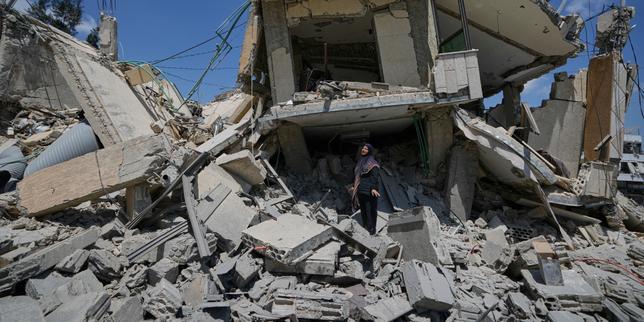
Israel has officially tied the withdrawal of its military forces from southern Lebanon to the complete disarmament of Hezbollah. This ultimatum sets a diplomatic bar so high it practically guarantees a protracted conflict. By demanding the total neutralization of Lebanon's most powerful military actor as a prerequisite for peace, Israeli policymakers have shifted the goalposts from regional containment to an absolute geopolitical overhaul. The strategy aims to secure the northern Israeli border permanently, but it relies on an enforcement mechanism that neither the Lebanese state nor international peacekeepers currently possess.
This is not a standard border dispute. It is a fundamental clash of survival strategies. Meanwhile, you can explore related events here: Why the US Response to Venezuela's Earthquake Is a Massive Logistics Test.
Understanding the deadlock requires looking past the immediate military skirmishes. The demand for disarmament draws directly from UN Security Council Resolution 1701, passed in 2006, which called for the area south of the Litani River to be free of any armed personnel other than the Lebanese army and UN peacekeepers (UNIFIL). For two decades, that resolution existed primarily on paper. Now, Israel is attempting to enforce through military leverage what diplomacy failed to secure for twenty years.
The Illusion of Lebanese State Enforcement
The central flaw in the current diplomatic calculus is the assumption that the Lebanese government can simply enforce its sovereignty if given enough international backing. To understand the complete picture, we recommend the excellent analysis by The Guardian.
Lebanon is enduring one of the most severe economic collapses in modern history. Its institutions are paralyzed. The Lebanese Armed Forces (LAF) rely heavily on foreign aid just to pay basic salaries and keep fuel in their vehicles. Expecting this fractured, underfunded military to march south and forcibly disarm a heavily entrenched, battle-hardened militia is a fantasy.
Hezbollah is not merely a non-state actor operating within Lebanon. It is woven into the country's social, political, and bureaucratic fabric. It holds seats in parliament, manages vast social service networks, and possesses an arsenal that eclipses the national army's capabilities.
If the Lebanese army attempts a forced disarmament, it faces two immediate risks:
- Internal Fragmentation: The army itself is drawn from Lebanon’s diverse sectarian landscape. Ordering it to fight Hezbollah could cause the military to fracture along sectarian lines, replicating the dynamics that triggered the 1975 civil war.
- Total Institutional Collapse: A direct confrontation would likely destroy the last remaining stable institution in the Lebanese state, creating a complete power vacuum.
Western diplomats frequently float the idea of reinforcing the LAF with billions of dollars in equipment and training to help them take control of the south. This approach ignores the timeline. Building a military capable of matching Hezbollah would take years, if not decades. Israel's security needs are immediate; the proposed solution is generational.
The UNIFIL Dilemma
With the Lebanese state unable to act, attention inevitably turns to international peacekeepers. UNIFIL has operated in southern Lebanon for decades, yet its mandate has never allowed it to actively search out and destroy weapons caches or engage in offensive operations against non-state actors.
+-------------------+-----------------------------------------+-----------------------------------------+
| Feature           | Current UNIFIL Mandate                  | Proposed Enforcement Mechanism          |
+-------------------+-----------------------------------------+-----------------------------------------+
| Primary Role      | Observation and monitoring              | Active enforcement and disarmament      |
| Rules of Engagement| Defensive; heavily restricted           | Offensive; authorization to use force   |
| Local Cooperation | Relies on Lebanese Army escort          | Independent operations and verification |
+-------------------+-----------------------------------------+-----------------------------------------+
Transforming UNIFIL into an enforcement army is practically impossible. The nations contributing troops to the mission—including France, Italy, and Spain—did not sign up for a high-intensity counter-insurgency war. They are highly unlikely to alter the rules of engagement to permit offensive operations against a group capable of retaliating with precision guided missiles.
Without a radical, highly improbable shift in the UN mandate, any international force deployed to the border will remain what it has always been: a buffer that can monitor peace, but cannot enforce it.
Regional Leverage and the Iranian Factor
Hezbollah does not operate in a vacuum. Its strategic decisions are deeply tied to regional dynamics, specifically its alliance with Iran. For Tehran, the group serves as a primary deterrent against a direct strike on Iranian territory.
"The rocket arsenal in southern Lebanon is not just a localized threat to Galilee; it is a vital component of a regional balance of power."
Any negotiation that demands the total disarmament of this force touches on the core national security architecture of Iran. This makes local compromises incredibly difficult to sustain. Even if local commanders on the ground desired a tactical pause, the broader geopolitical calculus dictates resistance.
Israel’s leadership knows this. By setting an absolute condition like disarmament, Israeli officials are signaling that they are prepared for a long-term campaign. The objective appears less about reaching a quick diplomatic signature and more about physically degrading infrastructure for as long as possible, establishing a de facto security zone by sheer military presence.
The Cost of the Buffer Zone
If diplomacy fails because the conditions are unachievable, the default outcome is a long-term military occupation or a permanently depopulated buffer zone.
This strategy carries severe long-term liabilities for Israel. Holding territory inside Lebanon historically leads to a war of attrition. Small, mobile insurgent teams utilizing anti-tank guided missiles can inflict steady casualties on static positions, reversing the initial domestic political gains of the operation. Furthermore, a deserted buffer zone inside Lebanon does not solve the long-range rocket threat, which can easily bypass a border strip.
The insistence on an unachievable diplomatic condition effectively removes the off-ramps from the conflict. It locks both sides into a war of endurance where the metric of success is not political agreement, but the total exhaustion of the opponent.
Wars end when political realities align with capabilities on the ground. By demanding a reality that no current regional force has the capacity to deliver, the requirement for disarmament ensures the engines of conflict keep running indefinitely.