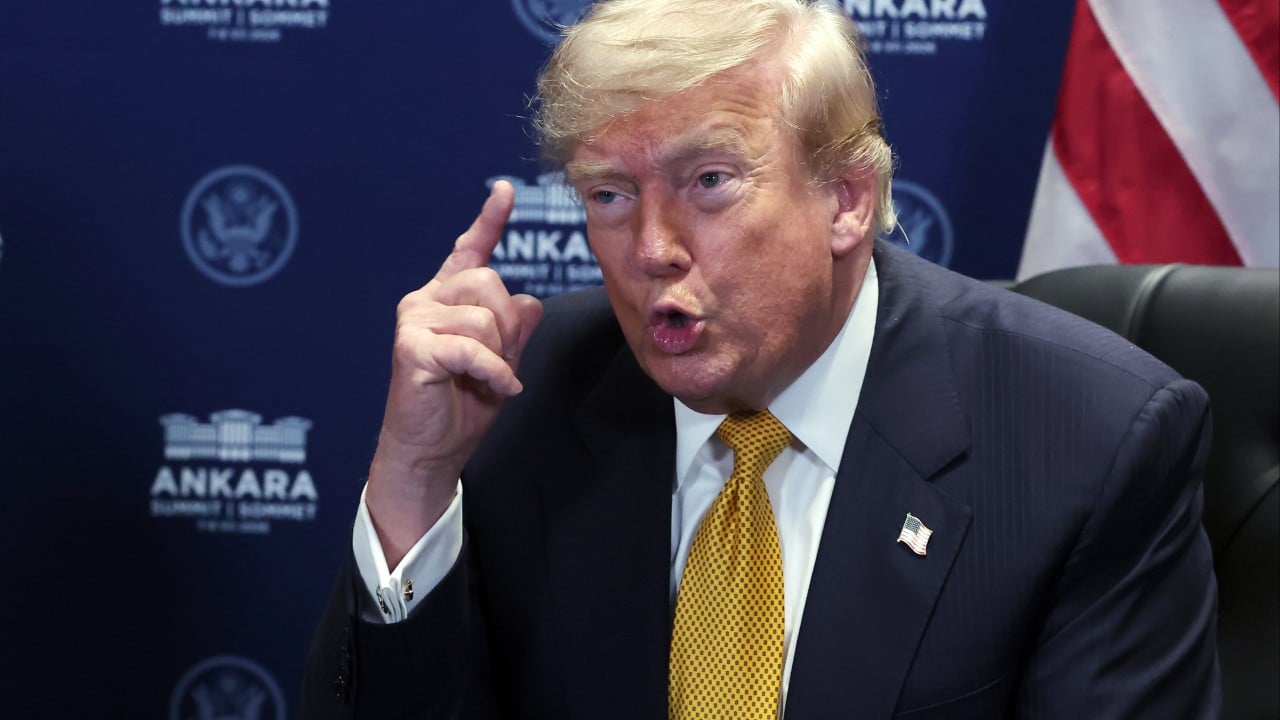
The collapse of the interim ceasefire between the United States and Iran took less than three weeks to finalize, culminating in a midnight exchange of ballistic missiles and a public declaration from President Donald Trump in Ankara that the deal is dead. For anyone watching the structural mechanics of the June 17 memorandum of understanding, this violent unraveling was entirely predictable. The agreement, brokered under Pakistani mediation, was built on an impossible contradiction. Washington believed it had bought a temporary pause to reopen the critical Strait of Hormuz, while Tehran believed it had secured a permanent lifting of oil sanctions without giving up its regional leverage.
When the illusions collided, the fallout was instantaneous. Overnight, U.S. forces struck more than 80 targets across Iran, prompting rapid retaliatory strikes against American military facilities in Bahrain and Kuwait. Global oil prices immediately surged over 5 percent. This is not a sudden diplomatic breakdown. It is the inevitable result of a flawed diplomatic framework that attempted to paper over fundamental geopolitical realities with temporary economic waivers.
The Flawed Architecture of the June 17 Accord
The fundamental weakness of the truce lay in its sequencing. Negotiators attempted to separate maritime commerce from the broader, more intractable issues of Iran's nuclear ambitions and regional proxy networks. The United States Treasury issued a general license allowing Iran to sell crude oil and petrochemical products through late August, betting that economic relief would incentivize cooperative behavior.
Tehran pocketed the economic concession but refused to accept a return to the pre-war status quo in the Strait of Hormuz. For the Iranian leadership, free transit through the strait without a permanent security guarantee was a strategic vulnerability. They immediately began asserting administrative control over the waterway, attempting to impose a new system of passage fees and forced transit routes on international shipping.
When international tankers refused to comply, the situation turned hostile. Iranian forces targeted three commercial vessels, including Saudi and Liberian-flagged tankers, within a 24-hour window. This triggered the immediate revocation of the U.S. oil export license on Tuesday and set the stage for the subsequent military escalation.
The Failure of the Dual Track Strategy
Washington's strategy relied on a dual-track approach of economic inducement mixed with the threat of overwhelming military force. This approach failed because it underestimated the internal political dynamics in Tehran following the assassination of the Supreme Leader in late February. The current caretaker leadership, operating under heavy pressure from hardline factions within the Islamic Revolutionary Guard Corps, cannot afford to look weak.
To the IRGC, the ceasefire was an opportunity to restock, reposition coastal radar networks, and deploy new anti-ship missile systems along the southern coast. The weeklong mass funeral processions for the late leader provided the perfect political cover for these deployments. While American negotiators waited in Qatar for formal talks to resume, Iranian military commanders were actively preparing for the next phase of maritime confrontation.
The American assumption that economic sanctions relief would automatically translate into diplomatic compliance was a miscalculation. For Tehran, the control of the Strait of Hormuz is an existential bargaining chip. They demonstrated that they would rather lose their oil export licenses entirely than surrender their ability to choke global energy markets at will.
Strategic Realities of the Maritime War
The overnight military strikes highlight the sheer scale of the ongoing conflict. U.S. Central Command targeted air defense networks, command facilities, and more than 60 small boats used by the IRGC to harass commercial shipping. The tactical objective was clear. Washington sought to systematically degrade Iran’s coastal interdiction capabilities in a single, high-intensity wave.
Yet, the Iranian response proved that total degradation is nearly impossible without a prolonged campaign. The IRGC counter-attacked by firing salvos of drones and ballistic missiles at U.S. installations across the Gulf, forcing bases in Bahrain and Kuwait into lockdown. This rapid retaliation shows that Iran’s command and control structures remained largely intact despite the scale of the American bombardment.
European allies are now left to manage the diplomatic fallout of a conflict they largely sought to avoid. At the NATO summit in Turkey, European leaders expressed private exhaustion with Washington’s shifting tactical goals. While the United Kingdom eventually permitted limited use of its airbases for the initial campaign, other major European powers have refused to participate directly in offensive operations against Iranian territory, fearing a permanent disruption to regional energy supplies.
Beijing and the Shifting Balance of Power
As Washington and Tehran return to active hostilities, China’s strategic positioning becomes the most critical variable in the region. Beijing has consistently called for de-escalation, but its actions behind the scenes tell a different story. China remains the primary destination for covert Iranian oil shipments, utilizing a vast network of shadow tankers that operate outside the conventional banking system.
The revocation of the official U.S. sanctions waiver will likely drive Iranian crude deeper into the underground market, increasing Beijing’s leverage over Tehran. By acting as Iran’s economic lifeline, China ensures that the United States remains bogged down in a costly, resource-intensive maritime conflict in the Middle East. This strategic distraction limits Washington's ability to project power effectively in the Indo-Pacific region.
The collapse of the June 17 agreement leaves the international community without a viable diplomatic off-ramp. President Trump’s assertion that further engagement is a waste of time suggests that the administration is preparing for a sustained period of containment and military confrontation. With the 60-day negotiation window shattered, the conflict now enters a highly unpredictable phase where neither side possesses a clear path to victory. Shipping companies must now plan for a prolonged closure of the Strait of Hormuz, forcing global trade networks to adapt to a permanently militarized energy corridor.