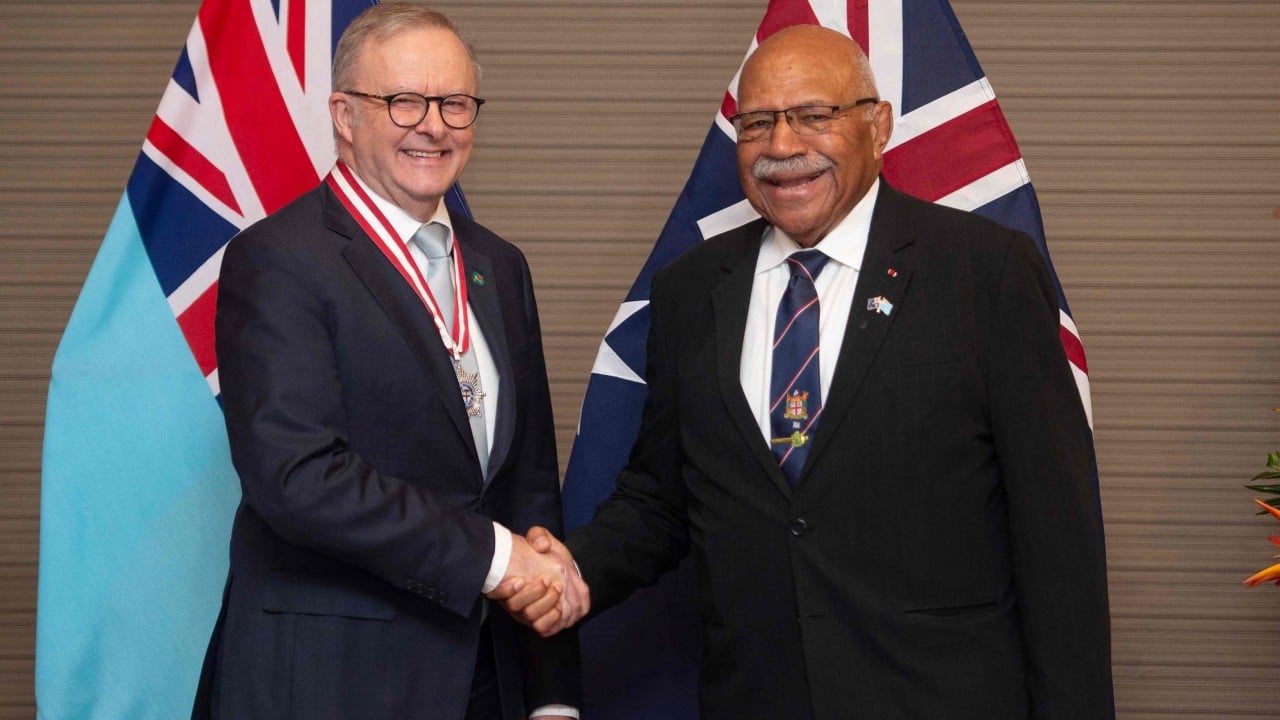
On July 6, 2026, Australia and Fiji signed the Ocean of Peace Alliance, a historic mutual defense treaty binding Canberra and Suva to come to each other’s aid if attacked. Days later, New Zealand Prime Minister Christopher Luxon declared that Wellington’s entry into this new pact was the logical next step. It looks like a masterclass in regional diplomacy, but the sudden rush to build a hard-security perimeter across the South Pacific reveals a deeper panic.
Western powers are rapidly losing their grip on Pacific diplomacy, and this new treaty is a desperate attempt to draw a line in the sand before Beijing crosses it.
For Fiji, this is the first formal mutual defense treaty in its history. For Australia, it is the fourth. Behind the soaring rhetoric of "Pacific unity" and "regional ownership" lies a colder, more urgent reality. Hours after the treaty was signed, China test-fired a nuclear-capable ballistic missile directly into the Pacific Ocean. The message from Beijing was unmistakable, and it exposed the central vulnerability of this new security axis. In attempting to lock down the South Pacific with hard-power treaties, Canberra and Wellington risk turning their backyard into a militarized theater of great-power conflict, ignoring what Pacific island nations actually want.
Why the Ocean of Peace is Built on Shaky Ground
The strategic logic of the alliance is simple on paper. Australia is committing $1 billion over the next decade to sweeten the deal with Fiji, seeking to secure its position as the region's preferred security partner. By inviting New Zealand to join, Canberra is trying to build a united front of countries with standing militaries, which would also include Papua New Guinea and Tonga.
But treaties do not buy genuine loyalty.
The core assumption driving this pact is that Pacific nations view their security through the same hard-power lens as Western defense analysts. They do not. For decades, Pacific leaders have maintained that their primary, existential security threat is not a foreign navy, but rising sea levels.
By forcing a hard-military framework onto countries like Fiji, Australia and New Zealand are imposing a template designed in Canberra and Wellington. It is an approach that prioritizes geopolitical competition over human security, and it has already sparked quiet resentment among smaller Pacific states that feel squeezed between competing superpowers.
The Problem with Buying Alliances
Australia’s statecraft in the Pacific has long relied on its checkbook. This pact is no different, leaning heavily on financial commitments to secure strategic alignment.
| Partner Nation | Defence Treaty Status | Major Financial Commitment | Primary Security Concern |
|---|---|---|---|
| Australia | Treaty Author | $1 Billion over 10 years | Chinese regional expansion |
| Fiji | Signed July 2026 | Economic and security aid | Economic resilience, climate |
| New Zealand | Under Negotiation | Joint operations, Pacific Reset | Regional stability, maritime patrol |
This transactional diplomacy has a major flaw. It assumes that financial aid translates directly into long-term geopolitical loyalty. Fiji has spent the last decade balancing its relationships, welcoming Chinese infrastructure investments while maintaining defense ties with traditional partners. Prime Minister Sitiveni Rabuka may sign treaties with Canberra, but his government cannot afford to alienate Beijing. If the Ocean of Peace Alliance forces Fiji to choose between Chinese economic cooperation and Australian military integration, the pact will face severe strain.
Wellington's Strategic Identity Crisis
New Zealand’s eager pursuit of this alliance is a major shift in its foreign policy. Traditionally, Wellington has positioned itself as the gentler, more empathetic neighbor in the Pacific, preferring development aid and climate diplomacy to Canberra's heavier military footprint.
That distinction is rapidly evaporating.
Wellington's defense establishment has quietly warned that Chinese naval activities and missile tests in the Pacific are no longer temporary disruptions, but a permanent feature of the regional environment. Faced with this reality, the Luxon government is abandoning its traditional caution. But joining a hard-defense treaty compromises New Zealand's unique diplomatic brand.
Wellington’s greatest asset in the Pacific has always been its role as a trusted, non-threatening partner. Aligning itself with a militarized alliance risks alienating the non-aligned Pacific nations that view Australia's security ambitions with skepticism. It traded its independent foreign policy for a seat at a table that might not even be serving the right menu.
The Threat of a Militarized South Pacific
The most dangerous consequence of this treaty is the inevitable reaction from Beijing. China has already shown that it will not be deterred by paper alliances, as demonstrated by its submarine-launched missile test on the same day the pact was signed.
Rather than deterring Chinese influence, the Ocean of Peace Alliance is likely to accelerate it.
If Beijing feels excluded by a formal security axis running from Canberra through Wellington to Suva, its logical countermove is to double down on its own security initiatives. This could mean pushing harder for its own police agreements with nations like the Solomon Islands or Kiribati, effectively dividing the Pacific into competing military blocs.
The Pacific was supposed to be an ocean of peace. By rushing to formalize a military alliance, Australia, New Zealand, and Fiji may have just fired the starting gun on a new era of regional militarization.