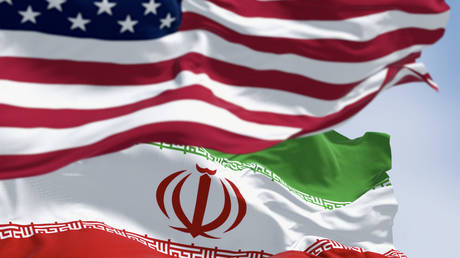
The global diplomatic press core is currently high on optimism. Headlines are treating the newly leaked "peace deal roadmap" between Washington and Tehran as a historic breakthrough, a generational shift in Middle Eastern dynamics. They are mapping out timelines, debating enrichment percentages, and predicting an era of regional stability.
They are entirely missing the point. Also making waves recently: The Order of the White Double Cross and the Art of Quiet Diplomacy.
This roadmap is not a prelude to peace. It is a highly calculated, transactional stall tactic engineered by two domestic administrations desperate to buy time. Peace requires a alignment of long-term strategic interests. This document is a temporary truce born of mutual weakness, designed to satisfy short-term domestic political cycles rather than dismantle decades of structural hostility.
To view this as a permanent pivot toward stability is to fundamentally misunderstand how modern geopolitical leverage operates. Further information into this topic are covered by BBC News.
The Fallacy of the Paper Breakthrough
Mainstream analysis treats international agreements as linear progressions. The assumption goes: nations talk, they draft a text, they sign it, and the world changes. Having spent years tracking sanctions evasion networks and back-channel diplomatic maneuvers across the Persian Gulf, I can tell you that the reality on the ground is brutally disconnected from the signing ceremonies in Geneva or Vienna.
The current enthusiasm rests on three deeply flawed assumptions that dominate the media consensus:
- Assumption 1: Sanctions relief will automatically lead to economic integration and behavioral modification from Tehran.
- Assumption 2: A framework targeting nuclear enrichment addresses the actual drivers of regional conflict.
- Assumption 3: The executive branches in both Washington and Tehran possess the absolute domestic political capital to execute a multi-year deal.
Let us dismantle these one by one.
1. The Sanctions Relief Paradox
The mainstream narrative assumes that lifting sanctions is a simple toggle switch. Washington flips the switch, compliance departments stand down, and billions of dollars flow back into the Iranian banking sector, incentivizing moderation.
It does not work that way.
International corporations do not make multi-billion-dollar infrastructure investments based on a political roadmap that can be torn up by a subsequent administration every four or eight years. The ghost of the 2015 Joint Comprehensive Plan of Action (JCPOA) looms over every compliance board in Frankfurt, Tokyo, and London. Legal departments know that secondary sanctions can be re-imposed overnight via executive order.
The Compliance Reality: Sovereign risk cannot be papered over by diplomatic communiqués. Compliance officers look at structural risk, not political promises.
Furthermore, the mechanics of modern Iranian state finance have adapted over two decades of isolation. Tehran has built an incredibly sophisticated, parallel economic ecosystem—often referred to as the "shadow economy." This network relies on front companies, dark-fleet oil tankers, and non-Western financial intermediaries across Asia and the UAE. This system is highly profitable for the entrenched security elites inside Iran. A formal re-entry into the transparent, SWIFT-monitored international financial system actually threatens the monopolistic control these internal factions hold over the domestic economy. They do not want total transparency; they want controlled, off-the-books liquidity.
2. The Enrichment Obfuscation
The competitor press is obsessing over the technicalities of centrifuge counts and uranium enrichment purity thresholds. They present these metrics as the definitive scorecard of peace.
This is a deliberate misdirection.
The nuclear program is a symptom of Iran's broader strategic posture, not the cause. Tehran's primary geopolitical doctrine relies on asymmetric forward defense—specifically its network of regional proxies stretching across Lebanon, Syria, Iraq, and Yemen. A roadmap that freezes enrichment at 20% or 60% while leaving the regional proxy network completely untouched changes nothing about the security architecture of the Middle East.
Traditional Analysis:   Nuclear Enrichment Control ➔ Regional Peace
Realistic Framework:   Asymmetric Proxies + Missile Proliferation = Real Leverage
For Israel, the Gulf states, and international shipping lanes through the Bab al-Mandab, a "denuclearized" Iran that continues to proliferate precision-guided munitions and attack drones to non-state actors is just as dangerous as a nuclear-capable one. The roadmap focuses on the nuclear element because it is quantifiable and easily packageable for Western television audiences. It completely ignores the unquantifiable, messy realities of asymmetric warfare that actually dictate daily risk profiles in the region.
3. The Illusion of Executive Control
The third structural flaw in the current media coverage is the belief that a roadmap signed by diplomats binds the states they represent.
In Washington, any deal that is not ratified as a formal treaty by the Senate is nothing more than a temporary gentleman's agreement. The legislative reality is that the opposition party can, and likely will, weaponize any concessions to Tehran during the next electoral cycle. Political risk is the defining currency of modern American foreign policy; no administration can guarantee the behavior of its successor.
In Tehran, power remains deeply bifurcated. The presidency and the diplomatic corps handle the external-facing theater of negotiations, but the deep state—the supreme leadership apparatus and the Islamic Revolutionary Guard Corps (IRGC)—retains ultimate veto power over strategic industries and security policy. The IRGC's institutional survival, economic dominance, and ideological legitimacy are fundamentally predicated on a state of managed confrontation with the West. A complete normalization of relations would strip them of their primary justification for domestic control.
The Strategic Reality of "Managed Friction"
What are we actually looking at then? If this is not a genuine peace roadmap, what is the true nature of this diplomatic document?
It is an exercise in Managed Friction.
Both leaderships are currently facing acute internal crises that make an active escalation counterproductive to their immediate survival.
Washington needs to stabilize global energy markets, prevent a wider regional war that would drag American forces back into a ground conflict, and keep its strategic focus trained on Eastern Europe and the Indo-Pacific. A roadmap allows the White House to signal diplomatic engagement and reduce the risk of a miscalculation in the Persian Gulf during an election season.
Tehran is dealing with severe internal economic mismanagement, domestic dissent, and a delicate transition of supreme leadership power. It needs immediate, limited financial breathing room—specifically access to frozen assets held in foreign banks—to stabilize its currency and quiet domestic discontent.
This roadmap is a transactional swap: tactical nuclear restraint in exchange for partial, informal sanctions relief. It is a lease on time, not a purchase of peace.
How Market Participants Actually Position for This
If you want to understand the true trajectory of this agreement, ignore the political pundits and watch the global shipping, energy, and insurance markets. They are the ultimate arbiters of geopolitical truth because they have real capital at risk.
When a genuine peace agreement occurs, maritime war risk insurance premiums drop, long-term capital expenditure in oil infrastructure surges, and compliance frameworks adapt. Right now, none of that is happening.
Instead, sophisticated operators are engaging in a strategy of cynical optimization:
| Market Vector | Mainstream Expectation | The Contrarian Play |
|---|---|---|
| Energy CapEx | Heavy investment in standard Iranian infrastructure. | Continued reliance on dark-fleet transit and regional transshipment hubs. |
| Maritime Insurance | Immediate normalization of Persian Gulf shipping rates. | Maintenance of high war-risk premiums due to unaddressed drone and mine threats. |
| Corporate Entry | Western multinationals rushing into the Iranian consumer market. | Zero engagement from publicly traded firms; limited trade handled via obscure private entities. |
The smart money understands that the underlying risk profile hasn't shifted an inch. The structural friction remains fully intact; it has simply been calibrated to a lower, less explosive frequency for the time being.
Stop Asking if the Deal Will "Work"
The standard media question is completely broken. Journalists love to ask: Will this roadmap successfully bring peace to the Middle East?
The question itself is flawed because it assumes the architects of the document designed it for that purpose. It is like asking if a band-aid will successfully heal a shattered femur.
The correct question to ask is: Who benefits from this specific period of delayed escalation?
The answer is the political elites in both capitals who get to claim a tactical foreign policy win without having to make the hard, politically fatal structural compromises required for actual normalization. Washington gets to pretend it has contained the nuclear threat without firing a shot. Tehran gets to inject billions of dollars into its state coffers without surrendering its regional influence or its long-term nuclear breakout options.
This is the great deception of modern diplomacy. It trades long-term strategic clarity for short-term tactical quiet.
Do not rewrite your risk models. Do not reallocate your capital based on the assumption that a new era of regional cooperation has dawned. The fundamental drivers of the Washington-Tehran rivalry—ideological incompatibility, regional dominance struggles, and deep domestic political institutionalization of animosity—cannot be solved by a multi-page framework drafted by tired diplomats in hotel conference rooms.
The roadmap is an intermission, not the end of the play. The actors will return to their battle lines the moment the immediate domestic pressures subside. Treat this agreement exactly for what it is: a cynical, temporary operational pause masquerading as historical statesmanship.