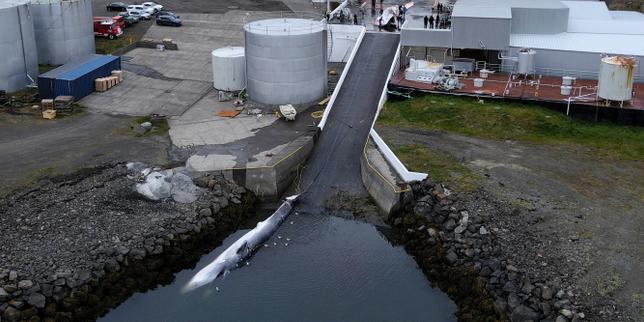
The moral panic over Icelandic whaling is back in the headlines, and the predictable chorus of outrage is missing the point entirely. Every time Reykjavik renews its coastal permits, international animal welfare groups flood the airwaves with apocalyptic warnings about endangered species and brutal slaughter. They frame the issue as a simple binary choice between enlightened modernity and blood-soaked barbarism.
That narrative is clean, emotionally satisfying, and fundamentally dishonest.
I have spent years looking at resource management across the North Atlantic, and the discourse surrounding Icelandic whaling relies on a profound double standard. The debate is rarely about the actual biological status of the minke and fin whale populations. Instead, it serves as a proxy war for cultural projection, corporate PR, and political grandstanding by nations with far bloodier industrial food systems of their own.
The Biological Reality Versus The Emotional Appeal
Let us start with the numbers that the activists conveniently leave out of their press releases. The primary target of commercial whaling in Iceland is the fin whale, followed by occasional minke whales. Under the scientific management framework overseen by the Marine and Freshwater Research Institute in Iceland, quotas are set using strict stock assessments.
Fin whales in the North Atlantic are not on the brink of extinction. The International Union for Conservation of Nature classifies the fin whale globally as Vulnerable, but regional sub-populations, particularly around Iceland and the Irminger Sea, have rebounded significantly since the moratorium decades ago. Current population estimates place the North Atlantic stock in a healthy range, numbering in the tens of thousands.
Yet, opponents treat every harpoon as a death knell for the species. This conflates localized commercial harvesting with systemic ecological collapse. If we applied the same absolute moral standard to terrestrial livestock production that activists demand for cetaceans, every modern slaughterhouse on earth would be shut down by sunset.
The Corporate Monopoly And The Myth Of Market Demand
The lazy consensus from the anti-whaling lobby suggests that Icelanders are stubbornly clinging to an ancient tradition out of spite. The reality is far more mundane and much more damning: almost nobody in Iceland actually eats whale meat.
For years, the vast majority of fin whale meat harvested by Hvalur hf, the sole remaining whaling company in Iceland, was not consumed locally. It was exported to a single market: Japan. Domestic consumption is practically negligible, restricted mostly to curious tourists trying it on a dare in a few Reykjavik restaurants.
This exposes the internal contradiction of the industry. It survives not because of deep cultural roots or domestic food security, but because of a solitary export channel and the political inertia of a company with entrenched historical quotas. When the Minister of Food, Agriculture and Fisheries temporarily suspends licenses over animal welfare concerns during the hunt, the battle is fought over administrative technicalities rather than a massive cultural awakening.
Icelandic society is largely ambivalent about the practice. The younger generations care far more about tech startups, renewable energy, and tourism revenue than they do about maritime mammal processing. The continuation of the hunt persists because bureaucratic inertia is difficult to break, not because the nation rises and falls on whale blubber.
The Hypocrisy Of Imported Outrage
Here is where the contrarian truth cuts deepest. The nations and NGOs leading the international boycott campaigns against Iceland are operating from a place of staggering hypocrisy.
Consider the countries most vocal in their condemnation. Many of them import massive quantities of beef, pork, and poultry from factory farms where animals endure systemic confinement, routine antibiotic over-use, and industrialized slaughter methods that optimize efficiency over sentience. Others look the other way on destructive industrial fishing practices, bottom trawling, and bycatch that decimates marine biodiversity on a planetary scale.
Targeting whaling is easy. Whales are charismatic megafauna with high intelligence and emotional resonance. Launching a campaign to save a majestic fin whale draws millions of social media shares, corporate donations, and righteous indignation. Trying to reform global supply chains for battery-farmed chickens or industrial aquaculture is boring, messy, and hard.
When a foreign government or an international celebrity lectures Iceland on ethics while dining on imported industrial meat, it is not moral leadership. It is cultural imperialism. It is a demand that a small island nation surrender its sovereign right to manage its exclusive economic zone according to science, simply because urbanites in London, New York, and Paris find the concept distasteful.
The Real Solution Nobody Wants To Discuss
If the international community actually cared about ending Icelandic whaling, the current strategy of shouting from the sidelines is the worst possible approach. Aggressive boycotts and moralizing rhetoric trigger a nationalist defensive crouch in Reykjavik, where politicians refuse to look weak in the face of foreign pressure.
Market forces are already solving the problem anyway. Hvalur hf faces massive logistical hurdles, strict regulatory oversight, and shrinking profit margins. The Japanese market for whale meat has been in structural decline for decades as younger demographics shift toward alternative proteins. The economic viability of the hunt is evaporating on its own, independent of what any activist organization claims credit for.
The debate over whaling in Iceland is a manufactured culture war masking a dying, economically insignificant industry. Stop treating it as an epic struggle for the soul of the planet. It is simply a sunset business kept alive by inertia, facing off against an army of digital moralists who refuse to look in the mirror.
Let the market finish what it started, and stop pretending that a few harpoons in the North Atlantic are the greatest threat to global biodiversity while industrial trawlers scour the ocean floor clean.