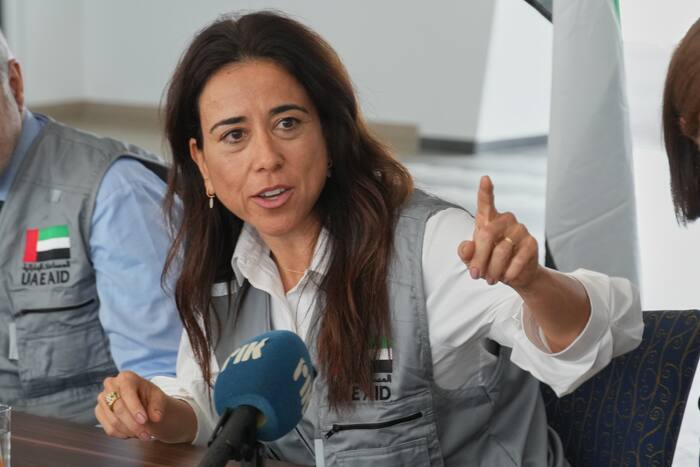
The media narrative surrounding the United Arab Emirates’ bid for the United Nations Secretary-General post is a masterclass in superficial geopolitics. The prevailing commentary focuses almost entirely on selective moral outrage: how can a candidate from a nation accused of fueling proxy conflict in Sudan lay claim to the highest diplomatic office on Earth?
It is a comfortable, lazy consensus. It allows Western foreign policy observers to play moral arbiter while ignoring the structural hypocrisy that has rendered the UN Executive Office ineffective for three decades.
The real controversy is not that a Gulf diplomat is running for Secretary-General while regional geopolitical rivalries play out in East Africa. The real controversy is that mainstream foreign policy commentary still pretends the United Nations leadership is chosen based on pristine humanitarian neutrality rather than cold, transactional power dynamics.
If you want to understand why multi-lateral diplomacy is broken, stop staring at moralized headlines and look at how the geopolitical machine actually operates.
The Myth of the Neutral UN Secretary-General
Every UN leadership cycle triggers the same performance. Commentators demand a candidate with squeaky-clean humanitarian credentials, completely ignoring how the UN Security Council selection process actually works.
The Secretary-General is not selected by a global tribunal of ethicists. The position is negotiated by the five permanent members of the Security Council—the P5—each holding a veto. A candidate does not win by being morally unassailable; a candidate wins by being tolerable to Washington, Beijing, Moscow, London, and Paris simultaneously.
The idea that past UN chiefs were untainted by state interests or military proxies is historic amnesia. Dag Hammarskjöld navigated the brutal proxy dynamics of the Cold War Congo. Boutros Boutros-Ghali’s tenure was defined by the geopolitical machinations of major powers during the Balkan disintegration and the Rwandan genocide. Ban Ki-moon and António Guterres have repeatedly managed state-backed proxy tensions while navigating P5 deadlocks.
Demanding an candidate who operates entirely outside realpolitik is not just naïve—it fundamentally misinterprets the job description. The UN Secretary-General is not the world's chief moral officer. The Secretary-General is a chief diplomatic broker whose primary utility is maintaining lines of communication between heavily armed, competing empires.
Why Proxy Warfare Outrage Misses the Larger Structural Mechanics
The conventional argument against the UAE’s candidacy centers on allegations regarding support for the Rapid Support Forces (RSF) in Sudan’s devastating civil war. critics argue that a state involved in arming regional militias cannot credibly champion international peace operations.
This focus overlooks a crucial reality: modern conflict is defined by complex, multi-layered proxy networks that involve nearly every major geopolitical player on the board.
Consider the landscape of contemporary regional power projection:
- Western powers routinely utilize non-state actors, private security firms, and targeted security assistance programs while holding permanent seats on the UN Security Council.
- Regional powers across the Middle East, North Africa, and Eastern Europe operate parallel intelligence networks and logistical corridors to secure energy transit routes, ports, and territorial influence.
- African security architecture is continually fragmented by competing interventions from European, Middle Eastern, and Asian powers seeking strategic depth in the Red Sea corridor.
Focusing exclusively on one Gulf nation's regional maneuvering treats a systemic feature of global power projection as an isolated anomaly. Sudan's civil war is not a localized tragedy driven by a single external actor; it is the catastrophic result of structural governance failure in Khartoum, dynamic regional resource competition, and decades of fragmented international policy.
Scrutinizing a diplomatic candidate's national foreign policy is legitimate. But pretending that moral purism is the primary metric for global leadership ignores how international consensus is actually forged.
The Shift from Traditional Western Hegemony to Transactional Multilateralism
The Western diplomatic establishment is uneasy not because of humanitarian concerns, but because the global balance of influence has shifted.
For decades, middle powers were expected to follow the foreign policy scripts written in Geneva, Washington, or London. Today, middle powers—specifically energy-rich Gulf states—are driving global logistics, mediation, infrastructure financing, and regional security architecture on their own terms.
Whether mediating prisoner exchanges between Russia and Ukraine, funding critical infrastructure across Sub-Saharan Africa, or hosting major international climate summits, non-Western middle powers are building global clout through transactional leverage rather than ideological alignment.
This model of diplomacy prioritizes concrete deals, infrastructure corridors, and economic entanglement over normative rhetoric.
When a middle-power diplomat targets the UN helm, traditional diplomatic circles react with discomfort. The criticism framing the bid as unacceptable is less about moral high ground and more about anxiety over an increasingly multipolar world order where Western consensus no longer holds an exclusive monopoly on global leadership.
The Real Breakdown: The UN's Structural Ineffectiveness
Critics who claim that a Gulf candidate would "damage the credibility" of the UN are ignoring a fundamental truth: the UN’s credibility is already compromised, not because of who leads it, but because its governance framework is obsolete.
The UN Security Council reflects the power distribution of 1945, not 2026. The General Assembly holds no enforcement mechanism. The Secretary-General possesses immense administrative responsibility but virtually zero sovereign authority to enforce peace without P5 consensus.
Focusing on the personal record or state background of an individual candidate is a convenient distraction from these core structural failures:
- The Veto Bottleneck: No Secretary-General, regardless of moral standing, can stop a conflict if one P5 member benefits from its continuation.
- Selective Intervention: The international community enforces peace operations aggressively where strategic interests align, while ignoring catastrophic conflicts where no major power has skin in the game.
- Funding Dependency: UN agencies rely heavily on volatile voluntary contributions from wealthy donor nations, making global humanitarian operations subject to domestic political shifts in donor capitals.
Fixing these issues requires structural reform of the Security Council and a complete redesign of peace enforcement mandates. Debate over individual diplomatic credentials acts as a smoke screen that avoids addressing the institutional sclerosis at the heart of the organization.
What Real Leadership Requires in a Multipolar World
If the international community wants an effective United Nations in an era of intense multipolar competition, it must change the criteria for global diplomatic leadership.
We do not need symbolic leaders who excel at issuing press releases expressing "deep concern." We need pragmatic brokers capable of negotiating directly with aggressive state actors, non-state armed groups, and competing regional powers.
A useful UN chief must be able to leverage real economic, strategic, and political capital to bring warring parties to the table. In a world defined by transactional foreign policy, the ability to negotiate hard deals across complex regional networks is far more useful than an unblemished record of conventional diplomatic grandstanding.
The debate over candidate qualifications should not be a contest of selective outrage. It should be a hard-nosed assessment of whether any leader can force the UN machinery to adapt to a world where power is decentralized, regional rivalries are escalating, and moral declarations no longer deter conflict.
Stop evaluating international diplomatic bids through the lens of performance ethics. Start evaluating them through the cold reality of power, leverage, and structural reform. Until the international community confronts the actual mechanics of global governance, changing the face at the top of the UN will change nothing on the ground.


