The supply lines are snapping. If you think the current conflict in West Asia is just a series of tactical strikes and geopolitical posturing, you're missing the grimmest part of the story. While the world watches missile counts, millions of people are watching their medicine cabinets and pantries go empty. Aid groups are now sounding an alarm that sounds more like a scream. They aren’t just worried about "instability." They’re seeing the systematic collapse of the basic logistics required to keep human beings alive.
The reality on the ground is that food and medicine have become casualties of war. We often talk about "collateral damage" as if it only applies to buildings or bystanders. But the real damage is the invisible wall that has been built around entire populations. Aid groups like Médecins Sans Frontières (MSF) and the World Food Programme (WFP) are reporting that the movement of essential goods is effectively paralyzed.
Why the Aid Bottleneck Is Killing People Right Now
It’s not just that there’s a war. It’s how the war is being fought. In West Asia, the geography of the conflict zones means that almost every calorie and every vial of insulin has to pass through a gauntlet of checkpoints, closed borders, and "deconfliction" zones that don't actually feel safe.
You’ve got to understand the scale of the failure here. When a port closes or a road is bombed, it doesn't just delay a shipment. It rots the food. It spoils the temperature-sensitive vaccines. Aid workers aren't just fighting bureaucracy; they're fighting a clock that runs on human lives. Organizations like the International Rescue Committee (IRC) have pointed out that even when supplies are "allowed" in, the process is so bogged down by security screenings and restricted routes that the volume is a fraction of what’s needed.
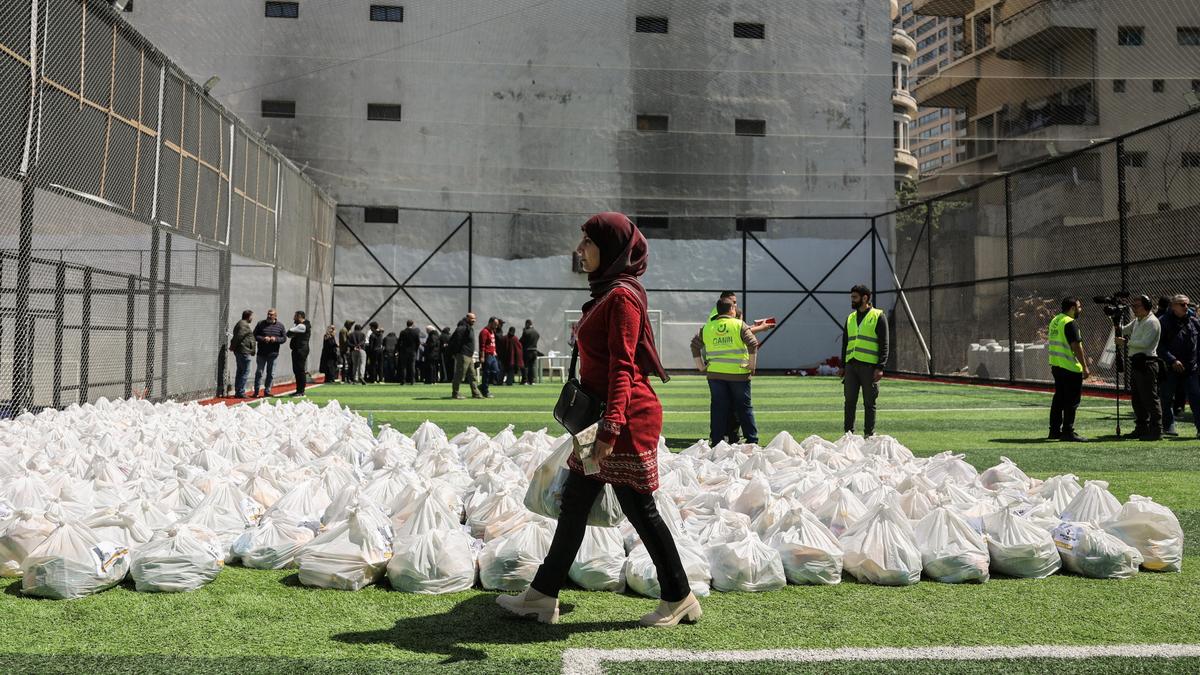
The numbers are staggering. We aren't talking about a few thousand people missing a meal. We're talking about millions. In Gaza and parts of Lebanon, the malnutrition rates among children are skyrocketing because the calories simply aren't there. The market shelves are bare. When food does appear, the prices are so inflated that a loaf of bread costs more than a day's wage for most. This is how a society hollows out.
The Medicine Gap Is a Silent Killer
If you run out of flour, you're hungry. If you run out of insulin or dialysis supplies, you're dead. That’s the brutal math. Hospitals across the region are reporting that they’ve run out of basic anesthetics. Can you imagine a surgeon having to perform an amputation without proper numbing agents? That’s happening. It’s not a hypothetical "risk." It’s the daily reality in makeshift clinics.
The World Health Organization (WHO) has been incredibly vocal about the fact that the health system isn't just under strain—it's being dismantled. Chronic diseases are becoming death sentences. If you have cancer or heart disease in these conflict zones, your chance of survival drops toward zero because the supply chain for specialized meds has evaporated.
The logistical nightmare involves more than just "closed roads."
- Dual-use restrictions: This is a big one. Items like chlorine for water purification or certain surgical tools are often blocked because they could be used for military purposes. This leaves entire cities without clean water, leading to cholera and other waterborne diseases.
- Fuel shortages: Trucks need diesel. Hospitals need generators. When the fuel stops, everything else stops.
- Targeting of infrastructure: Even if you have the medicine, you need a warehouse to store it. Many of these hubs have been leveled or are in areas too dangerous to reach.
This Is Not Just A Regional Problem
What happens in West Asia doesn't stay there. The disruption of these supply chains has a massive ripple effect on global humanitarian funding and regional stability. When people can't eat and can't get medicine, they move. We’re seeing a displacement crisis that is putting immense pressure on neighboring countries that were already struggling with their own economic issues.
The Red Cross and Red Crescent have noted that the "shrinking humanitarian space" is the biggest hurdle. Basically, the areas where aid workers can operate safely are disappearing. It’s getting harder to distinguish between a combat zone and a residential neighborhood. When the lines blur, the delivery of aid becomes a suicide mission for the drivers and volunteers.
I’ve looked at the reports from the ground. They’re horrifying. They describe mothers watering down baby formula or using contaminated water because there's no other choice. They describe doctors using dish soap to clean wounds because medical-grade antiseptics are stuck at a border crossing 50 miles away.
The Myth of Sufficient Aid
Don’t let the occasional "humanitarian pause" or the sight of a few trucks on the news fool you. It’s a drop in the bucket. The minimum caloric requirement for the population in these zones is vastly higher than what’s being delivered. People think of aid as a "bonus," but in West Asia right now, it’s the only thing keeping the heart of the region beating.
The "wait-and-see" approach from the international community is failing. Every day that passes without a secured, permanent humanitarian corridor is a day where more people die from preventable causes than from actual bombs. We’re witnessing a man-made famine and a man-made medical collapse.
What Actually Needs To Happen
We need to stop pretending that "working on it" is enough. If you care about the human cost, the focus has to shift from "how many trucks got in today" to "is the system restored."
- Pressure for genuine deconfliction: Military forces need to provide more than just "vague assurances." There needs to be a verified, transparent system where aid convoys are off-limits, period.
- Lifting dual-use bans on essentials: Life-saving medical equipment and water treatment supplies shouldn't be caught in a bureaucratic loop because of "security concerns" that have no basis in reality.
- Funding the backbone, not just the box: It’s great to donate a box of food, but without fuel for the truck and a salary for the driver, that box stays in a warehouse. Support the logistics, not just the goods.
You can help by supporting the organizations that are actually on the front lines, like MSF, the IRC, or local Red Crescent societies. They don't just need your money; they need the political pressure from your voice to demand that these borders open and stay open. The window to prevent a total generational catastrophe is closing. If we don't act now, we're not just watching a war; we're watching the slow, painful liquidation of a people's future.
Stop looking at the maps and start looking at the manifests. The trucks need to move. The medicine needs to flow. Anything else is just noise while people die in the silence of an empty pharmacy.