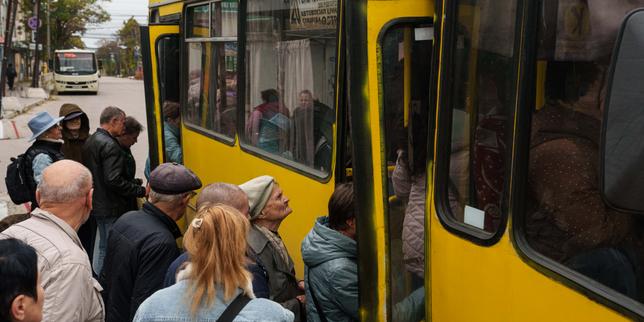
Humanitarian evacuations in active conflict zones operate as dual-use instruments where lifesaving logistics intersect with coercive statecraft and contested battlefield narratives. Reporting around late October 2026 on a planned aid and evacuation operation in occupied Oleshky—a town on the Dnipro River in Kherson Oblast where roughly 2,000 residents were slated to receive assistance and exit by November 1, 2026—highlights how observers fear military exploitation alongside Kremlin information framing. Conventional breaking coverage frequently treats such episodes as a binary clash between humanitarian relief and state spin. A sharper analytical approach separates verifiable operational mechanics from unconfirmed strategic hypotheses, maps the incentives governing both sides, and explains why curated press access does not guarantee narrative control.
Separating Verified Facts from Analytical Hypotheses
Rigorous conflict analysis starts by auditing what is established in public reporting against what remains an inference or contested claim. In late October 2026, international media coverage flagged an aid and evacuation push involving around 2,000 residents of occupied Oleshky ahead of a November 1 target date, accompanied by warnings from journalists and commentators that Russian authorities sought to stage-manage coverage and project themselves as rescuers of a city devastated during the war. Subsequent reporting in early November 2026 noted that roughly 700 evacuees moved in convoys, with approximately three-quarters heading toward Ukrainian-controlled territory and about a quarter remaining in occupied Crimea, according to Le Monde and ArmyInform citations of Ukrainian and international sources, while a DPA correspondent on a Russian-organized press trip observed more residents choosing Ukrainian-controlled territory than Russia or Russian-occupied areas. Learn more on a connected issue: this related article.
Treating every accompanying fear as settled fact weakens credibility. Specific claims—such as assertions that Moscow used the evacuation to reinforce frontline positions or replenish supplies, or accounts of street cleanup and curb painting ahead of cameras—require source verification and clear separation between eyewitness observation, secondary reporting, and strategic hypothesis.
- Established operational parameters: The operation centered on a contested, Russian-occupied locality in Kherson Oblast, involved coordinated convoy movement and humanitarian aid delivery around late October to early November 2026, and included state-managed media access alongside foreign press observation.
- Observable behavioral outcomes: Where evacuees had routing options, destination choices provided a revealing behavioral signal of civilian preference relative to official claims of "liberation".
- Educated hypotheses requiring verification: Concerns that an occupying force could extract tactical advantage from movement corridors, filter civilian interviews through coercion, or curate visual backdrops represent plausible conflict mechanisms rather than universally proven facts in every instance.
The Three Pillars of Contested Evacuations
To move past surface commentary, evaluate any evacuation from occupied territory through three structural pillars: Corridor Control, Information Curation, and Destination Signaling. Further reporting by The Washington Post delves into comparable perspectives on this issue.
Corridor Control and Tactical Friction
Whoever governs checkpoints, staging zones, and transit routes holds asymmetrical leverage over timing, pacing, and visibility. In frontline or riverine sectors such as the Dnipro theater, movement of vehicles and civilians occurs under persistent surveillance, artillery or drone risk, and strict military oversight. Even when aid reaches civilians, corridor control shapes who leaves, when convoys move, and how adjacent military activity is shielded or exposed.
The primary limitation of viewing evacuations purely as military maneuvers is over-attribution. Not every logistical pause, route adjustment, or inspection protocol reflects an offensive scheme; combat safety, mine hazards, and administrative bottlenecks also govern movement in active war zones.
Information Curation and the Gatekeeper Paradox
State authorities routinely manage media access to frame humanitarian operations as proof of benevolence and order. Journalists accompanying official press tours have highlighted structural constraints: state organizers select sites, schedule interviews, and invite disproportionate domestic or sympathetic outlets while limiting independent movement. Under such conditions, residents speaking near cameras may face explicit pressure or self-censorship.
Yet curated access creates what analysts can call the Gatekeeper Paradox. Tight stage management can backfire when observable realities—such as visible destruction, scarcity, or evacuees choosing Ukrainian-held territory over Russian-controlled destinations—penetrate reports filed by foreign correspondents embedded in the same trip. Controlling the camera frame does not automatically control the conclusions international audiences draw from the footage.
Destination Signaling Under Coercion
In occupied territories, verbal statements carry high risk, making physical routing a vital analytical indicator. When civilians board transport bound for Ukrainian-controlled territory rather than Russian territory or occupied Crimea, that choice registers a concrete preference under difficult circumstances.
Two constraints limit over-interpreting destination counts. First, route availability, family ties, property concerns, and administrative hurdles often constrain individual choice even when preferences are clear. Second, partial convoy tallies—such as roughly 700 evacuees moving out of a larger initial estimate of around 2,000 targeted residents—show that planned numbers and realized movements can diverge sharply on the ground.
Cause-and-Effect Chains Standard Coverage Misses
Surface reporting often lists risks side by side—military danger here, propaganda there—without tracing how one mechanism amplifies the other.
First, prolonged occupation degrades civilian baseline conditions, creating acute shortages of food, medicine, utilities, and physical safety. That deprivation generates genuine humanitarian urgency, which in turn gives the occupying authority an opening to claim credit when aid or exit routes finally open.
Second, tight information restrictions increase skepticism, which alters how external audiences weigh every detail. When foreign reporters note that access is curated by Russian defense and foreign ministries, viewers treat staged imagery skeptically while paying heightened attention to unscripted friction or departure patterns.
Third, visible civilian departures undermine occupation legitimacy narratives. If state media frames an operation as benevolent stabilization while a majority of departing residents choose the opposing side's territory, the contrast weakens the core "rescuer" storyline even inside coverage originating from an official press tour.
A Four-Step Verification Protocol for Analysts and Editors
Anyone evaluating future evacuation or humanitarian reporting from contested zones can apply a disciplined four-step workflow:
- Disaggregate totals from realized flows: Track announced targets separately from verified departures, noting dates, convoy counts, and destination splits rather than conflating plans with completed transfers.
- Map access provenance: Document who arranged journalist transit, which outlets attended, and where independent verification was restricted before weighing interview quotes.
- Cross-check tactical claims against corroboration: Treat claims of military resupply, frontline reinforcement, or scene staging as hypotheses until corroborated across multiple independent sources, satellite/open-source indicators, or consistent eyewitness accounts.
- Weight behavioral signals carefully: Use destination choices and local conditions as context alongside legal and humanitarian standards, while accounting for coercion and logistical constraints.
No analytical checklist eliminates the fog of war or the risk that civilians become pawns in information warfare. In contested corridors like Oleshky, the most reliable takeaway is structural: humanitarian necessity creates the opening, state control shapes the stage, and civilian choices plus independent scrutiny determine what survives the spin.
Strategic Recommendation: For newsrooms, NGOs, and intelligence analysts covering contested evacuations, pair every humanitarian update with an explicit Access and Verification Ledger—stating who controlled transit, how many people actually moved versus were projected, and which claims remain uncorroborated—so audiences judge both human need and narrative manipulation with clear-eyed precision.

