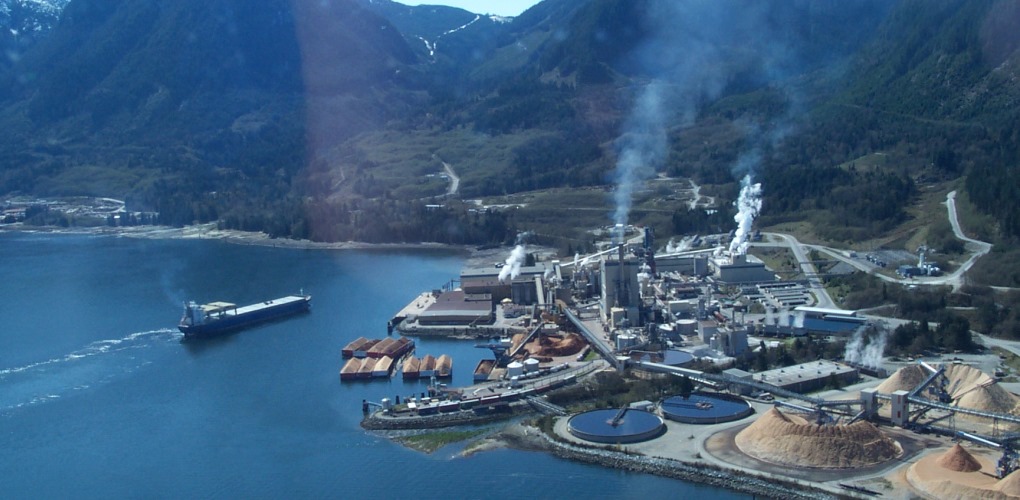
The news hit the Sunshine Coast like a freight train on August 20, 2026. Domtar announced it is indefinitely idling its Howe Sound Pulp and Paper facility in Port Mellon, along with the associated Bayview Fibre chipping plant. For about 400 workers, the reality is stark. Their last day is October 19.
This isn’t just a corporate balance sheet adjustment. It’s a 117-year legacy grinding to a halt. When a mill that has been operating since 1909 shuts down, it rips a hole in the social and economic fabric of the region. Also making headlines in this space: The Ghost Ships of Monterrey.
The hard reality of the market
Why is this happening? You’ll hear talk of "market conditions," but the math is brutal. Domtar president Luc Thériault pointed to three main killers: crumbling demand from Asia, historically low global pulp prices, and a severe shortage of affordable local fibre.
We are currently seeing pulp prices hovering near their lowest points in a century, at least when you adjust for inflation. If you’re wondering why a Canadian mill can’t compete, look toward the Southern Hemisphere. Low-cost hardwood eucalyptus pulp is eating the market share of Northern Bleached Softwood Kraft (NBSK) pulp. Technological advancements in hardwood processing mean it’s now cheaper and more versatile for many manufacturers, leaving high-quality Canadian softwood struggling to find a buyer at a price that keeps the lights on. Additional details regarding the matter are covered by Bloomberg.
It is not just about the jobs
The 400 people losing their paychecks are just the first ripple. Think about the tugboat captains, the logistics firms, the local service providers, and the shops on the Sunshine Coast that rely on the mill’s payroll. When the mill dies, the surrounding support ecosystem faces an immediate existential threat.
Labour leaders like Unifor’s Lana Payne aren’t mincing words. They’ve been ringing the alarm for years, arguing that the forestry sector in Western Canada is in a state of collapse. They see this not as an isolated incident, but as the latest symptom of a broader industrial strategy failure. Whether you agree with the union’s call for government intervention or prefer the "free market" explanation, the outcome is the same. Workers are left without a safety net, and communities are left wondering what comes next.
Indefinite idling versus permanent closure
You might see some news outlets dancing around whether this is a "permanent closure." Let’s be clear about what that term actually means in this industry.
When a company says they are "indefinitely idling" a site, they are technically keeping the equipment in a state where it could be restarted. It’s not the same as dismantling the facility or selling the scrap metal. However, don't let that give you false hope. In practice, once the power is cut and the workforce is gone, the likelihood of a restart is incredibly slim. Domtar will be watching the market, but right now, the market is screaming "no."
What happens to the workers now
If you’re caught in the middle of this, the next few weeks are going to be a blur of paperwork and uncertainty.
- Leverage support programs: The provincial government has promised to engage with the community to provide income and mental health support. Don't wait for them to find you. Reach out to local labour representatives or your HR department to get on every list for severance and transition assistance.
- Assess your local options: The Sunshine Coast economy is small. If you have specialized skills—like the tugboat crews or millwrights—you may need to look at relocation to other industrial hubs, even if that’s a tough pill to swallow.
- Document everything: With a closure date set for October 19, ensure you have your benefits, pension information, and severance terms documented in writing immediately.
The closure of the Howe Sound mill is a signal. The days of relying on traditional pulp and paper as a primary economic engine are fading, and we are witnessing the painful transition firsthand. The Sunshine Coast is changing, and the era of the big mill is reaching its final, quiet chapter.