Every time a drone crosses the southern border or a projectile arcs toward a storage facility, the wire services dust off the same tired script. The headlines scream about relentless assaults, escalating regional instability, and a kingdom perpetually under siege. It is clean, dramatic, and fundamentally wrong.
If you still believe that modern Saudi stability is hanging by a thread because of insurgent popgun tactics, you are looking at the map through a rear-view mirror. I have spent years watching analysts panic over every tactical flare-up in the Red Sea corridor while completely missing the structural shift happening in Riyadh. The consensus narrative is broken. The Kingdom is not merely absorbing blows; it is using the theater of peripheral conflict to accelerate a massive domestic economic overhaul while the world watches the wrong fire.
Let us dismantle the core myth: that these asymmetric strikes represent an existential military danger to the Saudi core.
The Arithmetic of Attrition
Look at the mechanics of defense. When a low-cost loitering munition or an unguided missile gets launched toward civilian infrastructure, the cost asymmetry is real, but the strategic outcome is heavily misunderstood. Riyadh operates some of the most advanced integrated air defense architecture on the planet. Interceptors cost millions, sure. But treating this like a war of financial attrition misses the point of what Saudi Arabia is actually optimizing for.
Wealth isn't a static pile of cash; it is capital velocity. The Kingdom’s leadership has realized that minor infrastructural interruptions are a rounding error compared to the cost of domestic stagnation. For decades, foreign observers treated security threats as a permanent veto over internal reform. If security is fragile, the logic went, you cannot open up society, you cannot float state-owned giants, and you cannot attract nervous foreign capital.
Riyadh inverted that equation.
They decided to reform while the sirens blare. By keeping the threat environment elevated, the state maintains absolute domestic political consolidation. A population focused on external defense is remarkably tolerant of rapid social restructuring and economic experimentation. The constant friction serves as political cement.
The Red Sea Red Herring
The media loves a naval crisis. Mention maritime chokepoints, disrupted trade routes, and international shipping anxieties, and the clicks roll in. But zoom out from the daily tactical reporting. Global trade has proven extraordinarily resilient to localized disruptions. Shippers reroute, insurance rates adjust, and supply chains absorb the friction.
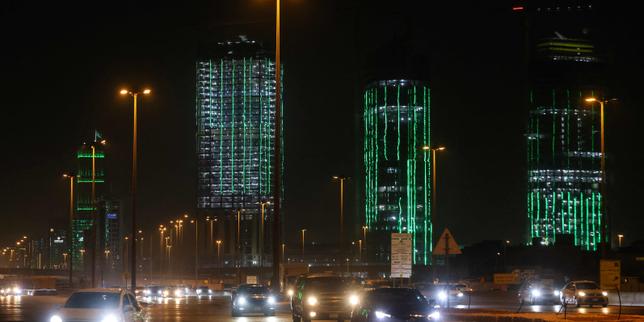
Meanwhile, the actual story is happening inland, far away from the coastline skirmishes. Look at the capital allocation. Billions are pouring into non-oil sectors—tourism, entertainment, logistics hubs, and advanced manufacturing. The projects are not slowing down because of distant border skirmishes; they are accelerating.
When you examine the foreign direct investment data, you see a clear disconnect between editorial panic and boardrooms putting skin in the game. Capital does not flow into warzones. Capital flows where the state can guarantee enforcement, execution, and massive infrastructural backing. Riyadh is providing all three, weaponizing state capitalism to force a post-hydrocarbon reality into existence whether the region likes it or not.
Dismantling the Proxy Mirage
Another favorite trope of the foreign policy commentariat is the obsession with foreign command and control. Analysts love to trace lines from regional capitals to launchpads, as if understanding the supply chain of a missile tells you anything useful about the political economy of the Arabian Peninsula.
This is a category error. Treating local actors merely as remote-controlled proxies strips them of their own domestic incentives, while treating the target state as a passive victim ignores its aggressive transformation. The reality is far more transactional. Borders in the modern Middle East are increasingly defined by economic gravity rather than old ideological lines.
When Saudi Arabia engages diplomatically or militarily, it is no longer about fighting a holding action. It is about clearing the geopolitical airspace so domestic megaprojects can hit their milestones without external interference. If a quiet channel can be opened, they take it. If a kinetic response is required, they absorb it and move on to the next fiscal quarter's targets. The old paradigm of permanent regional hostility is being replaced by cold, transactional pragmatism.
The Cost of Being Right
Of course, this approach carries heavy downsides. Militarized economies, even reforming ones, accumulate blind spots. Human capital development does not happen overnight just because you bought a consulting firm's slide deck. Centralized mega-planning has a long, brutal history of creating ghost cities and misallocated capital.
Admitting that the security threat is manageable does not mean the Kingdom faces no risks. The real vulnerabilities are internal: demographic shifts, water scarcity, bureaucratic friction, and the sheer execution risk of reshaping a society in a single generation. If the economic transition stalls, no amount of air defense systems will save the political compact.
Yet foreign observers remain obsessed with the loud noises at the periphery while the quiet revolution happens at the center. They want a simple story of perpetual crisis because it fits the historical template.
Stop reading the tactical flash reports as existential tea leaves. Watch where the capital goes, watch how fast the laws change, and watch the state ignore the noise to build an entirely new economy in the middle of the desert. The threat is real, but the panic is a distraction.