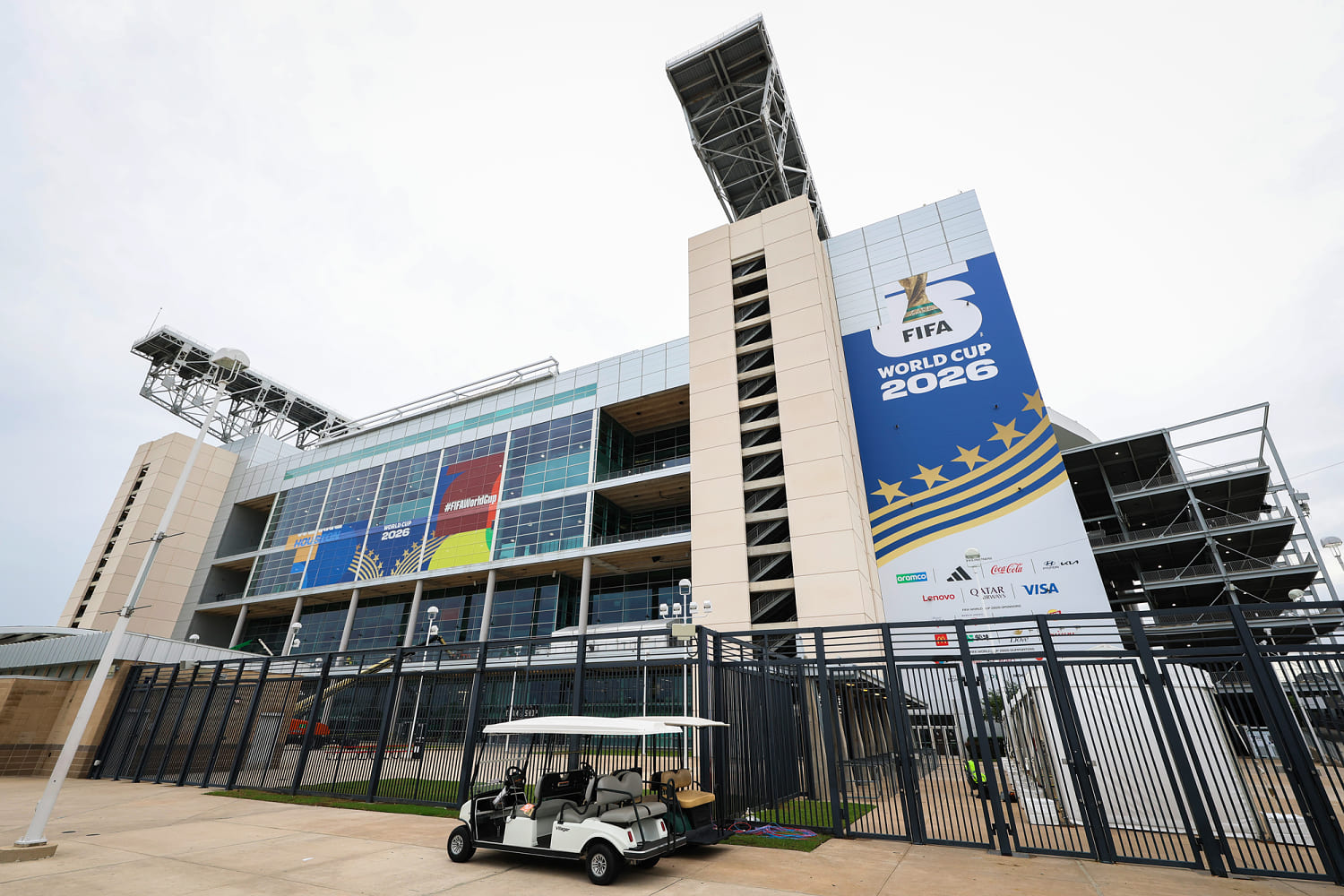
Houston is banking on a space-themed, hyper-local soccer extravaganza to capture the hearts of international travelers during the FIFA World Cup 2026. By embedding NASA exhibits, low-rider car culture, and sprawling open-air viewing grounds into East Downtown, the city is offering a distinct alternative to standard stadium seating. The primary goal is simple: capture the global spotlight and convert transient sports tourism into long-term international prestige. However, beneath the glossy promotional rollouts of space simulators and massive festival screens lies a high-stakes infrastructure experiment. Merging a sprawling, car-centric Texas metropolis with a dense, pedestrian-heavy global sporting event is a logistical challenge that flashy themes alone cannot solve.
The Friction Between Space City Spectacle and Asphalt Reality
The centerpiece of Houston's non-ticketed fan strategy is the FIFA Fan Festival, situated in East Downtown (EaDo) between Polk Street and Walker Street. On paper, it is a masterclass in civic branding. Organizers have erected an air-conditioned hub called Houston Hall to shield visitors from the brutal Texas summer heat while showcasing local mainstays like the Houston Livestock Show and Rodeo. Space Center Houston is deploying ESPHERA, an immersive aerospace experience designed to give international visitors a taste of the city's cosmic identity.
This programming acts as a direct counter-weight to the corporate uniformity that often sterilizes FIFA events. Instead of a generic fan zone sponsored by global conglomerates, visitors are greeted by customized art cars, Chicano "slabs," and regional culinary staples.
But culture cannot move bodies. The festival site sits miles away from NRG Stadium, the actual battleground for seven tournament matches featuring heavyweights like Germany, Portugal, and the Netherlands.
Connecting these two distinct hubs is the "Green Corridor," a 14-mile transit network heavily reliant on the METRORail light system, bus routes, and the Columbia Tap Trail. Houston received nearly $10 million in federal funding to patch up its public transportation infrastructure specifically for this month-long window.
For a city where public transit accounts for only a tiny fraction of daily commutes, dumping hundreds of thousands of international fans into a light-rail system creates immediate friction. European and South American fans expect robust, high-frequency, walkable transit. Houston is attempting to build that expectation on top of an urban framework historically built for the personal automobile.
The $55 Million Bet on Structural Longevity
While EaDo handles the cultural performance, the business end of the operation rests at NRG Park. The venue underwent a $55 million capital improvement initiative to prepare for the onslaught of global crowds.
The expenditures reveal where the real vulnerabilities lay. Money was not funneled into cosmetic luxury, but into vertical transportation. Elevators and escalators were completely overhauled to prevent the catastrophic bottlenecks that often plague aging American football stadiums when exposed to soccer crowds. Unlike American football games, where fans trickle in over tailgating hours and leave intermittently, international soccer matches feature massive, synchronous movements of people during the halftime whistle and immediately following the final match.
Houston Infrastructure Investment Breakdown
+-----------------------------------+-------------------+
| Project Focus                     | Funding Allocated |
+-----------------------------------+-------------------+
| NRG Stadium Upgrades              | $55 Million       |
| Public Safety Initiatives         | $65 Million       |
| Federal Transit Enhancement       | $10 Million       |
| Airbnb Columbia Tap Trail Support | $1.3 Million      |
+-----------------------------------+-------------------+
The $55 million also funded a complete replacement of the stadium's fabric roof and a total overhaul of the playing surface to meet strict FIFA natural grass specifications. This highlights a deeper tension in host cities. The temporary transformation of an American gridiron stadium into a global soccer pitch requires immense capital layout for structures that will be reverted within weeks.
The Security Paradox of Multiple Super Bowls
Local officials are openly comparing the 34-day tournament schedule to hosting "multiple Super Bowls at once." This is not hyperbole. A single Super Bowl is a discrete, single-day event with a week of buildup. The World Cup is an extended marathon of rolling operational demands.
Harris County leadership recently advanced a $65 million public safety initiative specifically to cover the security apparatus required for both the stadium matches and the daily 15,000-visitor crowd expectations at the EaDo Fan Festival.
The security puzzle is complicated by the geographic dispersion of the events. Managing a secure perimeter around a self-contained stadium is a standard operational procedure. Managing an open-air festival footprint woven into the active commercial fabric of East Downtown, while simultaneously securing transit lines running through the Third Ward, is an entirely different logistical tier.
Consider a hypothetical scenario where a high-profile match at NRG Stadium concludes at the exact moment a rival country's watch party peaks in EaDo. The strain on emergency services, crowd control personnel, and transit operators requires a level of institutional flexibility that Houston's municipal departments rarely have to exercise simultaneously.
Beyond the Last Match
Houston’s corporate sector has poured roughly $100 million into hotel expansions and hospitality developments downtown, adding over 550 rooms via dual-branded Hilton properties and Marriott expansions. The Main Street Promenade project has permanently pedestrianized seven blocks of the urban core.
These interventions are designed to outlast the final whistle on July 19. The true metric of success for Houston's World Cup strategy will not be the total attendance at the Space Center simulation or the volume of beer sold in Houston Hall. The metric will be whether the $130 million-plus combined public and private investment succeeds in altering the city's structural reputation.
If the Green Corridor holds under the weight of global soccer fandom, Houston establishes a blueprint for sunbelt city density. If the transit links buckle and the heat wins, the elaborate space themes will have been nothing more than an expensive distraction from the reality of urban sprawl.