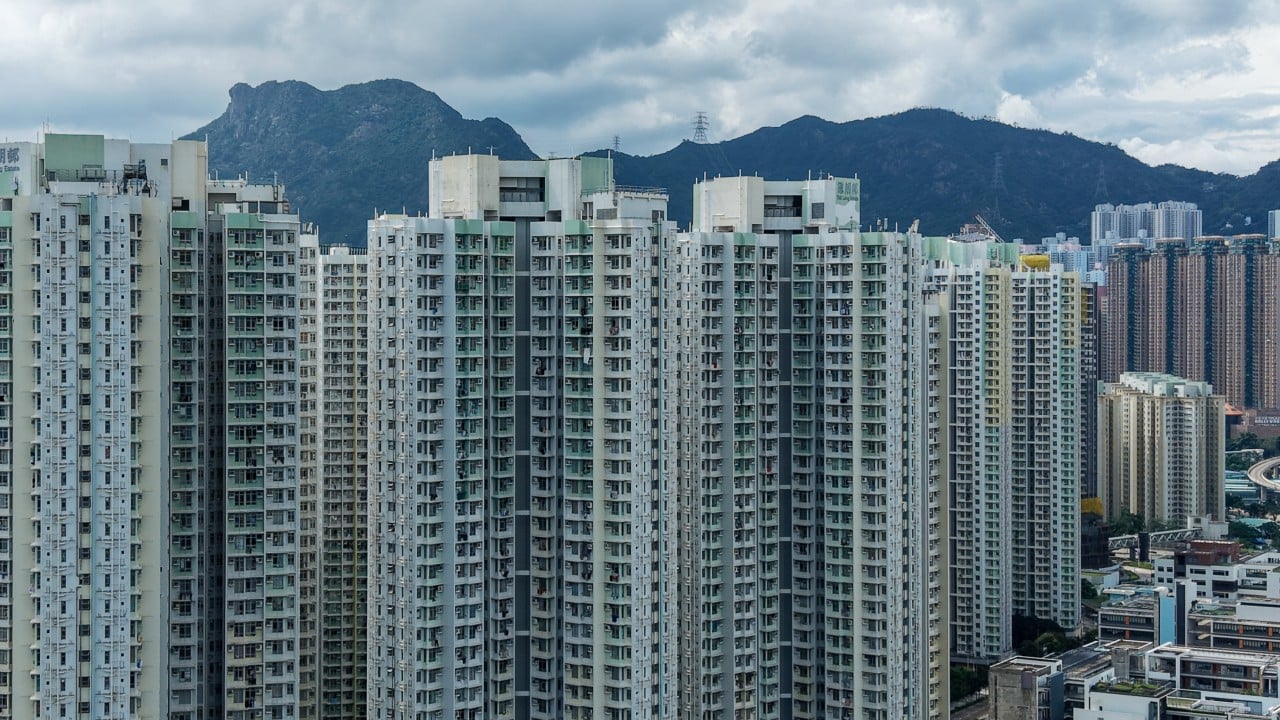
A headline drop in the average waiting time for Hong Kong public rental housing does not automatically signal a cured housing deficit; it reflects a specific shift in queue math, transitional supply injection, and applicant pool attrition. When the Hong Kong Housing Authority reports that the average waiting time for general applicants has fallen to its lowest point in over a decade, observers often misread the metric as a structural surplus of permanent concrete-and-steel flats. In operational reality, queue duration in a heavily rationed public housing system is a function of three distinct variables: permanent completion velocity, temporary buffer deployment, and denominator management. Understanding whether this contraction represents durable system capacity or temporary statistical relief requires dissecting how the Housing Authority calculates wait times and where the physical units actually originate.
The Accounting Mechanics of the Waiting Time Metric
To evaluate the validity of any reported drop in housing wait times, you must first examine the definition of the metric itself. The Hong Kong Housing Authority does not measure the forward-looking wait time of an applicant entering the queue today. Instead, the published figure represents a backward-looking trailing average: the mean time elapsed between registration and the first housing offer for general applicants—defined as family applicants and elderly one-person applicants—who were housed over the preceding twelve months.
This methodology creates a structural lag and introduces specific statistical distortions:
- Cohort Composition Effects: If the Housing Authority allocates a large batch of newly completed flats in the New Territories during a specific quarter, the applicants accepting those units exit the queue and enter the trailing twelve-month calculation. Because suburban New Territories developments often experience lower initial acceptance rates than urban Kowloon or Hong Kong Island estates, applicants willing to accept remote locations clear the queue faster, pulling the statistical average down even while urban wait times remain static.
- The Exclusion of Non-Elderly Singletons: Under the Quota and Points System (QPS), non-elderly one-person applicants are excluded from the headline average waiting time calculation. Because QPS applicants face strict annual allocation caps and age-weighted point accumulation, separating them from the general family queue prevents a massive backlog of single applicants from inflating the headline figure.
- Refusal and Freezing Rules: An applicant who refuses an offer without an acceptable reason loses that allocation cycle, while those who freeze their applications due to temporary income fluctuations or personal circumstances pause their clock. Variations in refusal rates directly alter the throughput speed of the active queue.
When a queue metric hits a ten-year low, the primary driver is rarely a sudden doubling of permanent construction speed. Rather, it is usually the convergence of several large-scale public housing estates reaching completion simultaneously after years of site formation delays, combined with targeted policy interventions that alter how applicants move through the pipeline.
Supply-Side Drivers and the Transitional Buffer
The physical delivery of public housing in Hong Kong operates on a rigid seven-to-ten-year development cycle, encompassing zoning, land resumption, site formation, foundation piling, and superstructure construction. Because permanent supply is inelastic in the short term, significant reductions in waiting times rely heavily on altering the composition of the supply pipeline.
The Role of Light Public Housing and Transitional Units
A critical structural shift in Hong Kong’s housing strategy involves deploying transitional housing and Light Public Housing (LPH) built using Modular Integrated Construction (MiC). While transitional units do not count as permanent public rental housing (PRH) allocations, they function as an essential pressure-release valve on the system:
- Immediate Subdivided Flat Substitution: By moving low-income families out of unsafe, high-rent subdivided units (SDUs) into transitional modular housing, the government reduces the acute socio-economic distress associated with long PRH queues without waiting a decade for permanent foundations to cure.
- Queue Stabilization: Applicants residing in transitional housing remain in the PRH queue until they receive a permanent offer. However, the stabilization of their living conditions reduces political pressure on the Housing Authority to rush permanent allocations in suboptimal locations, allowing planners to sequence permanent estate handovers more efficiently.
- Brownfield and Idle Land Utilization: Modular units utilize government and private land slated for long-term infrastructure or commercial development that would otherwise sit vacant for five to seven years. This converts dead land-bank time into active residential capacity.
Permanent Estate Clustering and Handover Synchronization
Permanent public housing completions in Hong Kong do not arrive in a smooth linear stream; they arrive in lumpy, high-volume clusters. When major public housing projects in areas such as Tung Chung, Fanling North, Kwu Tung North, or Kai Tak reach their occupation permit milestones within the same fiscal year, the sudden influx of ten thousand or more flats creates a steep downward step-change in the trailing twelve-month waiting average.
The operational bottleneck in this phase is rarely the construction of the residential blocks themselves, but the synchronization of supporting infrastructure. A public housing estate cannot be handed over to tenants until sewage treatment capacity, primary transport links, and basic retail provisioning pass statutory inspections. When these auxiliary systems clear bottlenecks concurrently, the Housing Authority executes mass intake operations that rapidly clear older cohorts from the register.
Demand-Side Filtering and Attrition Dynamics
Queue length is governed equally by inflow and outflow. While public discourse focuses almost exclusively on flat production, shifts in applicant eligibility, enforcement, and macroeconomic conditions quietly reshape the demand side of the ledger.
Asset and Income Threshold Enforcement
Public rental housing in Hong Kong is heavily subsidized, creating a strong financial incentive for households to remain in the system even after their economic circumstances improve. To counter this, the Housing Authority has tightened enforcement of the Well-off Tenants Policies and mandatory asset declarations:
- Mandatory Occupancy and Asset Checks: Tenants must declare household income, net assets, and domestic property ownership in Hong Kong every two years after living in PRH for ten years—and in some tightened regimes, from the very beginning of their tenancy.
- Cross-Border Asset Scrutiny: Enhanced cooperation and data verification regarding property ownership outside Hong Kong, particularly in the Greater Bay Area, have forced a subset of existing tenants to surrender their flats rather than face prosecution for false declarations.
- Recovered Flat Recycling: Every flat recovered through tenancy enforcement, voluntary surrender, or tenant migration represents an immediate, zero-construction-cost addition to the allocation pool. Because recovered flats are located in established urban districts with mature transport links, they achieve exceptionally high first-offer acceptance rates, accelerating queue clearance.
Macroeconomic and Demographic Pressures
The applicant pool itself is not static. Fluctuations in the broader Hong Kong economy directly influence both entry into the queue and exit from it:
- Wage Inflation vs. Income Limits: When nominal wages at the lower end of the service sector rise faster than the Housing Authority’s annual adjustments to PRH income limits, marginal households are disqualified during the vetting stage immediately prior to flat allocation. Disqualification at the vetting stage removes an applicant from the queue without consuming a housing unit.
- Subsidized Home Ownership Schemes (HOS): Aggressive pricing discounts on Home Ownership Scheme flats—often set at 30 to 40 percent below assessed market value—encourage existing PRH tenants to purchase subsidized flats under Green Form status. Each Green Form purchase frees up a rental flat for the general waiting list, creating a secondary chain of upward mobility.
- Demographic Contraction: Net population outflows over recent years and a persistently low birth rate have altered household formation patterns. Fewer newly formed low-income nuclear families entering the bottom of the funnel reduces long-term queue replacement rates.
The Structural Limitations of the Current Trajectory
Treating a multi-year low in waiting times as proof that Hong Kong’s housing crisis is solved ignores deep structural vulnerabilities embedded in the current delivery model. Three specific constraints limit how far and how permanently the waiting time can fall.
The Cliff Effect of Temporary Supply
Light Public Housing and transitional projects are explicitly temporary, typically operating on five-year land leases before the underlying sites are reclaimed for permanent infrastructure, commercial zones, or permanent housing. If permanent PRH completions do not scale up synchronously to absorb transitional tenants when those five-year leases expire, the system faces a double-handling crisis. Moving families from subdivided flats to modular housing, only to risk displacement if permanent estates fall behind schedule, creates a logistical bottleneck that could push waiting times back upward in the late 2020s.
Geographic Mismatch and Commuting Costs
The vast majority of Hong Kong’s future public housing supply is concentrated in the Northern Metropolis and outlying New Territories areas rather than the urban core. While building large-scale estates on reclaimed or resumed rural land solves the raw unit-count problem, it introduces a severe spatial mismatch:
- Employment Concentration: Lower-income service, retail, logistics, and hospitality jobs remain heavily concentrated in Kowloon and Hong Kong Island.
- Transport Friction: Until major rail arteries—such as the Northern Link and Tung Chung Line Extension—reach full operational capacity, relocating low-income families to remote districts imposes high daily commuting costs and time penalties.
- Refusal Rate Spikes: When the geographic distance between housing supply and employment hubs becomes too wide, applicants increasingly reject initial offers, slowing down the administrative allocation cycle and driving the average waiting time back up.
Fiscal Sustainability of the Public Construction Model
The Hong Kong government relies heavily on land sales revenue and stamp duties to fund capital works, while the Housing Authority operates as a financially autonomous statutory body that cross-subsidizes its loss-making rental operations through profits from commercial retail spaces, car parks, and Home Ownership Scheme sales.
When the private property market experiences a prolonged downturn, land premium revenues contract sharply, straining the government’s broader capital works budget. Simultaneously, if construction costs—driven by an aging construction workforce and strict safety compliance—continue to outpace general inflation, the per-unit capital expenditure required to maintain high-volume PRH production becomes increasingly burdensome. Maintaining a short waiting time requires uninterrupted capital deployment regardless of property market cycles.
Strategic Imperatives for Housing Governance
To convert a cyclical ten-year low in public housing wait times into a permanent structural equilibrium, housing policy must shift from raw unit-count maximization to lifecycle throughput optimization. The following operational adjustments are required to prevent a rebound in queue duration:
- Synchronize Infrastructure Handovers with Modular Decommissioning: Establish hard engineering dependencies between the decommissioning dates of Light Public Housing sites and the statutory completion milestones of permanent Northern Metropolis estates. Transitional units must never be dismantled before the permanent replacement stock has cleared utility and transport inspections.
- Automate Asset and Tenancy Auditing: Transition from periodic manual declaration forms to continuous, automated data-matching across the Land Registry, Transport Department, and tax authorities. Accelerating the recovery of underutilized or improperly held urban PRH flats yields immediate high-demand inventory at a fraction of the cost of greenfield development.
- Recalibrate the Rental-to-Ownership Ratio: Maintain an aggressive pipeline of discounted Home Ownership Scheme and Starter Homes projects specifically targeted at Green Form PRH tenants. Every existing rental tenant converted into an owner-occupier unlocks an established urban rental unit without requiring new site formation, effectively doubling the housing impact of a single construction project.
- Decouple Capital Works from Land Revenue Volatility: Ring-fence multi-year capital allocations for public housing site formation and trunk rail infrastructure so that temporary slumps in private land auctions do not trigger delays in early-stage earthworks, which represent the primary cause of seven-year supply bottlenecks.
The current drop in Hong Kong’s public housing waiting time proves that aggressive administrative intervention, modular construction, and strict tenancy enforcement can bend a seemingly intractable queue curve. Sustaining that compression requires treating public housing not as a static construction target, but as a dynamic flow system where urban flat recovery and suburban rail connectivity matter just as much as pouring concrete.