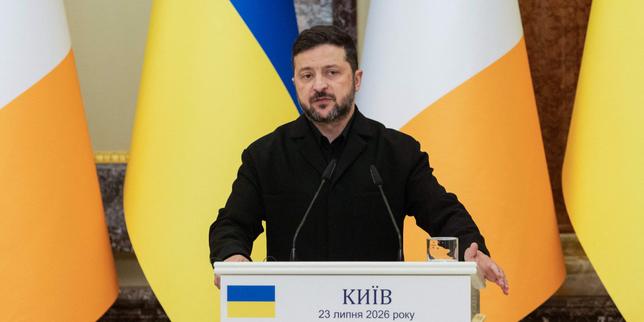
Ukrainian President Volodymyr Zelensky routinely praises the European Union whenever Brussels rolls out a new package of economic sanctions against Moscow. Publicly, these diplomatic announcements are framed as decisive blows designed to drain the Kremlin’s war chest and force an end to the aggression in Ukraine. Privately, trade data and supply-chain realities reveal a far darker picture. European restrictions continue to suffer from systematic evasion, diplomatic compromises, and enforcement loopholes that allow billions of dollars in war-critical goods to flow into Russia through third-party intermediaries.
The political ritual is now familiar. A new package of penalties is debated in Brussels, diluted to appease vulnerable member states, signed into law, and hailed by Kyiv as vital support. Yet, months after implementation, industrial components manufactured inside the EU consistently end up in Russian hardware on the front lines. The core issue is not a lack of political rhetoric; it is an enforcement framework built on voluntary compliance and patchwork oversight that European governments are reluctant to fix.
How Western Tech Keeps Reaching Russian Factories
Sanctions look impressive on parchment. In practice, trade routes adapt faster than regulatory bureaucracies can draft restrictions. When Western nations cut off direct exports of dual-use technology to Russia, trade volumes between Europe and neighboring non-sanctioning countries skyrocketed almost overnight.
Microchips, CNC machinery, and specialized sensors do not travel straight from Germany or France to Moscow anymore. Instead, shipment manifests list destinations in Turkey, the United Arab Emirates, Kazakhstan, Armenia, or Georgia. Once the cargo lands in these transit hubs, local shell companies re-export the hardware across Russian borders via rail or truck fleets.
+-------------------+      +-----------------------+      +-------------------+
|  EU Manufacturer  | ---> | Third-Country Hub     | ---> |  Russian Defense  |
|  (Germany/France) |      | (UAE/Turkey/Caucasus) |      |  Supply Chain     |
+-------------------+      +-----------------------+      +-------------------+
European exporters frequently claim ignorance. A manufacturer in Munich sells electronic components to a distributor in Istanbul, fulfilling all required paperwork. The exporter verifies that the buyer is not on a designated blacklist. Once the transaction clears European customs, control over the final destination vanishes. The Turkish firm sells the components to a second shell company, which then routes them into Russia.
This multi-layer buffer creates plausible deniability for everyone involved. National customs agencies within Europe lack the investigative bandwidth to track secondary sales across international borders. As long as the primary invoice shows a legal destination, the goods move out of European ports without interference.
The Maritime Loophole Fueling Moscow’s War Treasury
Financing a high-intensity war requires massive revenue, and crude oil remains Russia’s primary cash generator. To curb these revenues, Western nations established a price cap mechanism alongside strict bans on importing Russian seaborne crude. The intent was simple: keep Russian oil flowing to prevent global price spikes while capping the Kremlin’s profit margins.
The reality on the water tells a different story. Moscow responded by assembling a vast "shadow fleet" composed of aging, unflagged, or flag-of-convenience tankers operating outside Western insurance networks. These ships conduct risky ship-to-ship transfers in international waters, obfuscating the origin of the crude before delivering it to refineries in India and China.
| Strategy | Intended Economic Mechanism | Operational Reality on the Ground |
|---|---|---|
| G7 Price Cap | Limit Russian crude revenue to $60/barrel via maritime insurance restrictions. | Shadow fleet vessels bypass Western insurers, trading well above the cap. |
| Dual-Use Export Bans | Starve Russian defense contractors of advanced microelectronics. | Third-country routing via Central Asia and the Middle East fills the supply gap. |
| Asset Freezes | Immobilize Russian central bank funds to leverage peace negotiations. | Legal hurdles prevent seizure, while interest proceeds spark internal EU disputes. |
Once processed in foreign refineries, that same oil is sold back to European markets as diesel or jet fuel. Because the chemical origin of refined petroleum products is difficult to trace back to raw crude, European nations inadvertently import fuel derived from Russian resources. The financial pipeline remains open, filtered through foreign intermediaries who take a commission along the way.
Why Enforcement Remains Broken Inside the Block
The fundamental flaw of EU sanction strategy lies in its structural design. Directives are crafted at the European level in Brussels, but enforcement is left entirely to individual member states.
This decentralized approach creates a weakest-link problem. A sanction policy is only as effective as the least aggressive national customs authority within the trading bloc.
- Uneven Sanction Penalties: A company caught violating trade restrictions in one EU country might face severe criminal prosecution, while the same offense in a neighboring member state incurs a minor administrative fine.
- Corporate Resistance: Powerful domestic industrial lobbies push back against strict end-user verification requirements, arguing that excessive compliance costs render European exports uncompetitive globally.
- Bureaucratic Starvation: National customs departments are understaffed and ill-equipped to audit complex financial networks, international shipping registries, and multi-tiered corporate structures.
Efforts to centralize enforcement face fierce resistance. Member states view customs control and criminal law as core elements of national sovereignty. Without a centralized European enforcement authority with broad investigative powers—analogous to the U.S. Office of Foreign Assets Control (OFAC)—EU sanctions directives will continue to be implemented as a patchwork of voluntary guidelines rather than a tight blockade.
The Mirage of Economic Collapse
In the early months of the conflict, Western officials projected that isolated markets and severed trade connections would push the Russian economy toward structural collapse. Those predictions underestimated the adaptability of state-directed capital and global demand for raw commodities.
Russia pivoted its entire economy toward militarized industrial production. State factories operate around the clock, funded by sustained commodity revenues from non-Western trade partners. While this shift creates long-term structural distortions, inflation, and severe labor shortages inside Russia, it yields sufficient short-term output to sustain prolonged battlefield operations.
Symbolic victories, public praise, and celebratory press releases from Kyiv or Brussels do not alter the material balance on the ground. Until European leaders confront the commercial interests within their own borders, crack down on secondary trade networks, and penalize foreign financial institutions aiding evasion, every new package of sanctions remains an exercise in political theater.
The Kremlin does not fear press conferences. It calculates cargo tonnage, microchip supply flows, and daily oil revenues. So long as those metrics remain viable, diplomatic declarations from European capitals will change very little on the battlefield.