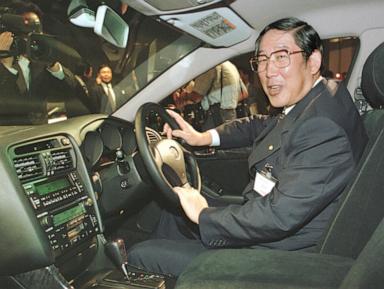
Hiroshi Okuda didn't care about corporate tradition. When he took the helm at Toyota in the mid-1990s, the company was stuck in its old ways. Japanese business culture demanded quiet obedience and slow consensus. Okuda threw that playbook out the window. He wanted speed, global expansion, and aggressive competition. That shift changed the automotive world forever.
Most people look at Toyota today and assume its dominance was an accident of history. It wasn't. It was engineered by leaders willing to break internal rules. Okuda became the first president from outside the founding Toyoda family in decades. That outsider status gave him the freedom to shake things up. He faced heavy pushback from old-school executives. He ignored them. Also making headlines in this space: The $500 Escape Hatch And Other Small Business Ideas That Actually Work.
Breaking the Mold at Toyota
Toyota had a conservative streak. They built reliable cars, dominated their home market, and expanded cautiously abroad. Okuda saw a bigger picture. He realized that staying local meant getting crushed by shifting global economies.
He pushed hard into overseas manufacturing plants. He wanted Toyota building cars right where people were buying them. This wasn't just about shipping vehicles across oceans. It meant localized supply chains and adapting designs to foreign tastes. Further insights into this topic are covered by The Wall Street Journal.
He also shook up management. Okuda promoted younger executives based on merit rather than purely on tenure. That injected fresh energy into stagnant boardrooms.
The Struggles Behind the Success
Growth came with massive headaches. Rapid expansion strained supply lines. Critics argued that chasing volume would ruin Toyota's legendary reputation for bulletproof quality.
Okuda took those risks head-on. He believed standing still was far more dangerous than moving too fast. He pushed production targets higher year after year. Factories had to adapt quickly. Some plants struggled to keep up with the aggressive quotas. Yet, the gamble paid off. By the time he stepped down from his executive roles, Toyota was nipping at General Motors' heels for the global sales crown.
You can't talk about modern manufacturing without acknowledging this era. Okuda proved that Japanese companies could play on the global stage with American-style corporate aggression.
What Leadership Lessons Remain Today
The automotive landscape looks entirely different now. Electric vehicles and software-driven cars dominate boardrooms. Yet, the core playbook Okuda wrote still applies.
If you're running a company or trying to scale a project, look at his blueprint.
- Ditch comfort zones. If your industry hasn't changed its core habits in ten years, you're vulnerable.
- Decentralize. Don't keep every decision locked at headquarters. Empower local teams to act fast.
- Accept friction. Real transformation upsets people. If everyone agrees with your growth strategy, it's probably too timid.
Okuda passed away at 93, leaving behind an industry transformed by his refusal to accept the status quo. He didn't just build cars. He built a machine designed to conquer the world.
Study how he moved past bureaucratic gridlock. Take those lessons and apply them to whatever you're building next.