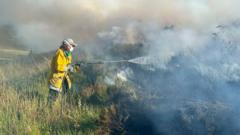
Residents in the shadow of Cairngorm are asking why emergency services took so long to mobilize as flames devoured local terrain, exposing deep-seated flaws in rural emergency infrastructure. When the first calls reporting smoke above the heather went out, the response was measured in agonizing hours rather than minutes. That delay has triggered fierce anger across local communities, forcing a hard look at how authorities handle high-altitude and remote blazes.
For years, warnings have echoed through Highland council chambers. Dry winters create tinderbox conditions across ancient peatlands. Despite these repeated red flags, the emergency mechanism remains heavily centralized, sluggish, and ill-equipped for rapid deployment in unforgiving terrain.
The Anatomy of a Delayed Mobilization
When a fire breaks out in metropolitan centers, response times are tracked down to the single digit. In the Cairngorms, geography dictates a vastly different reality. Narrow access tracks, limited water sources, and sprawling acreage mean standard urban engines are useless before they even leave the tarmac.
The core issue during the recent emergency was not a lack of courage among frontline personnel. Firefighters on the ground performed heroically once deployed. Instead, the failure stemmed from rigid command structures and outdated communication protocols that stalled critical decisions at the regional desk level.
Local gamekeepers and estate workers were the first to mobilize heavy machinery, cutting firebreaks hours before municipal units arrived. That informal local knowledge saved properties. Yet, official channels often ignore or sideline these civilian assets until a situation escalates to catastrophe.
Why Standard Protocols Fail in Remote Terrain
Bureaucracy moves slowly. Wildfire moves quickly. When multiple agencies must sign off on cross-jurisdictional air support and specialized tactical units, days can slip away.
- Jurisdictional friction: Disagreements between environmental bodies, forestry commissions, and municipal fire services create administrative bottlenecks.
- Asset allocation: Heavy-lift helicopters and specialized off-road tankers are stationed too far from the central Highlands to provide immediate initial strike capability.
- Communication silos: Radio frequencies between voluntary mountain rescue, local estates, and regional fire control do not always align seamlessly.
These structural weaknesses mean that by the time incident commanders officially declare a major incident, the fire has already dictated the terms of engagement.
The Peatland Tinderbox Factor
Understanding why these fires burn so intensely requires looking beneath the surface. The Cairngorm region rests on vast reserves of peat, a carbon-rich soil that acts like a sponge when wet but burns relentlessly underground when dry.
Standard water drops put out surface flames. They do nothing for sub-surface peat fires. These underground embers can smolder for weeks, reigniting days after firefighters pack up their gear.
Local ecologists have pointed out that historical drainage practices—dug decades ago to dry out land for forestry—have accelerated the drying process. These drainage ditches act as highways for wind-driven flames, pulling fire straight through valleys that should act as natural firebreaks.
"We are fighting modern climate extremes with mid-twentieth-century playbooks," notes a retired Highland forestry officer with four decades of experience. "Until we treat peatland restoration as an arm of national defense, these disasters will repeat."
✨ Don't miss: Inside the Tibetan Crisis Nobody is Talking About
Economic Realities and Tourism Fallout
The Cairngorm economy relies heavily on outdoor recreation, hill walking, and seasonal tourism. Smoke-choked skies and closed trails devastate local businesses during peak booking windows.
Hotels, guesthouses, and guide services absorb the immediate financial shock of cancellations. Yet, long-term environmental damage poses an even greater threat to the regional brand. Hikers will bypass blackened, sterile hillsides in favor of greener destinations.
Insurance premiums for rural properties surrounding the park are creeping upward. Underwriters are beginning to factor in wildfire risk for structures that historically only worried about winter snowstorms or heavy flooding.
Re-Engineering Rural Defense
Fixing the emergency response gap requires decentralizing power. Centralized command centers in distant cities cannot accurately judge wind shifts on a Highland ridge.
Communities demand immediate investment in localized rapid-response units equipped with all-terrain pumps, mobile water bowsers, and satellite communication kits. Furthermore, formalizing partnerships with estate workers who possess intimate knowledge of local tracks would cut deployment delays from hours to minutes.
The smoke has cleared from the recent valleys, but the structural heat remains. If authorities treat this incident as an isolated anomaly rather than a systemic warning, the next dry spell will test an unbroken system to its absolute breaking point.