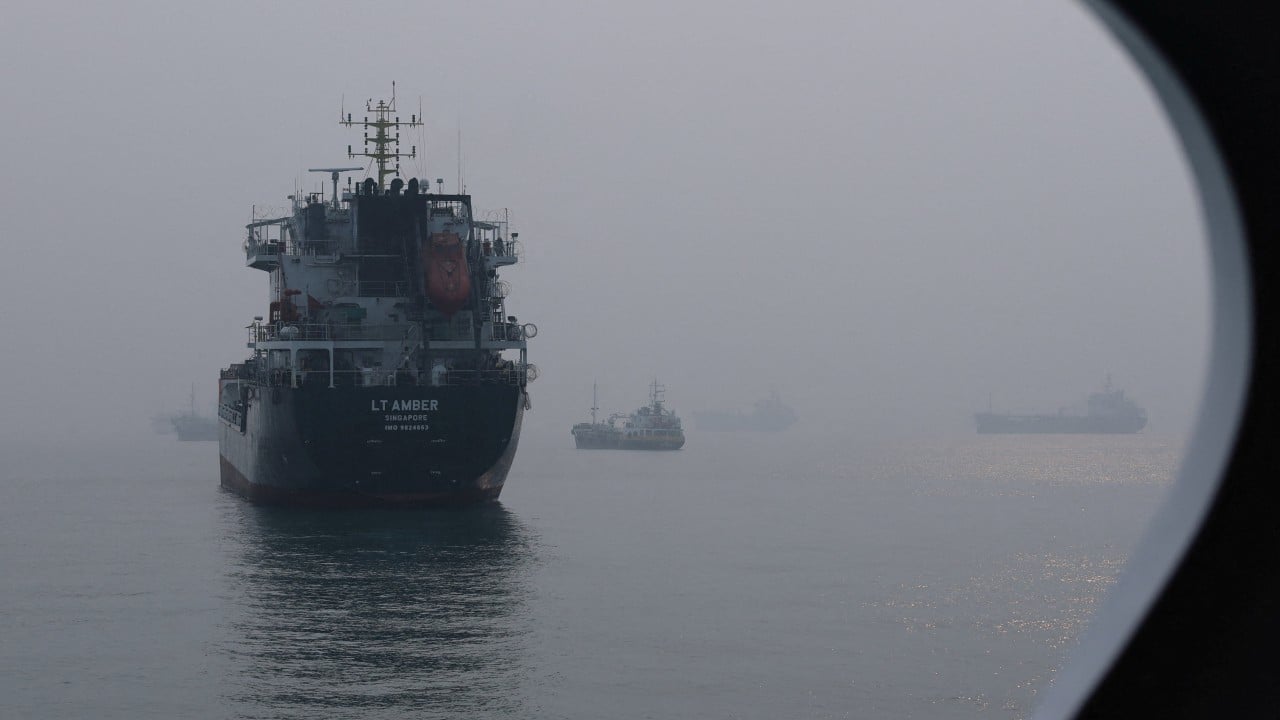
Red alert. Emergency advisory. Mask distribution.
Another seasonal siren goes off across Southeast Asia, and the press releases write themselves. A regional climate monitor flashes its highest warning over toxic haze, ministries hold solemn briefings, and headlines treat the alert itself as decisive action.
It is theater. Worse, it is lazy theater that lets everyone off the hook.
When a competitor outlet runs a piece on a highest-level haze alert, the formula is predictable. Count the hotspots. Quote an alarmed official. Warn that vulnerable groups should stay indoors. Express sorrow over transboundary smoke drifting across borders and urge stronger regional cooperation.
That consensus sounds compassionate and urgent. It is also analytically shallow. Treating a peak air-quality alert as the crisis confuses the smoke alarm with the house fire. Worse, it centers the story on seasonal panic and diplomatic hand-wringing while ignoring the subterranean engineering and land-use choices that turn ordinary dry spells into months-long chemical plumes.
If you want to understand why toxic haze keeps returning to Southeast Asia—and why emergency alerts keep failing to stop it—you have to stop staring at the sky and start looking at water tables, soil chemistry, supply chains, and monitoring blind spots.
What the Highest Alert Actually Measures—and What It Hides
An alert level is a threshold on a gauge. Nothing more.
When an air-quality index or regional warning hits its top tier, it tells you that monitored particulate concentrations—typically fine inhalable particles known as PM2.5, measuring 2.5 micrometers or less in diameter—have crossed a predefined health-risk line over a given averaging window. That matters for short-term exposure. High PM2.5 irritates airways, aggravates asthma, strains cardiovascular function, and disrupts daily life.
What an alert does not tell you is whether the worst danger sits in the air you breathe today or the smoldering ground beneath an agricultural concession. Nor does it distinguish between short-lived open biomass burning and deep, slow-burning peat fires that can simmer underground for weeks or months, releasing dense cocktails of carbon monoxide, volatile organic compounds, polycyclic aromatic hydrocarbons, and fine particulates.
I have worked on environmental risk and compliance problems where organizations blew millions of dollars chasing real-time dashboard spikes after damage was already baked into operations. Teams buy shinier sensors, add more color tiers to public maps, and hold crisis calls every time a needle crosses into maroon. Meanwhile, the root physical driver—drained carbon-rich peat domes drying out during monsoon lulls or El Nino dry phases—remains unaddressed until ignition is almost inevitable.
A highest alert is a lagging indicator of prevention failure. Calling it a breakthrough or a decisive response mistakes measurement for mastery.
The Premise Behind "People Also Ask" Questions on Haze
Search feeds around these alerts reliably churn out the same questions: Why does transboundary haze happen every year? How can countries stop toxic smoke from crossing borders? When will regional agreements finally end the haze?
Every one of those questions carries a flawed premise if you treat haze as a simple border-crossing weather event or a diplomatic goodwill problem.
Haze is not merely wind carrying smoke across a line on a map. It is a coupled physical and economic system. Monsoonal wind shifts move the smoke, yes. Dry weather accelerates ignition, yes. Yet fire is largely a human land-management tool and an unintended consequence of hydrological alteration. Clearing vegetation with fire is cheap compared with mechanical clearing on difficult terrain. Draining peatlands to grow commercial crops turns waterlogged carbon sinks—which naturally resist wildfire—into tinderboxes that also subside, flood more easily when heavy rains return, and oxidize massive stores of carbon.
Asking "Why do countries keep arguing over transboundary smoke?" misses the deeper structural friction. National sovereignty, domestic agricultural livelihoods, commodity price pressures, and uneven enforcement capacity collide right where environmental externalities cross borders. Diplomatic communiques cannot repeal basic economics or hydrology.
The Peatland and Land-Use Mechanics Nobody Wants to Untangle
To see the real engine behind severe Southeast Asian haze, look at tropical peatlands.
Peat is not ordinary dirt. It is partially decayed plant matter accumulated over millennia under waterlogged conditions. In its natural, saturated state, a peat swamp forest holds vast amounts of water and acts as a massive carbon reservoir. Because it is wet, it rarely burns at scale.
Once canals are dug to drain that peat for plantation agriculture or timber, oxygen enters the organic layer. The peat dries out, compacts, and subsides. Once the water table drops too far, surface fires can ignite the dry peat itself. Unlike a grass or brush fire that races across the top and burns out quickly, a peat fire burrows downward and sideways. It smolders at lower temperatures with incomplete combustion, which is precisely why it produces such thick, acrid, persistent smoke and stubbornly resists surface water drops.
Imagine a scenario where a regional monitor issues a top-tier haze warning during a dry spell. Officials focus public messaging on wearing N95 or KN95 respirators and keeping windows shut in major cities hundreds of kilometers away. Those steps help individuals cut short-term exposure on bad days. They do nothing to rewet drained peat domes, block illegal canal construction, or change land-clearing incentives on the ground.
Researchers and policy heavy hitters such as those at the Center for International Forestry Research and World Agroforestry (CIFOR-ICRAF), the ASEAN Specialised Meteorological Centre (ASMC), and atmospheric chemists studying Southeast Asian biomass burning have documented these dynamics for years. The core mechanisms are well established in peer-reviewed literature and regional assessments. Yet public coverage still treats severe haze as if it materialized out of thin air each autumn.
Why "Just Enforce the Law" Is Harder Than Headlines Admit
A common counter-argument goes like this: Governments already have laws against burning and peat destruction. Just enforce them.
Anyone who has dealt with real-world enforcement on sprawling rural landscapes knows how easily armchair critics underestimate the logistics. Policing millions of hectares of remote, fragmented land—where smallholders, mid-sized operators, and large concessions overlap—is not as simple as issuing a decree from a capital city.
Satellite hotspot detection has improved dramatically, allowing analysts to spot thermal anomalies rapidly. Still, a satellite pixel does not automatically prove legal liability, ownership boundaries, or intent on the ground, especially under cloud cover or thick smoke. When enforcement targets only the smallest actors while leaving larger supply-chain bottlenecks untouched, or when fines are cheaper than the cost of alternative land management, compliance stalls.
What Monitoring Gets Right—and Where It Misleads
Give credit where it is due: regional and national monitoring systems have come a long way from the days when citizens had no reliable hourly readouts of local air quality. Having transparent, standardized air-quality metrics helps schools decide on outdoor activities, helps hospitals prepare for respiratory surges, and gives researchers datasets to track trends over time.
Still, relying on a single headline alert or a handful of urban reference stations creates blind spots.
- Spatial gaps: Rural communities closest to active fires often face extreme smoke exposure with fewer ground monitors than major cities, skewing which populations get visibility and rapid aid.
- Metric limits: A single composite index compresses complex mixtures of gases and fine particles into one number, which can oversimplify health risks for people with heart or lung conditions.
- Alert fatigue: When warnings are issued repeatedly without visible structural fixes, public attention can harden into cynicism—people treat extreme readings as background noise rather than a cue to protect vulnerable household members.
The Honest Downside of Focusing on Structural Fixes
Advocating a shift away from alert-driven drama toward peatland restoration, hydrological management, and supply-chain reform carries its own risks, and pretending otherwise would be dishonest.
Structural fixes are slow. Rewetting peatlands, blocking drainage canals, negotiating land tenure, and reforming agricultural practices take years—not a single budget cycle or news cycle. If policymakers or institutions treat long-term structural work as an excuse to downplay immediate health warnings during a smoke spike, people breathing foul air today pay the price.
The disciplined position holds both truths at once: treat acute pollution spikes as an immediate public-health hazard to mitigate right now, while treating structural land and water management as the only way to shrink future spikes.
What Actually Works Instead of Performative Panic
If you are an executive, policymaker, investor, or informed citizen trying to cut through the noise when the next highest haze alert hits, skip the performative outrage and focus on high-leverage actions.
- Audit supply chains down to plot and hydrological risk, not just corporate pledges. A supplier's sustainability policy means very little if its sourcing sits on drained peat without water-table monitoring or verifiable fire-free land preparation.
- Invest in water and fire prevention before dry seasons peak. Blocking drainage canals, maintaining peat moisture levels, and funding rapid local ground response prevent small ignitions from turning into entrenched underground burns.
- Pair localized indoor air filtration with realistic health guidance. For households, schools, and workplaces hit by smoke, portable HEPA air purifiers and tight indoor air management often outperform flimsy cloth masks—and work continuously indoors where people spend most of their hours.
- Demand accountability on outcomes, not announcements. Track hectares rewetted, enforcement follow-through, and multi-year smoke-day trends rather than press conferences held on the day an alert peaks.
Stop treating a highest haze alert as the climax of the story. It is just the smoke telling you the ground is still on fire.