A rare handwritten draft connected to Martin Luther King Jr.'s iconic 1963 "I Have a Dream" speech is heading to public exhibition ahead of a major auction, reigniting a fierce legal, ethical, and financial tug-of-war over who truly owns the physical artifacts of the American Civil Rights Movement.
Whenever a foundational document from the 1960s surfaces on the private market, the headlines focus on the astronomical price tags and the dramatic auction-house previews. Those details sell tickets. What they rarely explain is how these papers left King's possession in the first place, why the King estate and private collectors have spent decades locked in bitter courtroom battles, and what happens to public access when civil rights history becomes an alternative asset class for ultra-high-net-worth buyers.
The story behind King's surviving manuscripts is messy. It involves hurried hotel-room revisions, informal gifts to aides, long-forgotten cardboard boxes in attics, and an intellectual property war that has reshaped how auction houses handle twentieth-century political ephemera.
The Myth of the Single Manuscript
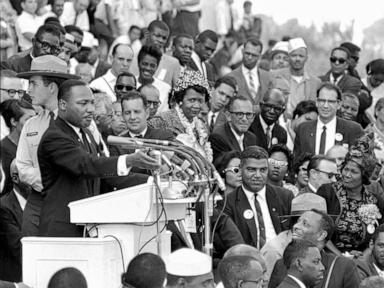
Most people picture the "I Have a Dream" speech as a single, sacred scroll that Martin Luther King Jr. carried up the steps of the Lincoln Memorial on August 28, 1963. History was far more chaotic than that.
King and his inner circle—including advisors like Clarence B. Jones, Wyatt Tee Walker, and Stanley Levison—worked furiously through the night at the Willard Hotel in Washington, D.C., drafting, cutting, and reworking remarks right up until the morning of the March on Washington. Multiple working drafts, typed reading copies, and handwritten notes existed simultaneously. Some pages were covered in King's own cursive loops and marginalia. Others were typed by assistants and marked up with blue or black ink as sections were scrapped for time.
Even more remarkably, the most famous section of the speech was not on the prepared page at all.
When King stepped to the podium, he began reading from a prepared text that leaned heavily on the metaphor of a "bad check" written to Black Americans by the nation's founders. Mid-speech, gospel singer Mahalia Jackson, standing nearby, famously called out to him to "tell them about the dream." King pushed his prepared notes aside, gripped the lectern, and launched into the improvised cadence he had honed in churches from Montgomery to Detroit.
Because of that pivot, the physical paper trail of August 28, 1963, is fractured into distinct categories:
- Working drafts and handwritten notes created during the intense brainstorming sessions in New York and Washington before the march.
- The typed reading copy that King actually held at the podium, which famously ended up in the hands of George Raveling, a college basketball player working volunteer security near the stage that day, after Raveling asked King for the pages immediately following the address.
- Post-speech transcripts and signed copies distributed for fundraising, press packets, and legal copyright registration later that autumn.
Understanding this distinction matters enormously when a handwritten draft goes on display before an auction. Buyers and museum curators are not just bidding on ink and paper. They are bidding on proximity to the exact moment King's rhetoric shifted from a prepared political address into American scripture.
How Civil Rights Artifacts Entered the Private Market
To understand why these manuscripts keep appearing in glass display cases at major auction houses, you have to understand how the Civil Rights Movement actually operated.
King did not travel with a team of archivists. He traveled with a battered briefcase, a handful of exhausted aides, and a relentless schedule of flights, rallies, and jail stays. Papers were left on hotel desks, handed to local organizers for safekeeping, tucked into the briefcases of speechwriters, or given away on the spot when someone asked for a memento. Nobody in 1963 was thinking about Sotheby's estimates or institutional provenance chains. They were trying to survive the week and pass a voting rights bill.
Decades later, as those aides aged or passed away, their families cleaned out filing cabinets and closets. Suddenly, items that had been treated as personal keepsakes or office clutter were recognized as priceless historical primary sources.
Consider the trajectory of other major King collections. In 2006, a massive archive of roughly 10,000 items—including early drafts, annotated sermons, and correspondence—was assembled by private collectors and slated for auction at Sotheby's, carrying an estimate between $15 million and $30 million. Days before the gavel was set to fall, a coalition of Atlanta business leaders, philanthropists, and civic institutions stepped in to broker a $32 million private purchase, transferring the collection to Morehouse College, King's alma mater.
Not every artifact gets rescued by a civic coalition. Smaller, single-item lots—a single handwritten outline, a marked-up speech draft, a letter written from a jail cell—regularly hit the open market. Pre-auction public exhibitions serve a dual purpose for the auction houses handling them. On the surface, putting a handwritten draft on free public display looks like an act of civic generosity, allowing students and everyday citizens to view history up close before it disappears behind closed doors. Financially, it is pure marketing. Media coverage of the public exhibition drives up prestige, validates provenance, and stokes bidding wars among wealthy private collectors and institutional buyers.
The Legal Minefield Behind King's Papers
Anyone examining a Martin Luther King Jr. manuscript before an auction is looking at an object caught between two completely different areas of law: physical property rights and intellectual property rights.
Owning the physical piece of paper does not mean you own the words written on it.
King was unusually aggressive about protecting his copyright during his lifetime, precisely because unauthorized bootleg recordings and printed pamphlets of his speeches were being sold without his permission—and without a dime going back to the Southern Christian Leadership Conference. Shortly after the March on Washington, King registered the copyright to "I Have a Dream." Under U.S. copyright law, the King estate retains control over the reproduction, publication, and commercial licensing of the text until the copyright expires decades from now.
This creates a bizarre reality for anyone who buys a handwritten draft at auction:
- You can hang the original paper on your wall or loan it to a museum for physical exhibition.
- You cannot print the text on merchandise, publish full high-resolution transcripts in a commercial book, or license the words for a documentary without paying the King estate.
- Even auction catalogs walk a tightrope, often blurring sections of text or printing only brief excerpts to avoid triggering copyright infringement lawsuits.
The King estate, managed by his surviving children through Intellectual Properties Management, has never shied away from litigation. Over the years, the estate has sued major media networks, book publishers, universities, and private collectors to assert control over both King's words and his physical artifacts.
In one high-profile dispute involving Boston University—where King earned his doctorate and to which he donated tens of thousands of papers in 1964—the estate argued in court that King had intended the papers to eventually return to his family or a dedicated center in Atlanta. The Massachusetts Supreme Judicial Court ultimately ruled in favor of Boston University, confirming that King's 1964 letter of gift constituted a valid charitable transfer.
In another long-running legal battle, the estate sued the estate of Maude Ballou, King's former personal secretary, over dozens of early letters, notes, and speech drafts she had kept for half a century. The core question in nearly all of these cases comes down to intent. Did Martin Luther King Jr. intend to gift that piece of paper to an aide or supporter, or was the recipient merely holding it in trust while working for him?
When an auction house puts a handwritten draft on display today, behind the scenes its legal department has spent months scrubbing the provenance. If there is any ambiguity about how the seller acquired the document, the auction risks an injunction forty-eight hours before the sale.
The Commodification of Protest History
The surge in prices for Civil Rights Movement manuscripts reflects a broader structural shift in the high-end collectibles market. For generations, Americana auctions were dominated by letters from George Washington, Abraham Lincoln, and Thomas Jefferson. Over the past twenty years, collectors—and the major institutions trying to correct centuries of lopsided archiving—have finally begun valuing Black history at the same financial tier as Founding Father memorabilia.
On paper, that recognition is overdue. In practice, it creates a brutal market distortion that actively harms public scholarship.
When a single handwritten speech draft commands hundreds of thousands or millions of dollars, regional historical societies, public libraries, and Historically Black Colleges and Universities are priced out of the room. They cannot compete with billionaire tech founders, hedge fund managers, or private equity executives who view rare historical manuscripts as trophy assets that appreciate faster than traditional equities.
Once a private buyer wins the bid, the document often vanishes into a climate-controlled vault in Greenwich, Manhattan, or Beverly Hills. Historians lose access to the physical ink analysis, paper watermarks, and subtle pencil erasures that reveal how King edited his thoughts in real time. Even when private collectors promise to loan an artifact to a museum later, those loans are temporary, revocable, and subject to the tax-deduction strategies of the owner.
How Experts Authenticate a King Manuscript
Because prices have climbed so high, forgery and misattribution are constant threats in the autograph and manuscript trade. Veteran dealers and forensic document examiners look far beyond a signature when verifying a handwritten Martin Luther King Jr. draft.
Authentication rests on four interlocking pillars:
- Graphological consistency: King's handwriting evolved noticeably between his seminary days in the late 1940s and the mid-1960s. Under extreme exhaustion—which characterized almost every week of 1963—his slant tightened, his letter spacing compressed, and certain uppercase letters took on distinct terminal strokes. Forgers almost always copy King's slow, formal signature rather than his rapid, working-draft cursive.
- Paper and ink forensics: Experts test the rag content and watermark of the stationery—often matching it to specific hotels where King stayed during a documented campaign—alongside micro-spectrophotometry of the ballpoint or fountain pen ink to confirm it matches formulations manufactured prior to 1963.
- Textual archaeology: Historians compare the phrasing on the draft against King's known "set pieces." King frequently recycled and refined specific metaphors across multiple sermons over several years before they crystallized into a major address. A genuine working draft usually shows the transitional scaffolding between an earlier church sermon and a national speech.
- Chain of custody: Without verifiable documentation tracing the paper from someone demonstrably in King's orbit back to the present owner, major institutions will not touch the lot regardless of how convincing the handwriting looks.
The Uncomfortable Truth About Public Previews
Walking into a pre-auction exhibition to view a handwritten draft of "I Have a Dream" is a genuinely moving experience. Seeing the crossed-out words and ink smudges humanizes a figure who has been frozen in bronze and marble for sixty years. It proves that his soaring cadence did not arrive effortlessly; it was hammered out line by line under immense political pressure.
Yet there is an unmistakable irony hanging over every one of these pre-auction displays. The public gets a brief, curated window to look through thick glass at a document written to demand full, permanent inclusion in American life—right before the gavel drops and ownership is transferred to whoever can write the largest check. Until major philanthropic funds and public endowments find a permanent mechanism to acquire and house these scattered manuscripts together, the physical record of the Civil Rights Movement will remain fragmented across private vaults, revealed to the public only when someone decides it is time to cash in.