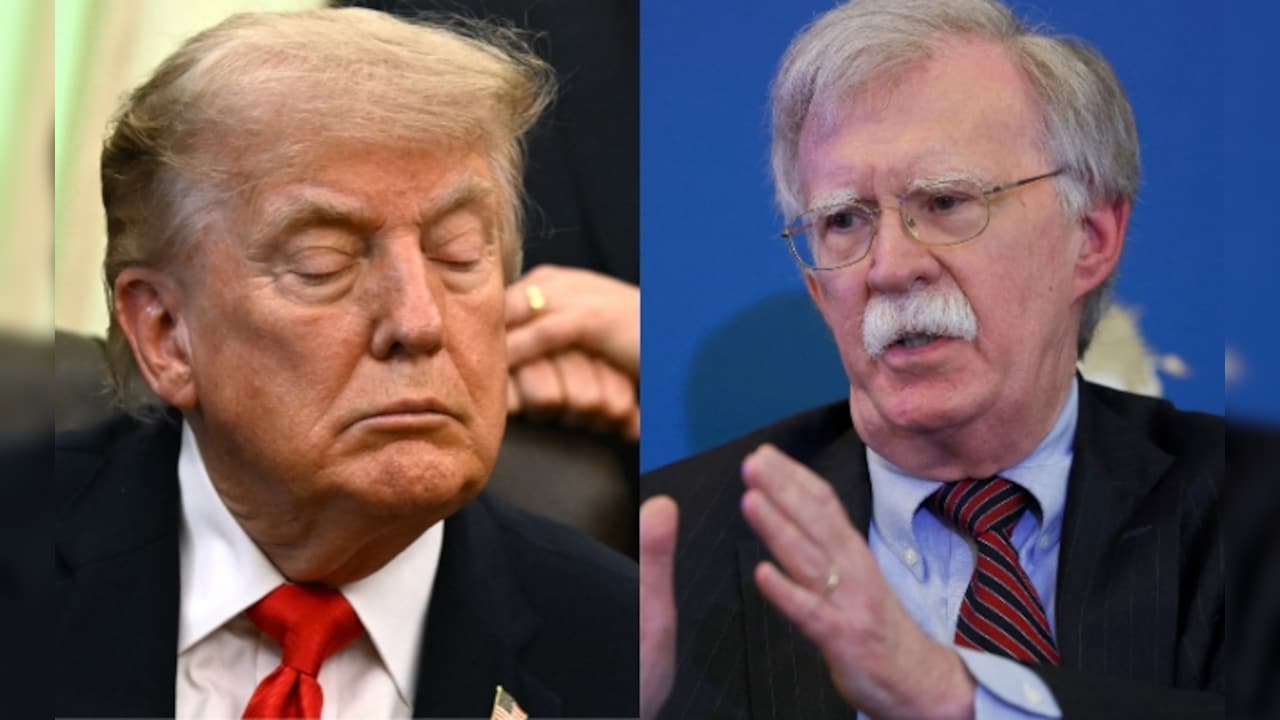
The white flag came disguised as a fourteen point memorandum of understanding. When President Donald Trump and Iranian President Masoud Pezeshkian signed a virtual accord to pause hostilities, Washington officials spun it as a masterstroke of pragmatic diplomacy. To the hawkish foreign policy establishment, however, the deal represents a catastrophic failure of American nerve. John Bolton, the former National Security Advisor who once helped direct the administration's maximum pressure campaign, did not mince words when analyzing the agreement. He argued that the administration blinked under pressure, handing Tehran an unearned economic lifeline while failing to secure concrete guarantees on the world's most critical maritime chokepoints.
The agreement establishes a sixty day window to iron out a permanent ceasefire, pauses active military engagements, and promises to restore the free flow of oil traffic through the Strait of Hormuz. In return, Washington is dangling major sanctions relief. This sudden pivot arrives after three months of intense maritime skirmishes and soaring energy prices that threatened to upend domestic economic stability. By prioritizing short term relief at the pump, critics argue the administration has fundamentally undermined its own long term strategic credibility.
The Anatomy of a Modern Capitulation
Washington chose to trade structural deterrence for immediate political breathing room. For months, the deployment of American naval assets failed to completely pacify the waters around the Arabian Peninsula. Drone strikes continued. Insurgent actions persisted. Instead of intensifying the military pressure to establish true dominance, the White House shifted its focus to inflation data and domestic polling numbers.
The immediate result is a document that offers substantial, front-loaded perks to Iran while leaving the primary drivers of the conflict unresolved. Under the current terms, Iran secures immediate access to previously frozen assets and a relaxation of export restrictions on its oil sector. Washington receives a promise. Tehran has agreed to halt hostile operations in shipping lanes, but the mechanism for verifying this compliance remains remarkably vague.
This asymmetry undercuts decades of American foreign policy doctrine in the Middle East. Security experts point out that rogue states routinely utilize temporary diplomatic agreements to restock their treasuries without abandoning their long term geopolitical ambitions. By easing the financial squeeze before demanding the complete dismantlement of Iran's regional proxy networks, the administration has given up its strongest bargaining chip.
Why the Strait of Hormuz Remains an Open Wound
The central justification for this diplomatic gamble was the total restoration of maritime transit. It has not happened. While Vice President JD Vance defended the agreement by pointing to a slight drop in global oil prices and an initial resumption of commercial shipping, the underlying legal framework of the deal contains a glaring omission. It fails to explicitly strip Tehran of its ability to interfere with international vessels under the guise of local regulations.
Bolton pointed directly to this vulnerability during recent public briefings. The agreement does not definitively bar Iran from implementing arbitrary tolls, demanding cargo inspections, or forcing commercial ships to comply with restrictive maritime protocols.
"The Strait of Hormuz is an international waterway, and that means there is a right of innocent passage through the strait for all commercial vessels," Bolton remarked. "This agreement does not prohibit Iran from trying to charge tolls or imposing other conditions on maritime traffic."
If the Iranian regime chooses to exploit these gray areas, the entire premise of the truce collapses. A hypothetical scenario illustrates the danger. If a western container ship refuses to pay a newly invented transit fee in the strait, Iranian forces could legally detain the vessel under domestic maritime laws without technically violating the explicit wording of the peace memorandum. Washington would then face the exact same crisis it just spent months trying to avoid, only this time, Tehran would have billions of dollars in fresh sanctions relief already sitting in its banks.
The Mirage of Nuclear Compliance
Nuclear proliferation remains the most terrifying variable in this geopolitical equation. The administration claims that pausing hostilities will create the necessary diplomatic space to negotiate a broader containment treaty. Historical precedent suggests otherwise. Throughout the last three decades, whether dealing with Tehran or Pyongyang, American administrations have repeatedly fallen into the same tactical trap.
The pattern is entirely predictable. A rogue regime creates a localized crisis through military provocation or accelerated enrichment activities. Washington panics over the prospect of an escalating war. A temporary deal is struck, offering immediate economic benefits in exchange for vague promises of future cooperation. The rogue state pockets the cash, delays inspectors, and continues its covert programs behind closed doors.
Leaked intelligence reports circulating in Washington indicate that the recent three-month conflict did absolutely nothing to slow down Iran's underlying nuclear timeline. The infrastructure remains intact. The centrifuges continue to spin. Believing that a temporary economic pause will suddenly transform the strategic calculus of the Iranian theological elite is a form of willful blindness that ignores the core ideological drivers of the regime.
Unintended Casualties in the Regional Alliance
The consequences of this sudden policy shift extend far beyond the immediate waters of the Persian Gulf. Israel now finds itself in an incredibly precarious position. For years, Jerusalem operated under the assumption that the United States would maintain a credible military threat against Iranian expansionism. This deal shatters that assumption.
While the administration insists that the broader strategic partnership with Israel will survive this diplomatic disagreement, the reality on the ground tells a far different story. By granting Iran an immediate economic windfall, Washington has ensured that tens of millions of dollars will inevitably flow back into the coffers of militant groups operating along Israel's northern and southern borders. The cessation of military operations includes theatres like Lebanon, but a pause is not a solution. It is a rearming period.
Regional allies like Saudi Arabia and the United Arab Emirates are also watching this developments with growing alarm. If Washington proves unwilling to sustain a confrontation over the freedom of navigation in the world's most critical oil lane, these Gulf nations must reevaluate their own security dependencies. They may decide that cutting their own separate deals with Beijing or Moscow is a more reliable way to guarantee their long term survival than trusting an unpredictable American executive branch.
The Mechanics of the Sixty Day Clock
The clock is ticking loudly in Washington and Tehran. The fourteen point memorandum is not a final treaty; it is a framework that initiates a strict sixty day negotiation window. During this period, teams of diplomats must attempt to convert vague promises of non-aggression into a binding, verifiable international agreement.
The challenge is virtually insurmountable given the current domestic pressures facing both leaders. President Trump is facing immense pressure from his political base to deliver a definitive foreign policy victory that lowers domestic energy costs before the next election cycle. This creates a powerful incentive for the White House to accept cosmetic concessions rather than holding out for deep, structural reforms.
Iran understands this domestic political vulnerability completely. Their negotiators have decades of experience in stretching out timelines, exploiting linguistic ambiguities in texts, and threatening to walk away from the table at the exact moment American domestic political pressure reaches its peak. They played the administration like a violin during the initial skirmishes, and there is no reason to believe they will change their tune during the formal talks.
True deterrence requires an absolute willingness to walk away from a bad bargain and face the consequences of escalation. If the administration continues to prioritize short term economic metrics over long term strategic stability, the final treaty produced at the end of these sixty days will not be a peace agreement. It will be a formal document of American retreat. The administration needs to establish a definitive, unalterable baseline for these ongoing talks. If Iran fails to grant completely unrestricted, toll-free passage through the Strait of Hormuz within the first thirty days, the White House must immediately tear up the memorandum, reinstate every dropped sanction, and prepare for the naval enforcement operations it spent the last three months trying to escape.


