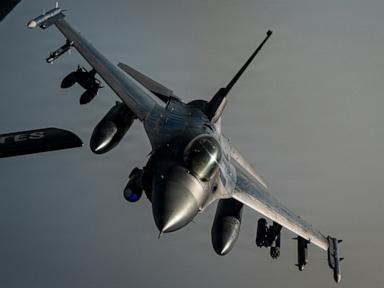
The standard defense-industry lamentation is predictable, lazy, and fundamentally wrong.
Every time oil prices spike, the defense establishment rolls out the same tired narrative. They complain that rising fuel costs are "fueling pain at the Pentagon," draining readiness accounts, and forcing agonizing trade-offs between training missions and keeping the lights on. They point to the Defense Logistics Agency buying nearly 100 million barrels of fuel a year and cry havoc because a $10 jump in crude costs translates to a billion-dollar hole in the budget.
This is a profound misreading of military reality.
High gas prices are not a strategic crisis for the military. They are a strategic forcing function. The real pain at the Pentagon isn’t that fuel is too expensive; it’s that the military is dangerously, pathologically addicted to it. By shielding the armed forces from the economic realities of energy scarcity, we are actively subsidizing tactical obsolescence.
The Logistical Mirage of "Cheap" Energy
Mainstream defense analysts look at the budget and see a line item. They calculate the price of a gallon of JP-8 fuel at the pump and call it a day.
This ignores the fundamental concept of the Fully Burdened Cost of Fuel (FBCF).
When a fighter jet or an armored column consumes fuel in a contested environment, the true cost isn’t the wholesale price paid to a contractor. The true cost includes the protected tankers, the security details, the aerial refueling assets, and the American lives required to move that fuel from a port to the front lines.
During the height of operations in Iraq and Afghanistan, the Pentagon estimated that while a gallon of fuel might cost a few dollars initially, delivering it to a remote forward operating base pushed the actual cost to hundreds of dollars per gallon. Marine Corps war games and operational reports revealed a brutal statistic: 10% of all US casualties in those conflicts occurred during fuel and water resupply convoys.
When fuel is cheap, the Pentagon treats it as an infinite resource. Command structures build operational plans that assume a seamless, unthreatened supply chain. This is a fatal assumption against a peer adversary.
High fuel prices force an immediate, brutal reckoning with reality. They expose the vulnerability of our logistical tail. If a division cannot operate without a constant, massive influx of fossil fuels, that division is not a modern fighting force. It is a hostage to its own supply lines.
The Incumbency Trap: Why the Pentagon Resists Change
I have spent years watching defense primes and legacy bureaucrats protect the status quo. They use temporary price spikes to demand emergency supplemental funding from Congress, treating energy volatility like an unpredictable natural disaster rather than a permanent feature of geopolitics.
This reaction serves a specific purpose: it protects legacy platforms.
The defense industrial base is built around heavy, thirsty systems. The M1 Abrams tank weighs upwards of 70 tons and burns roughly 1.6 gallons of fuel per mile—not miles per gallon, gallons per mile. A single carrier strike group consumes millions of gallons of fuel during a standard deployment.
Platform Fuel Consumption Metrics:
- M1A2 Abrams Tank: ~1.67 Gallons per Mile
- F-35A Lightning II: ~1,300 Gallons per Hour (Cruising)
- DDG-51 Destroyer: ~1,000+ Gallons per Hour (Operational)
The companies manufacturing these platforms have zero incentive to innovate away from fossil fuels because their sustainment contracts are incredibly lucrative. When gas prices rise, their first instinct is to demand more taxpayer money to maintain the exact same operational footprint.
If Congress continually bails out the Department of Defense every time OPEC restricts production, the military never learns to adapt. We are effectively paying to keep our forces slow, heavy, and dependent.
Dismantling the Premise: The Flawed Logic of "Readiness"
Go look at any major defense publication during an oil spike and you will find an article asking: Will rising fuel costs hurt military readiness?
The question itself is flawed. It assumes that "readiness" is measured purely by the number of hours a pilot spends in a legacy airframe or the number of miles a convoy drives in circles at Fort Irwin.
True readiness in a modern theater is defined by resilience, signature reduction, and logistical independence.
Consider the Western Pacific. In a hypothetical conflict across the Taiwan Strait, the concept of a contiguous, secure fuel supply chain disappears entirely. Fleet oilers will be primary targets for long-range anti-ship ballistic missiles. A carrier group that relies on constant replenishment will be forced to choose between retreating out of missile range or running dry.
In this context, high fuel prices at home act as an early warning system. They create the exact budgetary friction needed to kill off zombie programs and shift capital toward systems that do not require a massive logistics footprint.
- Operational Energy as a Weapon System: We must stop viewing energy as a utility and start viewing it as a vulnerability.
- The Power of Electrification: Hybrid-electric drive systems for tactical vehicles aren't about being environmentally friendly; they are about extending operational range, reducing thermal signatures, and enabling silent watch capabilities.
- Distributed Lethality: Small, autonomous, uncrewed systems require a fraction of the energy of manned platforms and can be deployed without a massive train of logistics vessels.
The Counter-Intuitive Truth About Innovation
History shows that the military does not innovate when it is comfortable. It innovates when it is desperate.
The US Navy’s transition from coal to oil in the early 20th century wasn't driven by a desire for efficiency. It was driven by the realization that oil-fired ships could travel faster, stay at sea longer, and be refueled at sea, giving them a decisive tactical advantage over coal-reliant rivals.
Right now, the Pentagon is facing a similar pivot point. Cheap oil acts as a narcotic, dulling the urge to transition to next-generation propulsion, advanced battery storage, and synthetic fuels.
When gas prices spike and stay high, it forces leadership to make hard, structural choices. Suddenly, investments in small modular nuclear reactors for forward bases or high-efficiency blended wing-body aircraft designs stop looking like speculative science fiction and start looking like immediate operational necessities.
The Downsides of My Stance
Let's be completely transparent about the risks of this approach. If the Pentagon does not receive immediate bailouts during a price spike, there is a short-term operational cost.
- Flight hours will be cut.
- Steaming days for the fleet will be reduced.
- Joint training exercises will be scaled back.
This introduces near-term risk. If a crisis erupts tomorrow, forces may be less practiced in traditional maneuvers.
But this short-term pain is preferable to long-term catastrophe. Accepting a temporary dip in legacy training hours is a reasonable price to pay if it forces the permanent retirement of inefficient, vulnerable systems and accelerates the deployment of platforms designed for the actual threats of the next decade.
Actionable Orders for the Defense Establishment
Stop whining about the line-item cost of fuel. Change the framework entirely.
First, Congress must mandate that all future platform procurement evaluations use the Fully Burdened Cost of Fuel calculated at $200 per barrel. If a proposed vehicle or aircraft cannot be justified economically under those conditions, it should not be built. This immediately shifts the competitive advantage from legacy defense giants to agile innovators working on high-efficiency propulsion and autonomous systems.
Second, the Joint Chiefs must decouple training from physical asset consumption. We possess advanced, high-fidelity synthetic training environments that can simulate complex, multi-domain operations without burning a single drop of JP-8. Save the live fuel for actual combat deployment and high-end validation exercises.
Third, aggressively divest from the heavy logistics tail. If a command cannot sustain its operational tempo using local, distributed, or renewable energy sources for at least 72 hours, that command should be deemed unfit for deployment to a contested theater.
The era of cheap, uncontested energy is over. The Pentagon needs to stop fighting the market and start exploiting it to force the modernization it has avoided for thirty years. Stop buying fuel you cannot protect to power platforms that cannot survive.