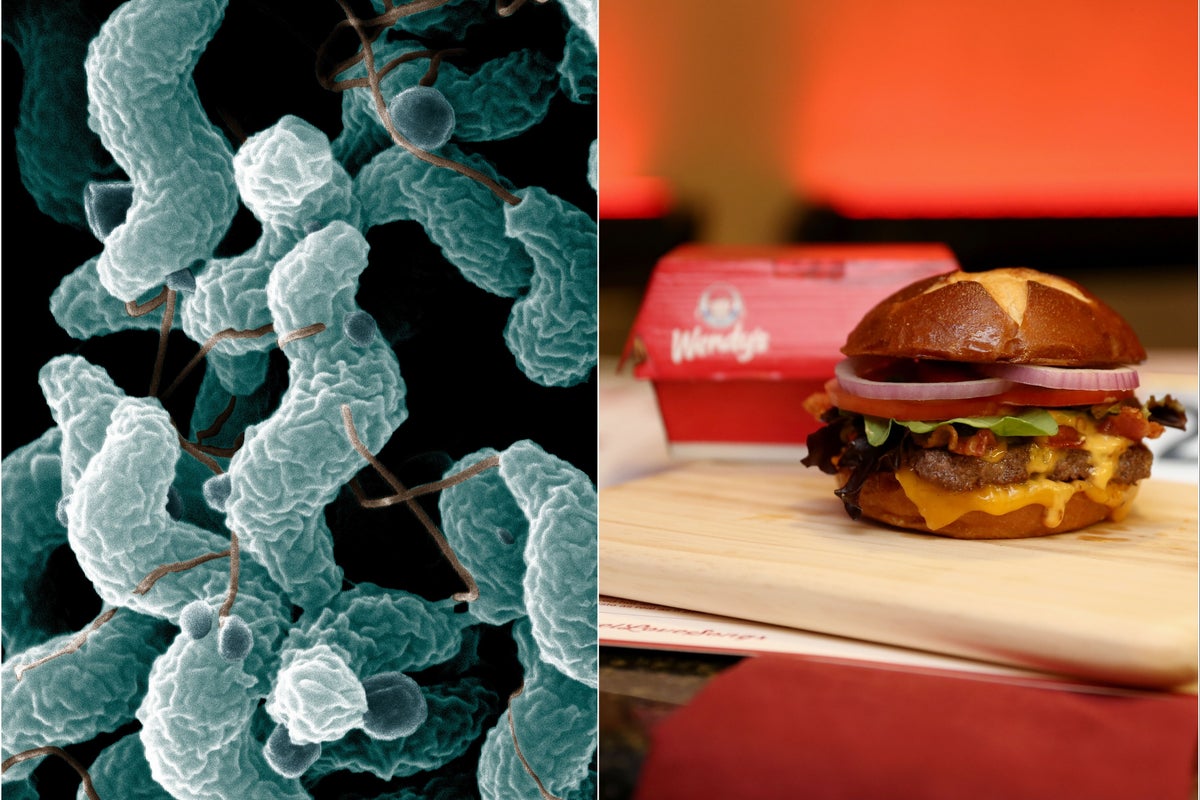
When a routine DoorDash delivery turns into a prolonged medical nightmare costing nearly one hundred thousand dollars in hospital bills, the illusion of fast food convenience shatters completely. A federal lawsuit filed by 68-year-old Chicago resident Roxie Ellis Douglas against Wendy's exposes the grim reality of foodborne pathogens infiltrating commercial kitchens. Douglas contracted a severe case of campylobacteriosis after consuming a double cheeseburger ordered from a South Stony Island Avenue franchise, launching a legal battle that highlights systemic vulnerabilities in the multi-billion-dollar fast-food supply and preparation chain. While corporate public relations teams lean heavily on automated safety protocols and certified sourcing frameworks, the operational breakdown at the ground level tells a far more hazardous story.
The Anatomy of a Pathogen Breakdown
Understanding how a standard double cheeseburger becomes a vehicle for severe bacterial infection requires looking past the corporate checklists. Campylobacter is primarily associated with raw or undercooked poultry, making its presence in a beef product or assembly area a glaring indicator of kitchen cross-contamination. In a high-speed commercial kitchen environment where assembly lines blur together, the risk of transferring pathogens from raw handling stations to ready-to-eat components multiplies exponentially.
Consider a hypothetical shift during a rush. A line cook handles raw ingredients without changing gloves, touches a prep counter, and seconds later dresses a toasted bun or stacks beef patties. The margin for error vanishes beneath the pressure of drive-thru timers and delivery app orders.
- Cross-contamination vectors: Shared utensils, unwashed surfaces, and improper glove hygiene routinely bypass invisible quality checks.
- Temperature control failures: Holding cooked proteins below thermal safety thresholds allows dormant or surviving bacteria to multiply rapidly.
- Supply chain blind spots: Even when corporate providers ensure baseline standards, individual franchise adherence frequently depends on minimum-wage shift supervisors juggling high staff turnover.
Douglas's medical trajectory—spanning multiple inpatient stays at Advocate Trinity Hospital, acute infectious colitis, and a colonoscopy months later—demonstrates how quickly a commercial oversight translates into catastrophic physical and financial tolls. Spending nearly one hundred thousand dollars on emergency transport, intensive care, and diagnostic procedures underscores the brutal human cost born by consumers when internal safeguards fail.
The Legal and Corporate Blame Game
Corporate entities facing product liability and negligence claims typically default to a predictable playbook. They highlight multi-tiered supplier audits, mandatory employee training modules, and strict adherence to industry regulations. Yet, federal lawsuits like the one brought by Douglas target the exact point where corporate policy meets human fatigue: the local franchise kitchen.
When a plaintiff alleges a breach of the implied warranty of wholesomeness, they challenge the fundamental social contract of the restaurant industry. Consumers pay for ready-made nourishment under the explicit assumption that the establishment has neutralized known biological hazards. When that assumption breaks, accountability frequently stalls between the parent corporation, the independent franchise owner, and third-party delivery couriers who handle the sealed packaging last.
The legal arguments point toward three distinct failures:
- Inadequate sanitation maintenance in day-to-day kitchen operations.
- Sourcing or handling lapses that introduce defects into consumable items.
- A complete absence of warning regarding biological hazards inherent in the final product.
Broader Systemic Pressures in Quick Service
The modern quick-service landscape operates on razor-thin margins and aggressive throughput metrics. Labor shortages across urban centers mean that franchise locations often operate with skeleton crews, forcing inexperienced workers to multitask across high-risk zones. When training is abbreviated to fill immediate staffing gaps, food safety fundamentals are often the first casualty.
Public health data consistently shows that foodborne outbreaks are rarely isolated anomalies of a single bad ingredient; they are symptoms of chronic operational drift. As long as speed dictates kitchen layout and performance incentives prioritize volume over meticulous sanitation, consumers will continue to roll the dice every time they order a standardized meal off a digital menu. The courtroom battles merely drag these invisible kitchen hazards into the harsh light of public scrutiny, revealing how fragile our food safety net truly remains.


