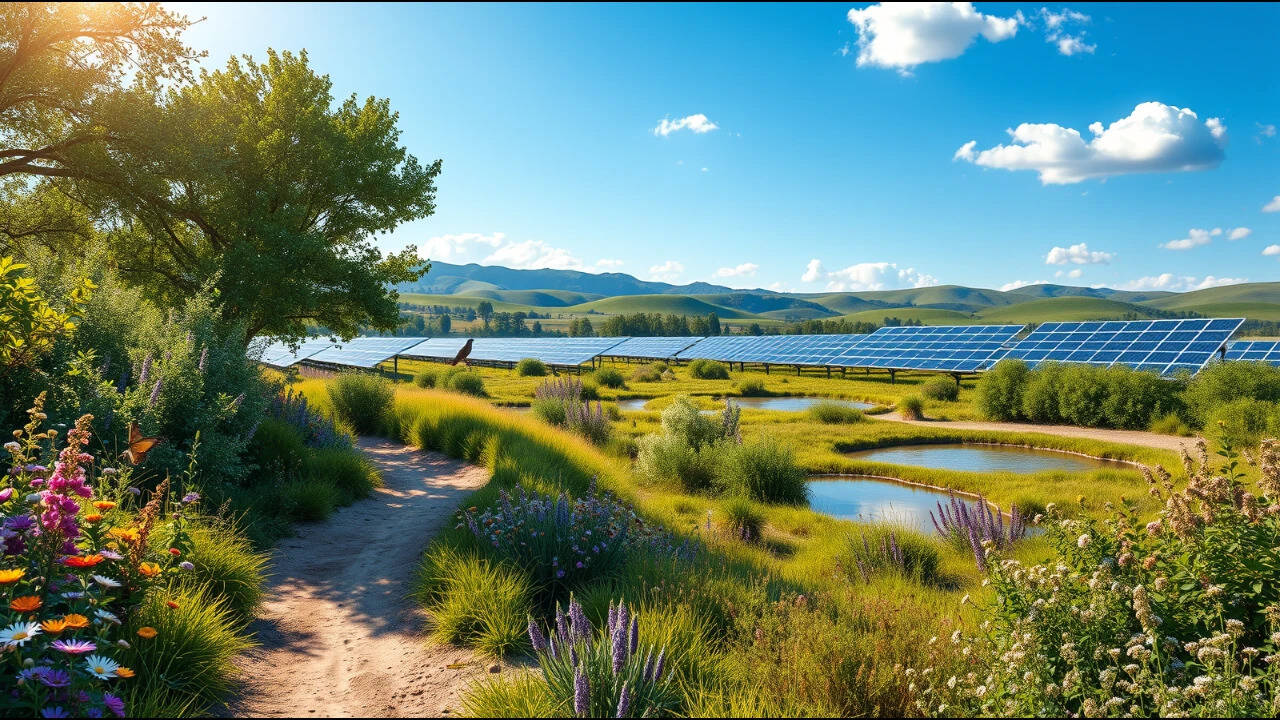
The narrative surrounding the Broxted Estate solar farm in Suffolk is seductive. A twelve-year study recently concluded that biodiversity on the property surged by 41 percent since 2011, a figure being touted as definitive proof that utility-scale renewable energy infrastructure and nature recovery can exist in harmony. It is a clean, comforting story. Yet, for those of us who have spent decades tracking the gritty reality of land management, the excitement surrounding these numbers requires a cold, hard look at what actually occurs when we industrialize the countryside.
The 41 percent increase is not a magic byproduct of solar panels. It is the result of aggressive, human-directed intervention. The site did not simply "get greener" because energy infrastructure appeared. The Suffolk Wildlife Trust, alongside estate ownership and commercial partners, engaged in a highly specific regime of habitat management. They utilized grazing sheep to prevent the land from becoming a scrubland wasteland, likely suppressing certain grasses to favor specific plant diversities that attract the nineteen red and amber-listed bird species identified in the report.
This is the central friction point that proponents of widespread solar expansion often gloss over. True environmental health in these setups is a manufactured commodity. If the funding for the Environmental Management Group—the entity coordinating these efforts—were to dry up, or if ownership changed hands to a firm less concerned with conservation optics, the biodiversity gains would likely evaporate within a few seasons. We are not witnessing the emergence of a self-sustaining wild ecosystem; we are looking at a managed garden that just happens to be covered in glass and silicon.
Consider the reality of land use. Solar developers frequently argue that they are dual-purposing the earth, extracting both electrons and ecological value. The Broxted model suggests this is possible, but it demands an admission that the land is no longer "natural" in any traditional sense. It is a commercial zone. When we talk about these gains, we must be honest about the baseline. A 41 percent increase from 2011 implies that the starting point was a landscape already subject to standard, perhaps intensive, agricultural practices. Improving biodiversity on an industrial farm is, by definition, a lower hurdle than protecting pristine wild spaces.
The engineering behind this success is as much about social cooperation as it is about biological science. The project succeeded because of a rare alignment of interests between a private estate owner, an energy corporation, and an environmental trust. This trio creates a protective bubble. In most other scenarios, the pressure to maximize energy yield per square meter often leads to the removal of hedgerows, the sterilization of grounds under panels to prevent shading, and the use of herbicides to minimize maintenance labor. Broxted is an outlier, not a prototype. It is a bespoke project that benefits from the deep pockets and long-term vision of a multi-generational estate.
If we intend to apply this strategy at scale, we face a massive hurdle in the form of cost. Who pays for the twelve years of monitoring, the sheep, and the specialized ecological oversight? If these costs are baked into the price of the energy, the electricity generated by such a farm is objectively more expensive than the output from a stripped-down, high-output solar installation. We are effectively choosing to pay a premium for "biodiversity credits" buried within our power bills. That is an acceptable trade-off for many, but it is a trade-off nonetheless, and one that is rarely spelled out in the glossy brochures produced by industry lobbyists.
There is also the uncomfortable question of species displacement. While nineteen bird species have been recorded, the study does not spend much time discussing the species that were driven out during the initial 2013 construction phase. Ecology is a zero-sum game in many respects. When you fence off several hundred acres and introduce grazing livestock, you change the behavior of predators, the migration paths of small mammals, and the soil composition. A 41 percent rise in a specific metric of biodiversity does not equate to a 41 percent improvement in the overall health of the environment. It indicates a shift in the community composition toward species that thrive in human-modified environments.
We need to stop treating these success stories as inevitable outcomes of renewable energy deployment. They are policy achievements. They are the result of conscious decisions to prioritize the environment over absolute profit margins. That is a commendable, even necessary, approach, but it is not the default. Without a regulatory framework that mandates this level of engagement, most solar farms will prioritize the bottom line, leaving behind sterile fields that offer little to the surrounding ecology.
Look closely at the data points that matter. We see eight bat species in the surrounding area and a healthy count of bird species. These are indicators of successful hedge management and insect population support. Yet, the energy sector is currently racing to scale up production to meet national targets. Speed and volume are the enemies of the kind of meticulous, twelve-year ecological monitoring seen at Broxted. As the industry scales, we will see a push for modular, rapid-deployment installations that skip the heavy, bespoke management plans which made this Suffolk project work.
The danger is that policymakers will use the Broxted study to justify lower environmental standards elsewhere. They will point to the 41 percent figure and argue that solar farms are inherently good for the land, using it as a blanket endorsement to fast-track permits for projects that lack the protective measures and the long-term ecological oversight that this specific estate provided. It is the classic mistake of confusing a single, well-resourced success with a scalable industry standard.
If we want to replicate the gains at Broxted, we must mandate the management. We need to formalize the role of the ecologist in the planning stage, not as a consultant who writes a report and walks away, but as a permanent fixture of the operational cycle. The panels themselves are static; the life around them is dynamic. If the industry is unwilling to treat its installations as living, managed entities, then the talk of biodiversity is nothing more than a convenient marketing strategy.
The electricity generated by this farm—over 350 gigawatt-hours—is significant. It is a genuine contribution to the energy grid. But the true value of the Broxted Estate is not the power. It is the evidence that if you force corporate entities to care about the land, the land will respond. We have a blueprint for how to do this right, but the heavy lifting of implementation remains largely ignored by the commercial rush to fill the countryside with panels.
The industry stands at a threshold. We can continue to hide behind the successes of the few, or we can legislate the rigor of the many. The next decade will show whether this 41 percent figure is a turning point in ecological management or merely a well-documented anomaly in a race toward industrial expansion. The soil under the panels does not care about energy targets. It only knows what it is fed, what is planted, and how it is protected. Watch the maintenance budgets in the coming years; that is where the real truth about biodiversity will be written.


