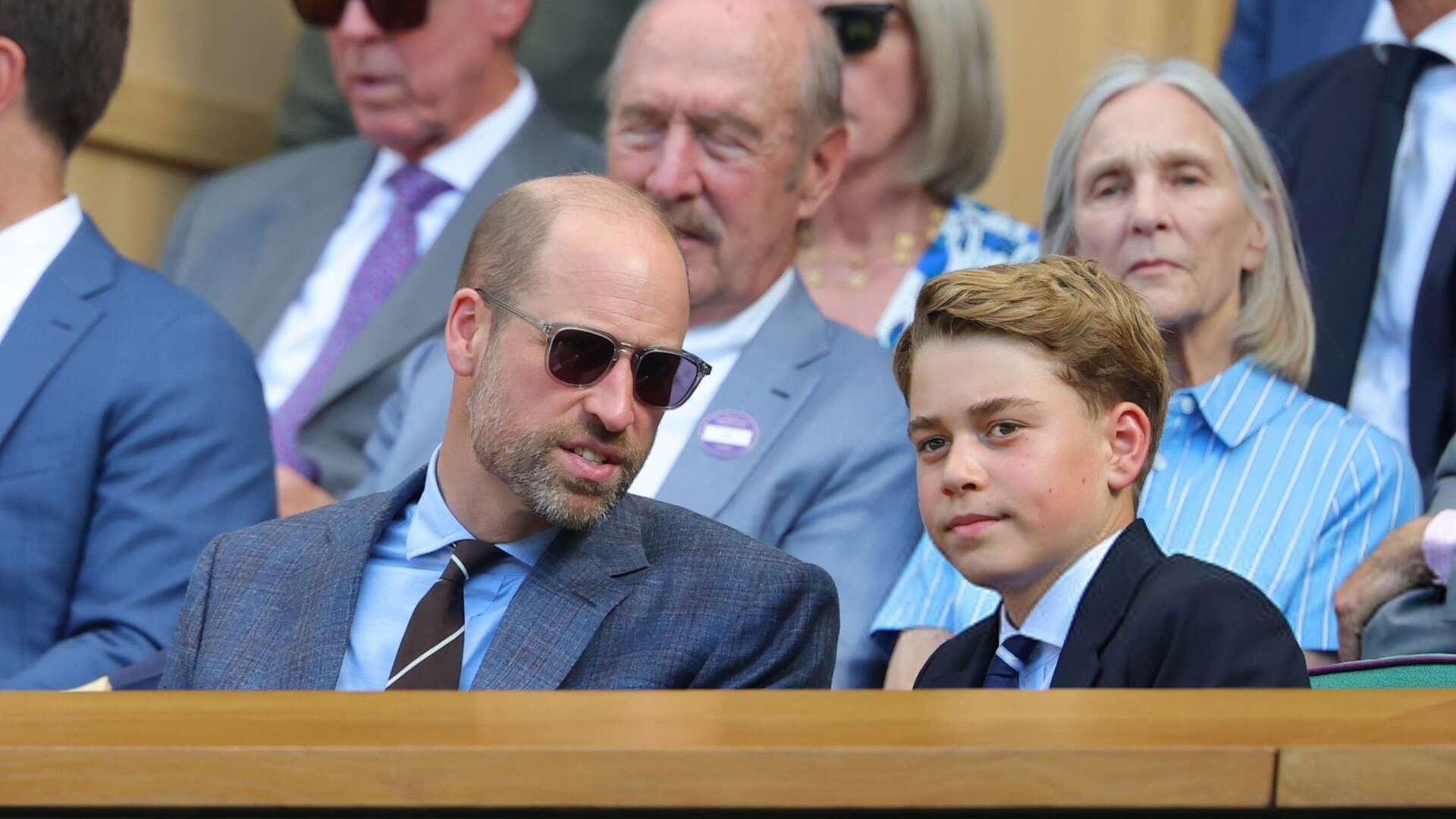
The sight of a young boy sweltering in a heavy wool suit during a blazing summer afternoon usually triggers a quiet word to the parents. When that boy is Prince George, sitting in the front row of the Royal Box at Centre Court, it triggers a global media storm. The reason Prince George wears a full suit and tie to Wimbledon, even during oppressive British heatwaves, is not a simple case of parental rigidity. It is the intersection of a mercilessly policed private club dress code and the calculated, centuries-old conditioning of a future British monarch. He is being trained to prioritize institutional duty over personal comfort, starting with his wardrobe.
During his appearances at the tournament, the young prince has been observed whispering to his father, Prince William, that he was too hot. Onlookers watched him sip water and fan himself with a wooden hand fan while wearing a navy blue jacket, a collared shirt, and a tightly knotted tie in temperatures exceeding 30 degrees Celsius. To the modern observer, this looks like unnecessary cruelty. To the architects of the British monarchy and the committee of the All England Lawn Tennis and Croquet Club, it is the bare minimum required to maintain an illusion of timeless order.
The Iron Gate of the Royal Box
To understand the suit, one must first understand the patch of green wicker chairs where the young prince sits. The Royal Box at Wimbledon contains exactly 74 seats. Entry is not a matter of wealth; you cannot buy your way in with a high-limit credit card. Invitations are distributed exclusively by the Chairman of the All England Club, sent to heads of state, tennis champions, commercial partners, and members of the British royal family.
With that invitation comes a legendary set of expectations.
The dress code for the Royal Box is explicitly defined on the tournament's official materials. Men are required to wear a lounge suit or a jacket with a tie. This is not a polite suggestion. In 2015, Formula One champion Lewis Hamilton was famously turned away from the Royal Box before the men's singles final because he arrived in a colorful floral shirt and no tie. Not even global sporting icons are permitted to bypass the mandate.
Critics argue that an eight- or twelve-year-old child should be exempt from such rules. They suggest that smart chinos and a polo shirt would be more appropriate for a growing boy. Yet, the palace and the tournament organizers view any relaxation of the rules as a dangerous crack in the foundation. If the future king is allowed to dress down, the prestige of the enclosure begins to erode.
The Arc of Aristocratic Attire
There is a highly specific timeline to how British upper-class boys dress. For generations, the sons of the aristocracy have been subject to a sartorial transition. Very young boys are kept in shorts, regardless of the weather. This tradition, which dates back to the Victorian era, dictates that trousers are for older boys and men, while shorts are a silent signifier of a child's youth and social standing.
When a young royal finally transitions into long trousers, it represents a step into adulthood and official public life.
For Prince George, wearing a suit to major sporting events is a visual declaration that he has graduated from the nursery to the public stage. It is a deliberate echo of his father, Prince William, who also wore suits to official engagements as a child. Observers of the royal family note that George views his father as a hero, actively wanting to mirror his appearance. While this explains the child's willingness to put on the clothes, it does not entirely erase the physical discomfort of doing so in a changing climate.
The Friction of Tradition and Climate Reality
The British summer is no longer what it was when Wimbledon established its original dress codes. Heatwaves are more frequent, and temperatures routinely spike to levels that make heavy tailoring physically punishing. Yet, the institutions of the British establishment remain stubbornly resistant to adaptation.
At recent tournaments, the All England Club has been forced to make minor concessions to the elements. They have allowed spectators in the Royal Box to wear hats to block the sun, a practice previously discouraged because wide brims block the view of those seated behind. Princess Catherine and Princess Charlotte have both taken advantage of this rule change, wearing lightweight summer dresses and using venue-provided fans to stay cool.
But the line is drawn at the male suit.
This refusal to modernise the male dress code, even for a child, highlights a broader tension within British society. The summer social season, which includes Royal Ascot, the Henley Royal Regatta, and Wimbledon, relies entirely on visual markers of exclusivity. If you remove the formal dress requirements, these events risk looking like any other public gathering. The suits are a barrier, a way of keeping the modern world at arm's length.
The Psychological Training of a Monarch
Behind the scenes, the insistence on formal wear serves a deeper, more domestic purpose. The life of a working royal is not one of personal freedom. It is a life defined by public duty, constant scrutiny, and long hours spent standing in uncomfortable clothing under hot television lights or in freezing wind.
By requiring Prince George to wear a suit to high-profile events, his parents are initiating him into the physical demands of his future role.
He is learning to endure discomfort without showing irritation on his face. The cameras are always trained on him, waiting for a sign of a tantrum or a complaint. Every sigh is analyzed; every sweat drop is photographed. Managing his posture and his expressions while wearing a restrictive uniform is the first real training a future king receives.
It is a silent, physical education in duty. While his peers are wearing T-shirts and shorts, George is learning that his public self belongs to the nation, and that public self must always look impeccable.
The tension between modern parenting and royal tradition will continue to play out on the world stage. As global temperatures continue to rise, the sight of a young prince in a heavy woolen suit will likely draw even sharper criticism from a public increasingly focused on child welfare and practical living. But the monarchy does not run on practicality. It runs on the slow, deliberate preservation of the past, one tightly knotted tie at a time.