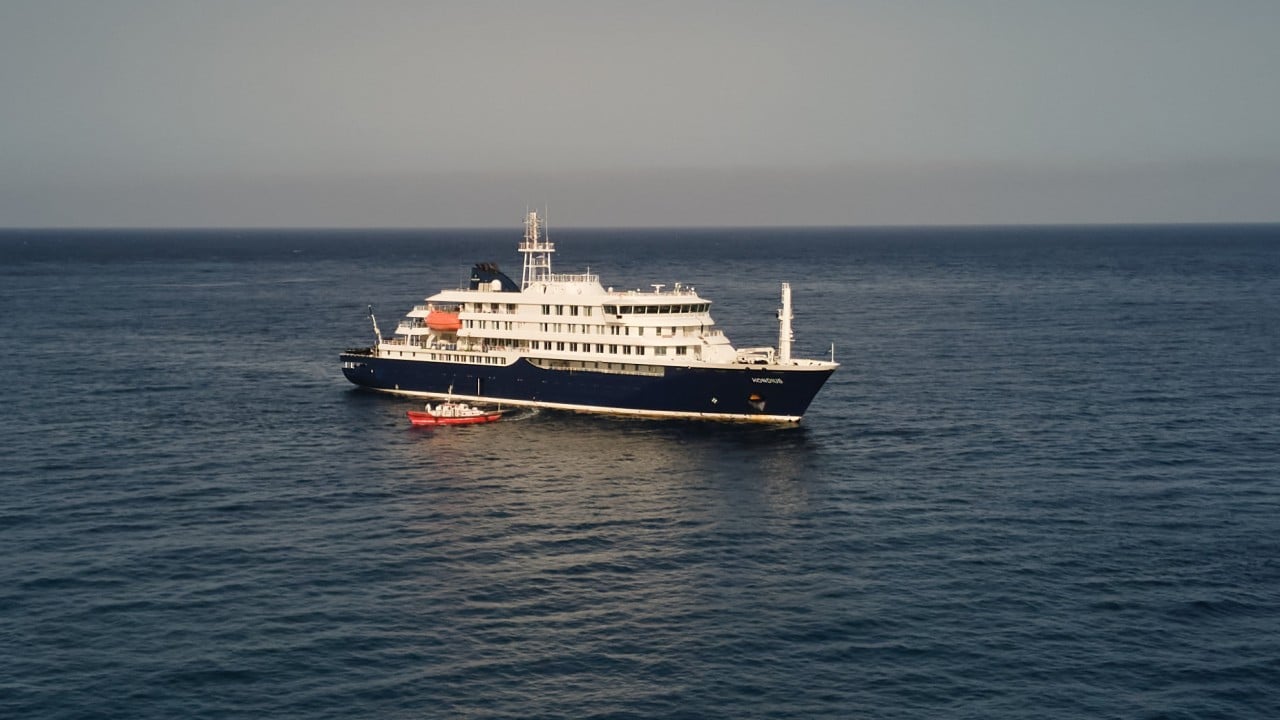
The MV Hondius, an expedition cruise ship carrying 147 passengers and crew, is currently en route to the Canary Islands following a deadly hantavirus outbreak that has claimed three lives and sickened several more. The vessel, which left Ushuaia, Argentina, in early April 2026, was intercepted by international health agencies and Spain's health ministry after Cape Verde found itself ill-equipped to manage the crisis. As the Andes strain of the virus—notable for its rare but documented potential for human-to-human transmission—is confirmed by authorities, the situation highlights the hidden biological risks inherent in remote ecotourism.
The Anatomy of an Outbreak at Sea
The journey began quietly on April 1, 2026. The Hondius departed Ushuaia with 88 passengers and 59 crew members representing 23 different nationalities. The itinerary was designed to cover remote and ecologically diverse territories: mainland Antarctica, South Georgia, Nightingale Island, Tristan da Cunha, Saint Helena, and Ascension Island. It was a route made for nature enthusiasts willing to pay for isolation from the modern world. Don't miss our recent coverage on this related article.
Instead, the passengers found themselves trapped in an entirely different kind of isolation.
The illness onset among the initial patients occurred between April 6 and April 28. Early clinical presentations included fever, gastrointestinal distress, and rapid progression to acute respiratory distress syndrome (ARDS) and shock. By the time the World Health Organization (WHO) issued its outbreak notification on May 2, the situation had deteriorated significantly. If you want more about the background of this, Medical News Today provides an in-depth summary.
To understand how a rodent-borne virus appeared on a steel-hulled vessel in the middle of the South Atlantic, we must examine the mechanics of hantavirus transmission.
Hantaviruses are zoonotic pathogens. Humans are typically infected through direct contact with or the inhalation of aerosolized particles from the urine, feces, or saliva of infected rodents. The initial infections on the Hondius almost certainly occurred prior to boarding or during early wildlife excursions in South America or remote sub-Antarctic islands. The rapid multiplication and spread of the illness, however, point toward the unique conditions of shipboard life.
The Hondius is an expedition vessel designed for small groups, yet it features tight quarters, shared dining areas, and recirculated air. These tight quarters accelerate the spread of any infectious disease when standard biocontainment measures fail to keep pace with an evolving contagion.
The Biological Threat of the Andes Strain
Hantavirus cardiopulmonary syndrome (HCPS) is notoriously dangerous. The case fatality rate can reach 50 percent. More than 20 viral species exist within the Orthohantavirus genus. While the Sin Nombre virus causes the majority of cases in North America, the Andes virus dominates in South America.
The Andes strain stands apart because of a terrifying biological trait. It is the only Orthohantavirus known to be capable of limited human-to-human transmission.
This transmission does not occur through casual contact or airborne droplets in the way influenza or COVID-19 spreads. It requires close, prolonged interactions. Sharing a bed, sharing food, or providing direct medical care without proper protective equipment can bridge the viral gap.
In the cramped confines of a cruise ship cabin, these conditions are easily met.
When the virus enters the body, it targets the endothelial cells lining the blood vessels. This creates a massive inflammatory response, causing blood vessels to leak fluid into the lungs. The resulting pulmonary edema forces patients into respiratory failure, necessitating supplemental oxygen or mechanical ventilation in intensive care units. The high fatality rate is a stark reminder of why public health officials treat any cluster of hantavirus as a medical emergency.
The virus spread from the initial index patients to others on board. This secondary transmission is precisely why international health authorities raised the alarm. It is no longer a localized environmental exposure. It is a cluster with the potential to propagate within a closed population if containment protocols fail.
The Logistics of Quarantine and Repatriation
When the Hondius approached Cape Verde, the West African island nation faced an impossible dilemma. The vessel requested assistance, but local authorities lacked the specialized biocontainment facilities and medical infrastructure to manage a severe viral outbreak.
The ship remained offshore while diplomatic and medical teams scrambled to find a solution.
Spain’s health ministry agreed to accept the vessel in the Canary Islands, directing it toward Tenerife or Gran Canaria. This decision was made following urgent requests from the WHO and the European Centre for Disease Prevention and Control.
The decision was not universally popular.
Fernando Clavijo, the regional president of the Canary Islands, expressed deep concern over the potential public health risk to the local population. He demanded an urgent meeting with Spain's Prime Minister, Pedro Sánchez. The central government, exercising its authority under international maritime and humanitarian law, bypassed regional objections to allow the docking.
The logistical dance is staggering.
Patients require immediate, specialized treatment. Two individuals remain in critical condition, while others show mild or no symptoms. The ship's doctor was among the evacuated patients. South African health authorities confirmed that testing performed on an evacuated British passenger showed the Andes strain, while another passenger who collapsed and died in South Africa was also tested posthumously.
The remaining passengers on the Hondius are subject to a 45-day monitoring period. Monitoring a closed cohort of 147 passengers and crew onboard requires strict environmental cleaning procedures. Dry sweeping is prohibited. Ventilation systems must be set to maximum outside-air intake to minimize the concentration of any aerosolized virus. Medical masks are mandatory for anyone displaying symptoms.
Once they dock in Tenerife, each passenger must undergo health screenings, antibody tests, and PCR tests before they are cleared to return home. The Canary Islands authorities are entirely justified to be concerned about the logistical capability to manage 150 people at once while keeping them strictly separated from the public.
The Gray Areas of Global Health Governance
The incident exposes the vulnerabilities of international maritime law when applied to emerging biological threats. Cruise operators market remote itineraries as pristine and safe, yet they operate thousands of miles from tertiary medical centers.
When an outbreak occurs, the burden of care falls on the nearest available sovereign state.
In this instance, Spain acted under humanitarian principles, but the Hondius is a Dutch-flagged vessel, chartered by a Netherlands-based operator. The passengers represent dozens of nations, and the initial exposure likely occurred in Argentina.
Who bears the financial and legal responsibility for the evacuation?
International health regulations do not provide a clear, standardized playbook for multi-country, multi-jurisdictional outbreaks at sea. The WHO's current guidance relies on the cooperation of multiple states parties, including Cape Verde, the Netherlands, Spain, South Africa, and the United Kingdom.
This decentralized response creates friction.
As of early May, over sixty contacts, including flight crew and hospital staff, are being traced across three continents. The risk to the wider public remains low, according to health officials. Yet, the margin for error is razor-thin when dealing with a pathogen that boasts such a high fatality rate.
The Hondius operator, Oceanwide Expeditions, is facing substantial financial and legal exposure. The costs of multiple medical evacuations—including specialized hospital aircraft to South Africa and the Netherlands—are compounded by the legal exposure arising from the failure to protect passengers from known regional diseases.
Hard Realities for the Expedition Industry
The incident forces an uncomfortable reckoning for the expedition cruise sector.
For decades, the industry has expanded its reach into increasingly remote and ecologically fragile regions. Operators rely on Zodiac landings, guided walks, and close interaction with local wildlife populations.
The procedures for environmental cleaning onboard such vessels require strict adherence to biological safety standards.
Dry sweeping, for example, is strictly prohibited because it aerosolizes dust and potential pathogens. The ventilation systems on these ships must be continuously evaluated for filtration efficiency. If the ship's crew lacks the training or equipment to enforce strict isolation and disinfection procedures, a localized zoonotic event can spiral into an international incident.
The MV Hondius is undergoing intensive disinfection. Passengers who tested negative remain isolated in their cabins, awaiting their turn to return home.
The journey continues, not toward the serene isolation of the Antarctic, but toward a Tenerife port filled with ambulances and epidemiologists.
The illusion of total separation from nature's dangers has once again been broken by the realities of biology.


