Washington wants Southeast Asia to pick a side. Southeast Asia has spent decades perfecting the art of refusing to do just that.
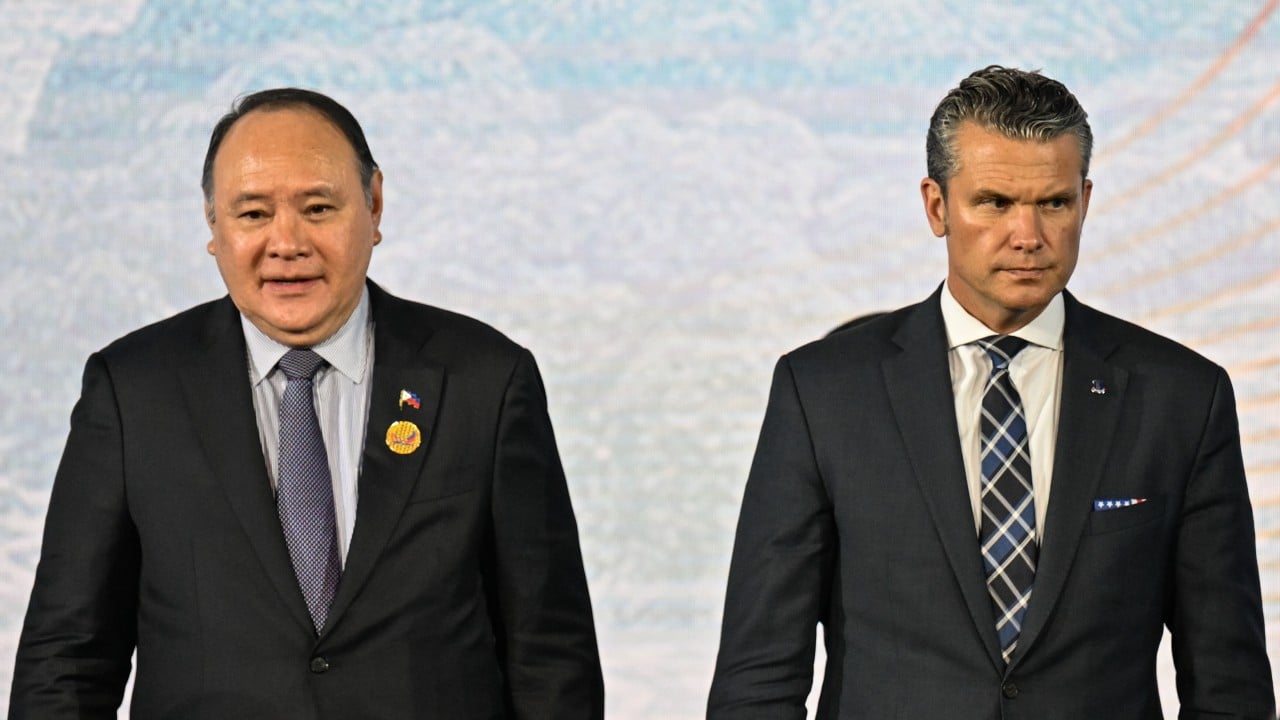
When US Defense Secretary Pete Hegseth recently pitched a revamped US-ASEAN defence framework, the diplomatic applause in the room masked a massive wall of regional hesitation. On paper, the proposal looks like a standard Washington play to modernize maritime security, streamline joint military exercises, and counter Beijing's growing footprint in the South China Sea. In reality, it runs straight into the buzzsaw of Southeast Asian realpolitik.
If you've spent any time following Indo-Pacific security, you know the drill. American administrations come and go, each arriving with a shiny new regional acronym or security architecture, while ASEAN leaders nod politely, sign a diluted joint statement, and go right back to balancing Washington against Beijing.
Hegseth's pitch isn't failing because Southeast Asian nations love China's coast guard tactics. They don't. It's stalling because regional capitals have deep, structural doubts about American staying power, domestic political swings, and the exact cost of getting caught in a superpower crossfire.
What Pete Hegseth Actually Proposed
To understand why regional diplomats are dragging their feet, you first have to look at what's actually on the table. Hegseth's outreach to the Association of Southeast Asian Nations isn't a formal mutual defence treaty like NATO. Nobody in Washington is naive enough to ask for that.
Instead, the Pentagon is pushing for tighter operational integration. That means expanding the ASEAN-US Maritime Exercise (AUMX), sharing real-time maritime domain awareness data, and building more resilient defence supply chains across the region. The pitch centers on deterrence through coordination—making it harder for any single power to bully smaller neighbours in contested waters without the entire region watching and responding in sync.
Sounds reasonable, right? If you're the Philippines, dealing with regular water-cannon blasts and laser-pointing incidents from Chinese vessels near Second Thomas Shoal, you want all the American backing you can get. Manila has already expanded US access to military bases under the Enhanced Defense Cooperation Agreement (EDCA).
But ASEAN isn't a monolith. It's ten distinct nations (soon eleven with Timor-Leste) with wildly different threat perceptions, economic dependencies, and political systems. What looks like a lifeline in Manila looks like a provocation in Kuala Lumpur or Jakarta.
The Trust Deficit Washington Can't Ignore
Here's the uncomfortable truth that rarely makes it into Pentagon press releases. Southeast Asian leaders don't fully trust American consistency.
Every four years, US foreign policy risks a complete 180-degree turn. Regional policymakers still remember the abrupt 2017 withdrawal from the Trans-Pacific Partnership (TPP), a move that gutted Washington's economic credibility in Asia overnight. Even when the Biden administration launched the Indo-Pacific Economic Framework (IPEF) to fill the void, the refusal to offer actual market access left Asian capitals underwhelmed.
Now, with the Trump administration back in the White House and Hegseth at the helm of the Defense Department, the "America First" ethos hangs over every handshake. Southeast Asian diplomats are asking a very blunt question behind closed doors. If a real shooting war breaks out in the South China Sea or over Taiwan, will Washington actually show up, or will it demand that allies pay up and fend for themselves?
You can't build a lasting security framework on "maybe." When countries like Indonesia and Malaysia look at Washington's transactional approach to alliances—whether it's questioning NATO commitments or threatening sweeping tariffs on Asian exporters—they see an unreliable partner. Why anger your largest trading partner for a security guarantor who might lose interest after the next election cycle?
China's Economic Gravity Is Simply Too Strong
You can't talk about US-ASEAN defence ties without talking about money. Specifically, Chinese money.
China has been ASEAN's largest trading partner for well over a decade, with bilateral trade routinely topping $900 billion annually. From high-speed rail projects in Laos and Indonesia to massive manufacturing investments in Vietnam and Malaysia, Beijing's economic footprint is baked into the daily survival of these governments.
In Southeast Asia, political legitimacy isn't built on abstract geopolitical ideals. It's built on economic growth, jobs, and infrastructure. If an Indonesian president or a Thai prime minister signs onto a US-led defence framework that Beijing views as a containment strategy, the economic blowback could be swift and devastating.
China doesn't even need to send warships to punish a disobedient neighbour. It can quietly slow down customs clearances for agricultural imports, restrict outbound tourist groups, or freeze Belt and Road financing. Washington simply doesn't have an economic counter-offer on the table that matches Beijing's wallet. Guns and radar systems don't build subways or employ factory workers.
The Myth of ASEAN Centrality vs Cold Reality
There's also a massive clash of diplomatic DNA happening here.
Washington prefers speed, efficiency, and clear chains of command. That's why the US has poured so much energy into "minilateral" groups like AUKUS (Australia, the UK, and the US) and the Quad (the US, Japan, India, and Australia). These smaller groupings get things done without getting bogged down in endless consensus-building.
ASEAN operates on the exact opposite model. Decisions require unanimous consensus. Non-interference in internal affairs is treated like sacred scripture. While this glacial pace has kept Southeast Asia largely peaceful since 1967, it makes the bloc terrible at rapid military coordination.
When Hegseth pushes for a unified US-ASEAN defence posture, he's asking a consensus-based organization to act like a military alliance. It won't happen. Countries like Cambodia and Laos, which maintain tight political and economic ties with Beijing, have an effective veto over any ASEAN-wide security initiative that looks too anti-China.
Even Singapore, arguably Washington's closest security partner in the region without a formal treaty, repeatedly warns against forcing Asian nations to choose between Washington and Beijing. Prime Minister Lawrence Wong and his predecessors have been crystal clear on this point. Forcing a binary choice doesn't corner China; it fractures ASEAN.
Where the Framework Actually Has a Shot
So is Hegseth's pitch dead on arrival? Not completely. If the Pentagon drops the grand strategic rhetoric and focuses on quiet, practical cooperation, there's plenty of room to work.
Southeast Asian nations genuinely want help with non-traditional security threats. Think illegal, unreported, and unregulated (IUU) fishing, piracy, disaster relief, and cybersecurity. Nobody in Beijing can easily complain when the US Navy helps ASEAN coast guards track illegal fishing fleets or responds to a typhoon in the Visayas.
Bilateral deals also remain far more effective than bloc-wide frameworks. Washington will continue making real progress with the Philippines on base access and joint patrols, with Vietnam on coast guard capacity and defence trade, and with Singapore on high-end naval and air logistics.
If you're tracking Indo-Pacific geopolitics or assessing regional risk for business and policy decisions, stop watching the big multilateral summits and the flashy framework announcements. Watch the quiet bilateral acquisitions, the coast guard ship transfers, and the trade numbers. Keep a close eye on how Manila and Hanoi manage their maritime borders over the next twelve months, and track whether Washington actually pairs its military pitches with concrete trade deals. Until the US offers an economic vision that rivals its military hardware, Southeast Asia will keep nodding politely at Pentagon proposals while keeping one foot firmly planted in Beijing's camp.