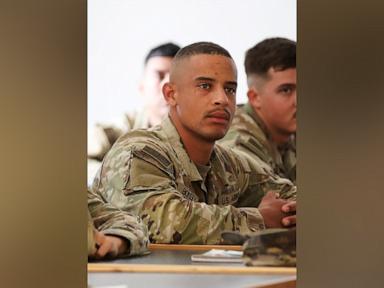
Military training will never be entirely safe. When you mix heavy machinery, zero illumination, and profound exhaustion, disasters occur. The recent death of Army combat engineer Adrian Bonsey at the National Training Center in California is a brutal reminder of this reality.
On June 10, 2026, Bonsey was on foot during a massive training exercise in the Mojave Desert. At 4:30 a.m., under conditions of limited visibility, an M2 Bradley Fighting Vehicle struck and run over the 29-year-old soldier. He was assigned to the 3rd Infantry Division out of Fort Stewart, Georgia.
This tragedy isn't an isolated mishap. It highlights a structural pattern of risk that the military struggles to contain. The National Training Center serves as the final, high-intensity evaluation before troops head overseas. To make it realistic, commanders push soldiers to their absolute physical limits. Unfortunately, those limits sometimes cost lives.
The Brutal Reality of NTC Training Conditions
The Mojave Desert is an unforgiving environment, especially at four in the morning. Units spend a month at the National Training Center navigating simulated war zones. The goal is to replicate the chaos, noise, and confusion of real combat.
This replication requires massive vehicle movements in total darkness. The M2 Bradley is a 27-ton armored beast. When you're sitting inside that vehicle, visibility is incredibly restricted. Drivers and vehicle commanders rely heavily on night vision optics or thermal sights. These tools have major limitations, creating dangerous blind spots.
Ground troops face equal challenges. Walking through the desert sand with heavy gear makes quick movements difficult. If a multi-ton vehicle bears down on a soldier in the dark, they have seconds to react. Combat engineers frequently work near these armored columns to clear obstacles or minefields. This puts them in the highest-risk zones on the simulated battlefield.
Why Ground Safety Rules Breakdown in the Field
The Army has strict protocols for ground movements around tracked vehicles. Ground guides are supposed to accompany vehicles moving in tight spots or near troops. Soldiers are taught to maintain clear distance.
Yet, in the middle of a massive field exercise, standard procedures break down. Fatigue changes everything. Combat training rotations intentionally induce sleep deprivation to test leadership under stress. When a crew has slept only two hours a night for a week, their reaction times tank. Peripheral vision narrows. Decision-making suffers.
The physical design of armored vehicles makes communication tough. The roar of a Bradley engine drowns out shouting. Radio channels get cluttered with tactical chatter. A soldier on the ground might assume a driver sees them, while the driver is actually focused on a completely different thermal signature on their display screen.
Tracking the Numbers Behind Military Training Casualties
Training incidents kill more service members than active combat during peacetime. In 2025, the Army lost 31 soldiers to training accidents. The fatalities were split between aviation crashes and ground incidents.
Most of these ground fatalities involved tactical vehicles, frequently in rollover accidents or ground strikes. The service averages roughly two vehicle-related deaths every month. While this number has dropped significantly since the height of the Iraq war surge in the mid-2000s, the current plateau proves that safety initiatives have hit a wall.
Official investigations into these mishaps repeatedly point to identical systemic failures. Inexperienced leaders, insufficient pre-execution checks, and profound sleep deprivation are constant factors. In several recent investigations, commanders supervising the high-risk maneuvers had only recently taken over their units. They lacked the familiarity required to spot subtle safety lapses before they turned fatal.
Practical Steps to Protect Soldiers on the Ground
We can't eliminate risk from combat training, but we can manage it better. Tech upgrades offer part of the solution. Integrating better proximity sensors on heavy armor could alert crews when a dismounted soldier gets too close. Thermal identification beacons on individual vests would help ground troops stand out on a driver's display panel.
The biggest changes must be cultural. Field commanders must balance the desire for realism with basic risk mitigation. Forcing an exhausted crew to execute a complex armored movement at 4 a.m. without adequate ground guides is a recipe for disaster.
Enforcing mandatory rest cycles during non-combat exercises isn't soft. It preserves combat power. Leaders must be empowered to pause an exercise when safety margins degrade. If the military continues to ignore the warning signs of cumulative exhaustion, more families will receive the devastating news that Adrian Bonsey's loved ones just did.