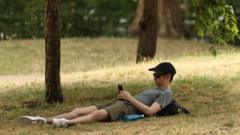
The sweat sticks to your neck at 3:00 AM, a damp weight that no cheap oscillating fan can lift. You flip the pillow. It is just as warm on the other side. Outside the window, the asphalt radiates a silent, invisible heat built up over weeks of relentless sun, a battery charging during the day and discharging into the bedroom floorboards all night.
We used to view summer as a reprieve. A reward for surviving the gray, bone-chilling months of winter. But lately, mid-summer feels less like a vacation and more like an endurance sport.
By the time late July bleeds into August, something changes in the atmosphere. The sky loses its sharp blue brilliance, replaced by a hazy, milk-colored dome that traps everything beneath it. Meteorologists call this the late-season shift. They look at satellite maps, pointing to pressure systems over the Atlantic and tracking moisture plumes rising from the south. They talk about the duel between high-pressure ridges and incoming cold fronts.
But on the ground, we don’t live in maps. We live in the humidity that makes it hard to draw a full breath. We live in the agonizing choice between running the air conditioner to the breaking point or facing an electric bill that looks like a mortgage payment.
Consider a hypothetical neighborhood on any block in the country. Let’s look at a woman named Sarah. She runs a small bakery, the kind of place that relies on foot traffic and the comforting aroma of ovens. In June, the heat was a novelty; people walked in for iced lattes. By August, the pavement outside her shop is hot enough to warp thin shoe soles. The street is empty. People are retreating indoors, sheltering in place against an invisible adversary. For Sarah, a prolonged August heatwave isn’t just uncomfortable. It is a financial hemorrhage.
This is the hidden friction of the season's second half. It is the period where the initial joy of summer curdles into exhaustion. And according to the latest atmospheric data, the weeks ahead are going to demand a lot more endurance from all of us.
The Mirage of the Cold Front
The weather forecasts tease us. They dangle the promise of relief like a carrot, showing green blobs of rain radar moving toward our towns. We see the little rain cloud icons on our phones and feel a sudden, desperate surge of hope. Finally, a break.
The rain will come. The models are quite certain about that. As the jet stream begins its inevitable late-summer wobble, it opens the door for low-pressure systems to slide across the country. These systems bring moisture, slicing through the stagnant air.
But water falling from the sky is a complicated blessing in August.
When a cold front slams into a wall of baked, superheated air, the result is rarely a gentle, romantic afternoon shower. Instead, the atmosphere reacts violently. Think of it like dropping ice water into a searing hot skillet. It pops, hisses, and explodes. The second half of summer brings a significantly heightened risk of localized, severe downpours—the kind of rain that falls so fast and so hard that the parched earth cannot absorb it.
Instead of soaking the soil, the water sheets off the hardened ground, turning suburban streets into shallow rivers and overloading municipal storm drains. You watch through the window as your garden gets flattened by a half-hour deluge, only for the sun to break through the clouds immediately afterward.
Then comes the real punishment.
The rain stops, but the heat remains. The moisture on the ground evaporates instantly under the midday sun, turning the world into a giant, suffocating sauna. The thermometer might read 88 degrees, but the humidity pushes the heat index well past 100. It is a suffocating, tropical soup. This is the great deception of late-summer rain: it doesn't always cool the world down; sometimes, it just seals us inside a greenhouse.
The Battery that Never Unloads
Why does the threat of a dangerous heatwave persist even when the days are technically getting shorter? The answer lies in the concept of thermal mass.
The earth is a slow learner. It takes months for the oceans, the soil, and the concrete of our cities to warm up in the spring. But once they absorb that energy, they do not let it go easily. By August, the planet has been baking under maximum solar radiation for over two months. The thermal battery is completely full.
Because of this accumulated energy, even a brief spell of sunny weather in late summer can trigger dangerous temperature spikes. The system is already primed. It requires very little effort from a high-pressure ridge to push temperatures back into the danger zone.
This creates a cumulative toll on the human body.
During the first heatwave of June, our bodies are fresh. Our homes are cool. But by the time the third or fourth heatwave rolls around in late August, our internal reserves are depleted. The walls of our houses have absorbed weeks of heat, radiating warmth inward even during the cooler hours of the morning.
Statistically, the health risks associated with heat escalate dramatically during the back half of the season. It is not necessarily because the temperatures are higher than they were in June, but because the exposure has been relentless. The body thrives on recovery, particularly nighttime recovery. When the nights stay hot, the heart works harder, sleep becomes fragmented, and stress hormones skyrocket.
The vulnerable among us—the elderly living in upper-floor apartments without central cooling, the construction crews pouring concrete on midday highways, the kids playing on synthetic turf fields—face a shifting landscape of risk. The danger becomes quiet, creeping, and ubiquitous.
The Rhythm of the Shift
Living through this time of year requires a shift in perspective. We have to abandon the illusion that summer is a static block of golden sunshine and recognize it as a volatile transition.
There is an art to navigating these weeks. It involves watching the sky not just for sun, but for the subtle changes in the wind that signal a pressure change. It means understanding that the atmosphere is trying to balance itself, trading the raw energy of heat for the chaotic release of storms.
We find ourselves waiting for autumn with a hunger that would have seemed blasphemous back in May. We look for the first yellow leaf on the maple tree, the first morning where the air feels thin and crisp instead of thick and heavy.
Until then, the summer must be endured. We check on neighbors. We drink water before we feel thirsty. We accept that the rain might not bring a breeze, but a steam bath. We adapt to the heavy air, moving a little slower, breathing a little deeper, waiting for the battery of the earth to finally run down.