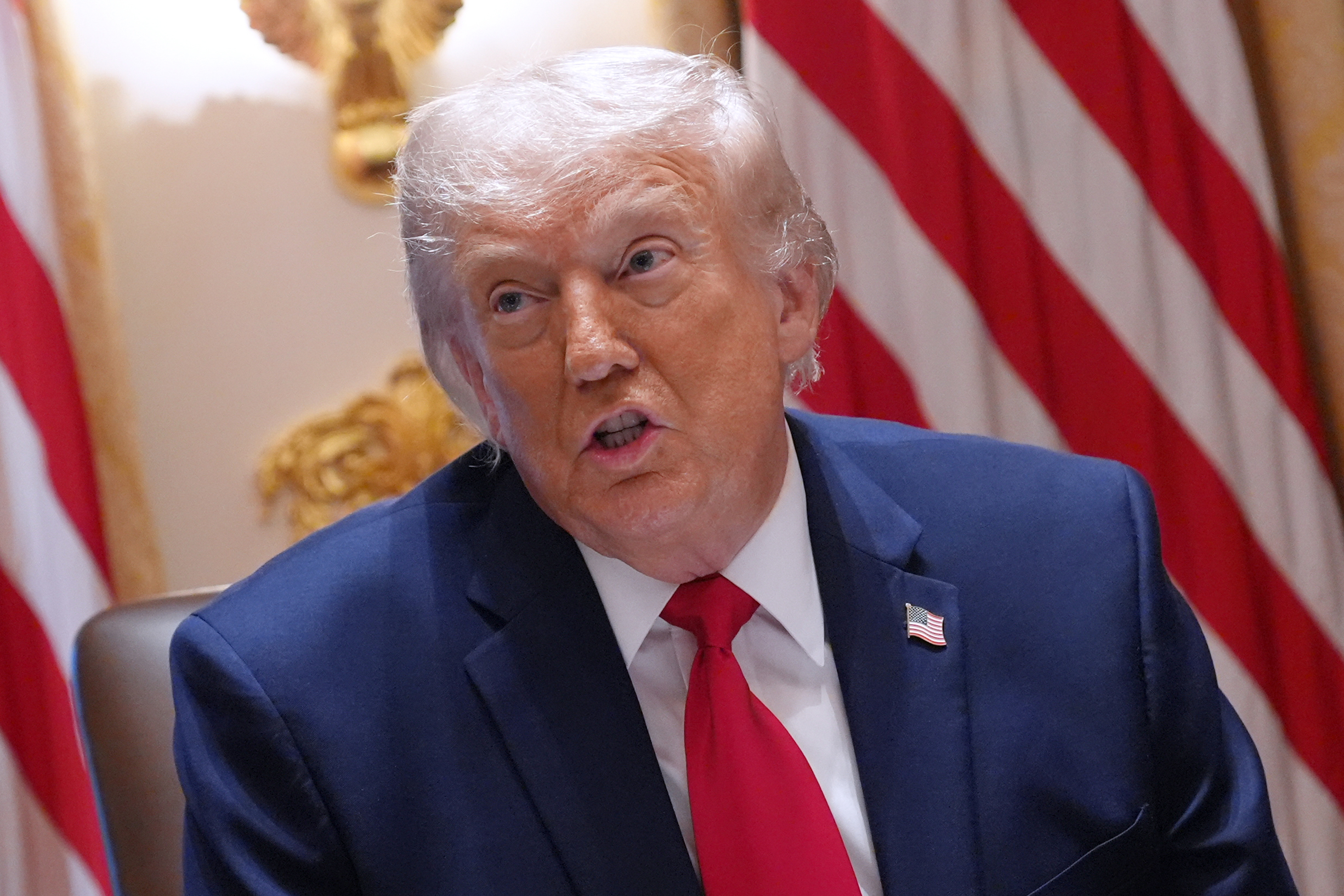
The room is sealed from the outside world, yet the pressure inside feels heavy enough to crack the glass. It is a quiet space buried within the White House medical suite, smelling faintly of antiseptic and polished wood. Outside, the geopolitical axis spins on a dime. Inside, a man sits on the edge of an examination table, the white paper crinkling beneath him with every slight shift of his weight.
Dr. Ronny Jackson, the White House physician, stands with a folder in hand. He looks at the numbers. He looks at the man.
The man is Donald J. Trump, the President of the United States.
To the public, he is an archetype of unyielding energy, a storm of rallies, late-night tweets, and fast-food feasts consumed on private jets. But the scale does not care about bravado. It does not register political victories or crowd sizes. It registers a cold, mathematical truth: 239 pounds. Paired with a height of six feet, three inches, that number puts the leader of the free world precisely on the precipice. His Body Mass Index rests at 29.9.
One tenth of a point more, and the medical charts officially reclassify him from overweight to obese.
This is not just a story about a routine physical. It is a glimpse into the bizarre, high-stakes collision between human biology and the most demanding job on Earth. We often treat the presidency as a position of pure power, forgetting that the person wielding it is still bound by the same fragile cardiovascular architecture as the rest of us.
The Illusion of Invincibility
Every President undergoes this ritual. They step behind the curtain, strip away the tailored suits, and let a military doctor probe their vulnerabilities. For Trump, a man whose public persona is rooted in strength and stamina, the annual physical is a strange moment of forced vulnerability.
Dr. Jackson steps up to the microphone in the press briefing room shortly after the examination. The journalists are restless. They want to know about cognitive tests; they want to know about cardiac health. Jackson delivers a line that will echo through the news cycle for days. He declares that the President has "incredibly good genes" and that "if he had a healthier diet over the last twenty years, he might live to be 200 years old."
The room laughs. It makes for a great headline. But beneath the hyperbole lies a more urgent reality.
The official medical recommendation is clear and uncompromising: the President needs to lose ten to fifteen pounds. He needs to change his diet. He needs to start exercising.
To understand why this is a monumental task, you have to look at the daily reality of the Oval Office. The presidency is an engine designed to grind human health into dust. It is a sedentary trap wrapped in unparalleled luxury. You do not walk anywhere; you are driven. You do not cook; a world-class culinary staff stands ready 24 hours a day to prepare whatever your heart desires. And if your heart desires a well-done steak with ketchup and a chocolate shake, that is exactly what appears on a silver platter.
Imagine the sheer friction of trying to implement a calorie-restricted diet when you are managing a nuclear standoff or negotiating a trillion-dollar budget. Stress triggers cortisol. Cortisol triggers cravings for fats and sugars. It is a biological trap. The body, sensing danger from the endless barrage of crises, demands fuel to fight or flee. But a President cannot flee. They sit in the Resolute Desk, eating a Filet-O-Fish, while the world burns outside the window.
The Secret Geometry of the Scale
Weight is a deceptive metric. We look at it through the lens of vanity, but doctors look at it as a map of internal pressure.
Consider the heart. Every extra pound of adipose tissue requires the body to develop miles of new micro-capillaries to supply it with blood. The heart has to pump harder, pushing against that vast, new network day in and day out. For a seventy-one-year-old man, that workload is not theoretical. It is a physical strain on a pump that has already been beating for more than seven decades.
During the press briefing, Jackson reveals that Trump takes a daily dose of Crestor to lower his cholesterol. His number had crept up to 223, which is a red flag in any medical textbook. By increasing the statin dosage, the medical team managed to bring that number down to 143.
That is the power of modern pharmacology. It acts as a safety net, catching the patient before they fall into the abyss of a major cardiac event. But medicine can only do so much heavy lifting. It cannot unclog an artery that is continually bombarded by a diet heavy in saturated fats and void of leafy greens.
The public reacts to these revelations with a predictable mix of mockery and defense. His detractors use the 239-pound figure to accuse the medical team of doctoring the records, pointing out that he looks heavier. His supporters point to his grueling campaign schedule as proof that his stamina defies standard medical logic.
Both sides miss the deeper point. The human body is a complex system of checks and balances. You can run on adrenaline and sheer willpower for a long time. Months, even years. You can bypass sleep, live on diet soda, and command audiences of thousands. But the bill always comes due. Biology is a meticulous accountant. It tracks every skipped hour of sleep, every elevated blood pressure reading, and every ounce of visceral fat crowding the internal organs.
The Battle of the White House Mess
The true drama of this medical mandate does not happen in the briefing room. It happens in the private quarters of the White House, where a quiet war begins over the President’s dinner plate.
How do you get a man who has spent a lifetime doing exactly what he wants to eat a salad?
The White House medical staff, alongside the chefs, have to resort to a kind of dietary espionage. They talk about introducing vegetables into mashed potatoes. They try to swap out high-calorie snacks for fruit, placing bowls of apples within arm's reach while hiding the starches. They suggest a low-impact exercise routine—perhaps a stationary bike or a treadmill in the residence.
But habit is a stubborn adversary. When you are the most powerful man on earth, the phrase "you have to" loses all its teeth. If the President wants a bowl of ice cream at midnight, there is no force in the building that can logistically stop him. The secret service will not tackle a chef for delivering a dessert.
This brings us to the psychological core of the issue. For Trump, food is not just sustenance; it is a comfort and a control mechanism. In a world where everyone wants something from him, where every word is scrutinized, a fast-food meal is predictable. A Big Mac tastes exactly the same in Washington D.C. as it does in New York or Tokyo. It is a rare, unchanging constant in a life of chaotic variables.
Asking him to give that up is not just about changing his physical health. It is about stripping away a psychological coping mechanism.
The Unseen Stakes of Governance
We have a long history of hiding the illnesses of our leaders. Woodrow Wilson’s debilitating stroke was kept a closely guarded secret. Franklin D. Roosevelt’s failing heart was obscured from a nation in the throes of world war. John F. Kennedy’s cocktail of medications for Addison’s disease was buried beneath a veneer of youth and vigor.
We do this because the health of the leader is directly tied to the stability of the state. If a President falters, markets dip. Adversaries look for weakness.
Dr. Jackson’s public performance is a masterclass in balancing clinical truth with geopolitical reassurance. He assures the world that cognitively, the President is exceptionally sharp. He passed the Montreal Cognitive Assessment with a perfect 30 out of 30. He is fit for duty.
Yet, the image of that 239-pound threshold lingers. It reminds us that no matter how much power a person accumulates, they are still just a collection of cells, valves, and arteries. The same heart that beats inside the leader of a superpower is susceptible to the same laws of physics and biology that govern a factory worker or a schoolteacher.
The recommendation to lose weight and exercise more is passed down not as a condemnation, but as an urgent plea from a medical team that understands the stakes. They know that the presidency is a marathon run at a sprinter's pace.
As the news cycle moves on to the next crisis, the folder is closed and filed away. The President returns to the West Wing. The cameras flash, the reporters shout their questions, and the heavy door of the Oval Office swings shut. Inside, a man sits down at a desk covered in papers that could alter the course of human history. He is surrounded by advisors, protected by an army, and insulated by the immense apparatus of state power.
But as he reaches for his pen, the quiet ticking of his own heart remains the one thing he cannot govern.