The morning air in Kansas City usually smells of two things: charred white oak and possibilities. For decades, this city existed in the minds of coastal dwellers as a silhouette on a map—a place you flew over to get somewhere "important." But something shifted in the dirt and the concrete. If you stand on the corner of 18th and Vine, you can feel the vibration of a city that stopped asking for permission to be on the world stage.
Kansas City didn’t just win a bid to host the 2026 FIFA World Cup. It outmaneuvered the giants.
Consider a local shop owner, let's call him Elias. He has run a small print shop near the Crossroads District for twenty years. To Elias, the World Cup isn't a collection of statistics about "infrastructure scaling" or "visitor spend." To him, it is the sound of six different languages being spoken outside his front door while he drinks his morning coffee. It is the terrifying, exhilarating reality that his neighborhood, once ignored by the world, is now the world’s chosen living room.
The Geography of Grit
The narrative around Kansas City often leans on the "Midwestern pioneering spirit." It’s a tired phrase, worn thin by tourism brochures. The truth is much more jagged. This isn't about covered wagons; it’s about a stubborn refusal to be sidelined.
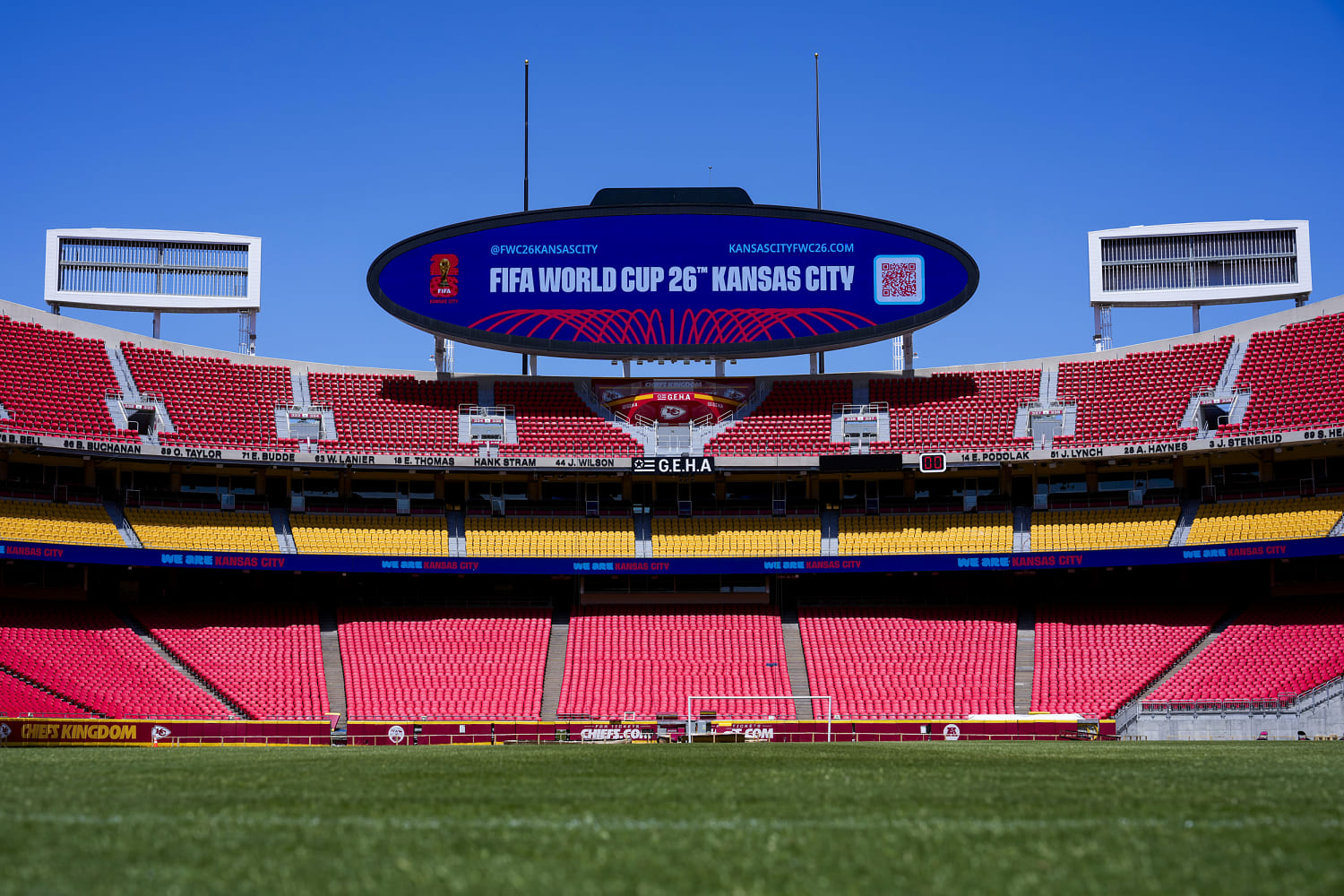
When the FIFA delegates arrived, they didn't see a sprawling metropolis with a subway system that rivals London or Tokyo. They saw something different. They saw Arrowhead Stadium—a literal sea of red concrete that vibrates with such acoustic intensity it has broken Guinness World Records. They saw a soccer-specific stadium in Sporting KC’s Children’s Mercy Park that proved this region understood the "beautiful game" long before it was trendy in the States.
But the logistics are a beast.
How does a city designed for cars and wide-open spaces suddenly accommodate hundreds of thousands of international fans who expect to walk, train, or bus to a stadium? This is the invisible stake. If Kansas City fails, it validates every critic who says the American heartland isn't ready for the global spotlight. If it succeeds, it rewrites the manual on how mid-sized cities participate in the global economy.
The $50 Million Handshake
The numbers are staggering, but they don't tell the whole story. The state of Missouri and the city have funneled millions into Arrowhead—now officially branded as Kansas City Stadium for the tournament—to meet FIFA’s exacting standards. They are ripping out seats, widening the pitch, and installing high-tech hospitality suites.
Yet, the real investment is happening in the streets.
The city is fast-tracking the expansion of its streetcar line. It is a gamble. Imagine a vascular system being built while the heart is already beating at double time. The goal is to connect the pulsing center of the city to the fans, creating a flow that feels natural rather than forced. It is a logistical tightrope walk. One wrong move, one delayed project, and the city becomes a gridlocked cautionary tale.
There is a specific kind of anxiety that comes with this level of transformation. It’s the feeling of a homeowner who has invited the entire neighborhood over for a gala before the roof is finished. We see the construction crews working under floodlights at 2:00 AM, and we know that this isn't just about football. It’s about the next fifty years of the city’s identity.
A Culture of the Pitch
Critics often wonder why a place famous for barbecue and American football would be the "Soccer Capital of America." To understand this, you have to look at the suburbs and the city centers alike.
In the 1970s and 80s, while the rest of the country was tentatively kicking a ball around in PE class, Kansas City was quietly building an obsession. This is the home of the National Training and Development Center. This is where the tactical minds of U.S. Soccer come to sharpen their blades.
The World Cup coming here is less of an introduction and more of a homecoming. The local fans don't need to be taught the rules of offside or the nuance of a false nine. They live it. When the matches begin, the atmosphere won't be a manufactured "fan experience" designed by a marketing firm in Zurich. It will be the raw, unbridled energy of a fan base that has waited forty years for the world to notice they were playing.
The Shadow of the Infrastructure
Let’s be honest about the hurdles.
The distance between the airport and the stadium is a logistical nightmare. In a city like New York or Madrid, you take the train. In Kansas City, you take the highway. The city is currently wrestling with the "last mile" problem—how to move fifty thousand people from point A to point B without creating a parking lot that spans three counties.
They are looking at massive shuttle systems, dedicated lanes, and temporary transit hubs. It’s a bit like trying to fit a gallon of water into a pint glass. The pressure is immense. Every official, every planner, and every volunteer knows that the eyes of billions will be on their transit maps.
But there is a hidden advantage to being the underdog.
When you are New York, you expect things to work because you are New York. When you are Kansas City, you make things work because you have to. There is a lean, hungry quality to the planning. There is a willingness to try unconventional solutions—like the free fare bus system that has already set a precedent for the rest of the country.
The Invisible Stakes
Why does this matter to someone who doesn't care about sports?
Because the World Cup is a catalyst for urban evolution. The improvements being made to the transit system, the renovations of public spaces, and the international investment in local businesses won't disappear when the final whistle blows and the teams fly home.
The city Elias lives in will be fundamentally different.
The "Midwestern pioneering spirit" isn't about a nostalgic look at the past. It’s about the audacity to believe that a city in the middle of a continent can become a global hub. It’s about the kid playing on a dusty field in Wyandotte County who will look at the stars of France, Brazil, or Argentina and realize that the world isn't somewhere else. It’s right here.
The stakes are personal. For the residents of the historic 18th & Vine Jazz District, the tournament represents a chance to showcase a cultural heritage that is as vital to the American story as any skyscraper. They are preparing for a surge of visitors who will come for the goals but stay for the soul of the city.
The Long Game
We often talk about "legacy" in sports as if it’s a trophy you put on a shelf. The legacy of 2026 in Kansas City won't be a trophy. It will be the kid who learned how to navigate a world-class transit system. It will be the small business that went global because it learned how to serve an international clientele.
The city is currently a construction site of dreams and heavy machinery. There is noise. There is dust. There is a healthy amount of skepticism.
But watch the people.
Watch the way the local chefs are experimenting with menus that bridge the gap between Kansas City smoke and international palates. Watch the way the volunteers are signing up in droves, not because they get a free t-shirt, but because they want to be the ones who said, "Welcome to my home."
This isn't just a tournament. It is a heavy, beautiful responsibility. It is the moment where the "flyover state" myth finally dies, buried under the weight of a million cheering fans.
When the sun sets over the Missouri River in June 2026, the reflection won't just show a city hosting a game. It will show a city that finally sees itself the way it deserves to be seen. The lights will come on, the pitch will be a perfect, shimmering emerald, and for one month, the center of the universe will be exactly where it was always meant to be.
Right here in the middle of everything.


