Silence has a weight. On June 12, 2021, seventy thousand voices inside the Parken Stadium in Copenhagen vanished in an instant. Millions more watching television screens across the globe gasped, then froze.
Christian Eriksen, a man at the absolute peak of human physical conditioning, trotted toward the touchline to receive a routine throw-in during Euro 2020. Then, his knees buckled. He fell forward, face-first into the grass. There was no collision. No lunging tackle. Just the sudden, terrifying capitulation of a body that had always been a finely tuned machine.
We are conditioned to view elite athletes as modern gladiators, invincible demigods who push past the boundaries of ordinary human endurance. But in that horrific, breathless stretch of minutes, the illusion shattered. The green grass of the football pitch became an emergency room. Captain Simon Kjær sprinted across the field, fiercely preventing his friend from swallowing his tongue. Medical staff pumped desperately at a chest that had, moments before, powered a nation's hopes.
Eriksen had suffered a sudden cardiac arrest. For several agonizing minutes, he was gone.
The world watched a brotherhood form a human shield around their fallen comrade, tears streaming down faces that usually wore masks of fierce determination. It was a stark, brutal reminder of a fragile truth we often choose to ignore. Underneath the jerseys, the multimillion-dollar contracts, and the athletic glory, there is only flesh, bone, and a pump that can simply decide to stop.
The Invisible Engine
To understand what happened to Eriksen, we have to look at the heart not as a symbol of passion, but as a complex electrical grid. Imagine a massive, bustling city where every traffic light, subway train, and apartment building relies on a single, central power station. If a water main breaks, a specific neighborhood floods; that is a heart attack, a plumbing issue where a clot blocks blood flow.
A cardiac arrest is entirely different. It is a total, catastrophic blackout.
The electrical signals that dictate the rhythm of life suddenly turn chaotic. The heart stops pumping blood to the brain and organs. Every second that ticks by without intervention slices away the chances of survival. It is an ambush.
When Eriksen spoke about the incident much later, he noted how different his subsequent minor health scares felt compared to that day. During the collapse, there was no prelude. No dramatic chest pain. No cinematic gasping for air. The lights simply went out.
For the average person, surviving an out-of-hospital cardiac arrest is a statistical anomaly. The survival rate hovers grimly below ten percent. Eriksen survived because he collapsed in a place where the highest level of medical care was less than sixty seconds away. He survived because a defibrillator—a machine designed to shock the chaotic electrical chaos back into a steady, rhythmic march—was deployed immediately.
But survival was only the first chapter of a much longer, quieter battle.
The Ghost in the Stadium
The physical recovery from a cardiac arrest is a grueling process of rebuilding trust with your own skin. Imagine waking up in a hospital bed knowing that your own body, the vehicle you trusted to conquer European football, had betrayed you without warning. How do you take a deep breath without wondering if it will be your last? How do you lace up your boots when the very act of running reminds you of the night the world went dark?
Medical science offered a partial solution: an Implantable Cardioverter-Defibrillator (ICD). This tiny device, implanted under the skin, acts as a permanent, silent guardian. It constantly monitors the heart rhythm. If the chaotic electrical storm ever returns, the ICD delivers an internal shock to reset the system.
It is a marvel of modern medicine, but it came with a heavy price.
Rules are unyielding. In Italy, where Eriksen was under contract with Inter Milan, the medical authorities maintain a strict protocol. Athletes with an ICD are barred from playing contact sports. The risk, they judge, is simply too high. With a stroke of a pen, the life Eriksen had built since he was a boy kicking a ball in Middelfart was effectively severed. He was healthy enough to live, but legally forbidden to do what made him feel alive.
The easy path was clear. Retire. Become a pundit. Live a comfortable, quiet life as a miracle survivor. No one would have blamed him. In fact, most people expected it.
But the drive that creates an elite athlete does not vanish when the heart skips a beat. If anything, the brush with mortality turns that drive into something fierce, obsessive, and beautiful.
Reclaiming the Pitch
The journey back was lonely. It began on isolated training pitches in Denmark and Switzerland, away from the roaring crowds and the flashing cameras. It was just a man, a ball, and the rhythmic thud of a heart working to find its old tempo.
Consider the mental fortitude required to push your heart rate back into the red zone after it has already failed you once. Every drop of sweat, every burning sensation in the lungs, every skipped beat must have felt like a question mark. Is it happening again? When Brentford Football Club offered him a short-term contract to return to the English Premier League in early 2022, it was viewed by many as a sentimental experiment. A feel-good story. But Eriksen did not return to be a mascot or a walking miracle. He returned to play.
His debut for Brentford was not characterized by caution. He demanded the ball. He dictated the tempo of the matches. He slid into tackles. His vision on the pitch remained as sharp as a diamond, proving that while the body had faltered, the footballing mind was completely untouched. He didn't just help Brentford survive in the top flight; he elevated them.
Then came Manchester United. Then came a return to the Danish national team.
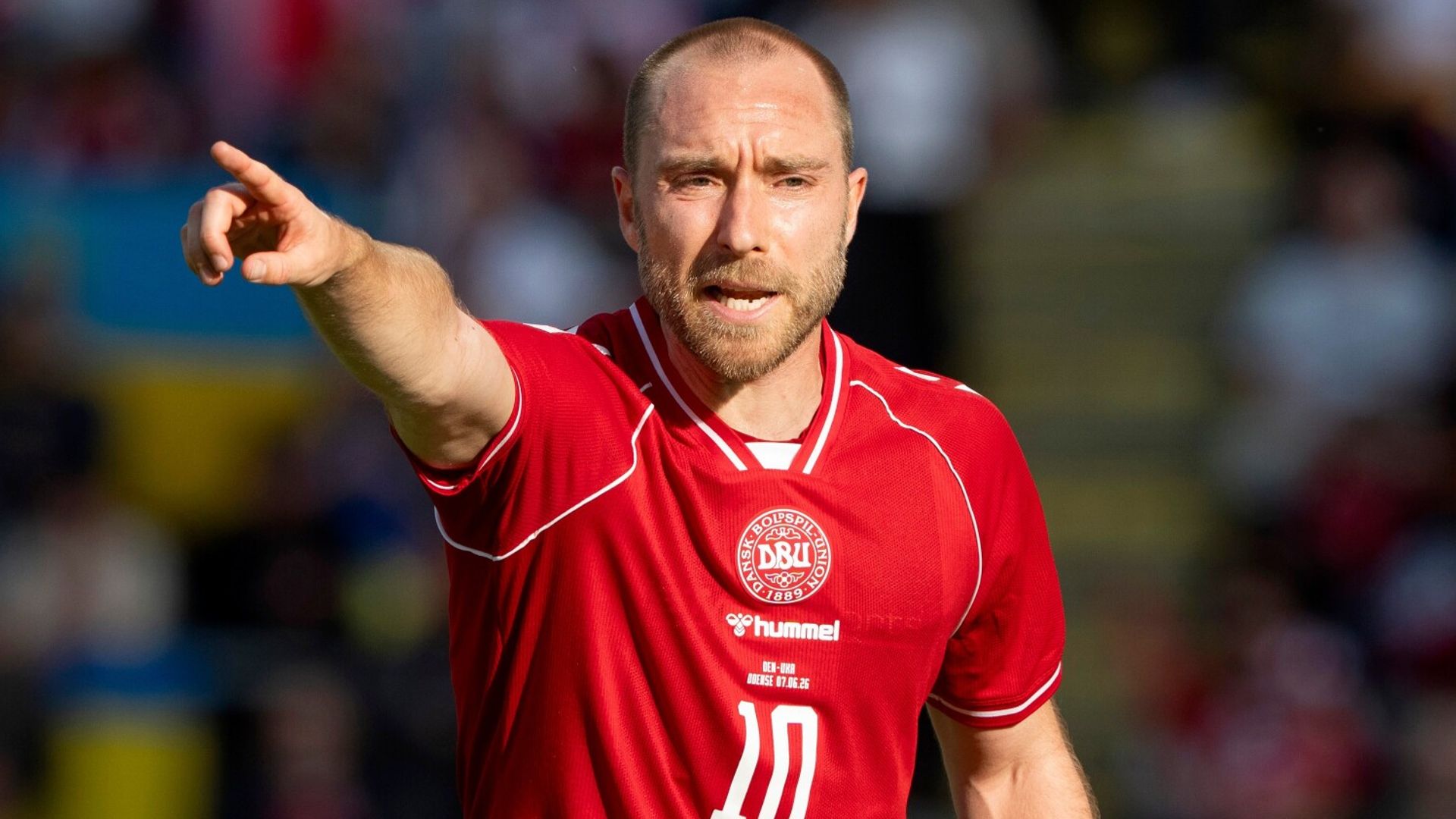
When Eriksen walked back onto the pitch for Denmark, wearing the same red jersey he wore on that fateful night in Copenhagen, the narrative came full circle. He scored within two minutes of coming on as a substitute. It was a moment of pure, unadulterated catharsis for an entire sport.
The Echo of Copenhagen
We love sports because they provide a clean canvas for human drama. We see triumph, heartbreak, rivalry, and redemption played out within ninety minutes. But what happened to Christian Eriksen transcended the boundaries of a game.
His journey fundamentally altered the conversation around athlete welfare and public health. Suddenly, clubs worldwide re-evaluated their screening processes. Amateur leagues began installing automated external defibrillators (AEDs) on the sidelines of muddy community pitches. Millions of fans learned how to perform CPR. His near-tragedy became a shield that will undoubtedly save countless anonymous lives in the decades to come.
Eriksen gave a rare update on his health long after the event, noting calmly that he felt normal, that the device in his chest was just a part of him now, no more intrusive than a wristwatch. He spoke of it not as a scar, but as a companion. He refused to let the collapse define the remainder of his days on earth.
The true victory of Christian Eriksen is not the trophies he won before, or the high-profile matches he played after. It is the quiet defiance of a man who looked into the abyss, felt the terrifying fragility of existence, and decided to keep running anyway.
The next time you watch a match, look closely at the player directing the midfield, finding space where none exists, calmly passing the ball through a eye of a needle. You are looking at a man who carries a small machine near his collarbone, a testament to the day the music stopped, and the stubborn, beautiful will of a human being who simply refused to leave the stage.