Home court does not save sloppy basketball. It exposes it.
Every time the WNBA Finals shift cities for Game 3, lazy sports coverage treats the move like a coronation waiting to happen. The formula is always the same. A team steals a split on the road, flies home, steps into a louder building, and suddenly the narrative acts as if the series is already tilted beyond repair.
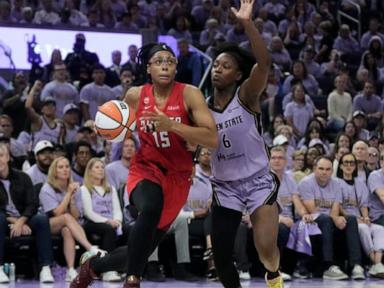
Look at how the 2026 WNBA Finals unfolded between the Atlanta Dream and the Golden State Valkyries. Golden State took Game 1 at Chase Center (68-64), Atlanta answered in Game 2 on the road (79-65), and the series shifted to Atlanta for Game 3 at State Farm Arena. Even after Atlanta blew Golden State out 97-71 in Game 3 to take a 2-1 lead, the instant takeaway across half the basketball world was that Atlanta's home-court arrival had broken the Valkyries.
Then the rest of the series happened. Golden State won Game 4 in Atlanta (67-62), took Game 5 back home (64-55), dropped Game 6 in Atlanta (80-69), and won Game 7 at Chase Center (68-63) to claim the championship.
That seven-game arc buries the lazy consensus six feet under. Heading to Atlanta for Game 3 was never a magic switch that guaranteed Atlanta's title or doomed Golden State's offense. In a 2-2-1-1-1 Finals format, Game 3 is a pivot point, not a finish line—and treating home floor as a cure-all gets coaches, players, and bettors burned every single October.
The Lazy Consensus About Game 3 Home Court
Standard Game 3 previews rely on three tired assumptions:
- Crowd noise equals instant momentum. Writers love turning an arena crowd into a sixth starter, especially when a team moves from a smaller regular-season venue like Gateway Center Arena into a massive 17,000-plus-seat building like State Farm Arena.
- A Game 2 road split proves total control. Stealing Game 2 in San Francisco gave Atlanta momentum and home-court control entering Game 3. Coverage routinely treats that split as proof that the road team has solved its opponent.
- A blowout settles the strategic debate. When Atlanta hung 97 points on Golden State in Game 3 while Angel Reese posted 21 points and 12 rebounds, surface-level analysis declared the Valkyries' offense broken and Atlanta's style unstoppable.
None of those assumptions hold up once the adrenaline fades. Crowds do not shoot free throws, rotate on weak-side help, or keep turnovers down in the fourth quarter. In fact, a massive home crowd can create the exact opposite problem: players speed up, hunt highlight plays instead of clean actions, and confuse noise with execution.
In my years studying playoff basketball from war rooms, film sessions, and betting desks, I have watched teams blow millions in expectations—and coaches blow series—by mistaking emotional energy for structural advantage. A roaring arena feels electric on television. On the court, an emotional spike without discipline is just fuel burning faster.
What "Home-Court Advantage" Actually Measures
In basketball analytics and coaching terminology, home-court advantage is not a mystical aura surrounding a city or a mascot. It is the net point-differential boost a team gains on its home floor relative to a neutral court, driven by familiar shooting sightlines, travel recovery, lineup control, and subtle officiating tendencies.
That distinction matters because sightlines and familiar routines only help if your half-court offense already generates good shots. Shooting 49 percent at home feels great, yet a jump-shooting surge in one blowout can mask underlying spacing or turnover flaws that resurface 48 hours later.
Golden State's offensive struggles across the 2026 Finals were real—their shooting percentages hovered in the low-to-mid 30s in the opening games, and turnovers repeatedly stalled their rhythm. Yet blaming Atlanta's Game 3 arrival alone misses the deeper reality of playoff series. A seven-game Finals is a chess match of adjustments, not a single-night referendum on crowd volume.
Consider a thought experiment to strip away the noise: Imagine a scenario where two evenly matched teams play a seven-game series in empty gyms with identical rims, zero crowd noise, and identical travel schedules. The team that gets Games 3, 4, and 6 at home still has the comfort of sleeping in its own bed and practicing on its own floor. Yet neither team gets a single extra point from cheers or jeers. If Team A still wins in a tight low-scoring grind like a 67-62 Game 4, the deciding factor was defensive execution and shot selection—not the decibel meter.
People Also Ask: Does Winning Game 3 in the WNBA Finals Decide the Series?
No—and assuming it does is one of the fastest ways to misread playoff basketball. Winning Game 3 after a 1-1 split puts a team up 2-1, which is meaningful in a best-of-seven format, especially when you still have Game 4 on your home floor.
What Game 3 actually decides is pressure distribution, not the trophy. When Atlanta won Game 3 by 26 points, Golden State faced a simple reality: lose Game 4 in Atlanta and fall into a 3-1 hole against a confident opponent; win Game 4 and steal back home-court leverage before heading west. Winning Game 3 only sets the stage for Game 4. If you treat Game 3 like the climax and relax on the margins—missing box-outs, forcing tough early-clock threes, letting turnovers creep up—you hand the other team a lifeline.
People Also Ask: Why Do Road Teams Often Bounce Back in Game 4?
Desperation sharpens focus, while comfort can breed complacency. A team trailing 2-1 on the road has zero margin for coasting. Coaches simplify reads, tighten rotations, and lean on veteran poise to survive early runs from the home crowd.
Look at Game 4 in Atlanta: Golden State held Atlanta to 62 points and won 67-62. After giving up 97 points in Game 3, the Valkyries did not suddenly turn into an explosive scoring machine overnight. They slowed the game down, protected possessions better, and turned a track meet into a rock fight. Home court helps you play fast when everything clicks; disciplined defense wins when shots stop falling.
The Heavy Hitters and the Real Mechanics of Playoff Series
Great coaches and analysts—from Hall of Fame mentors like Dean Smith and Gregg Popovich to modern WNBA tacticians and basketball analytics researchers—have preached the same core truth for decades: process survives travel, while emotion travels poorly.
When a team shifts to a new arena for Game 3, three mechanics determine who actually controls the series:
- Possession discipline under noise. Loud crowds often push home defenders to gamble for steals and home ball-handlers to push pace recklessly. If the road team refuses to turn the ball over and forces half-court sets, crowd energy loses half its bite.
- Shot quality over shot volume. A team can catch fire from three in front of a hyped hometown crowd and win by 25. Two days later, if those same shots come off the dribble against set defenses, efficiency regresses hard.
- Late-game execution when legs get heavy. Finals games in late October are physical wars. Teams that rely purely on adrenaline spikes in the first half often run out of composure in the final four minutes when every possession carries championship weight.
The 2026 Finals proved all three points in real time. Atlanta's Game 3 surge showed how dangerous the Dream could be when locked in at home. Golden State's Game 4 response—and its eventual Game 7 road triumph at Chase Center—proved that composure, defensive grit, and series adjustments outlast a single statement night.
Where My Contrarian View Can Backfire
Being contrarian for its own sake is lazy, and pretending home court never matters is just as dishonest as pretending it guarantees victory. There are real downsides to downplaying home-court advantage.
First, a raucous home crowd can swing officiating momentum on fifty-fifty calls or force timeouts when communication breaks down. Second, if a team already has superior personnel and spacing, playing at home magnifies every edge they possess. Third, if you bet or coach as if home floor is irrelevant, you can underestimate how hard it is for a young or turnover-prone road squad to survive a hostile first quarter.
Contrarian analysis works only when it respects real leverage without worshipping hype. Home court is a multiplier, not a miracle.
Actionable Playbook for Game 3 and Beyond
If you are coaching, scouting, or watching a Finals series shift to a hostile home arena for Game 3, stop staring at the pregame hype package and run this checklist instead:
- Track live-ball turnovers, not just final score. A blowout win built on forced turnovers and transition layups travels much better to Game 4 than a blowout fueled by contested perimeter shooting.
- Judge the road team by its third-quarter poise. Anyone can panic in the first six minutes of a loud Game 3. Watch who executes cleanly after the home crowd's opening wave passes.
- Treat Game 3 as a two-game mini-set. Games 3 and 4 belong to the same trip. Splitting them on the road is a win; sweeping them at home is a statement; dropping Game 4 at home hands back every ounce of leverage you earned in Game 3.
Ignore the noise at the door. Watch what happens on possession forty.