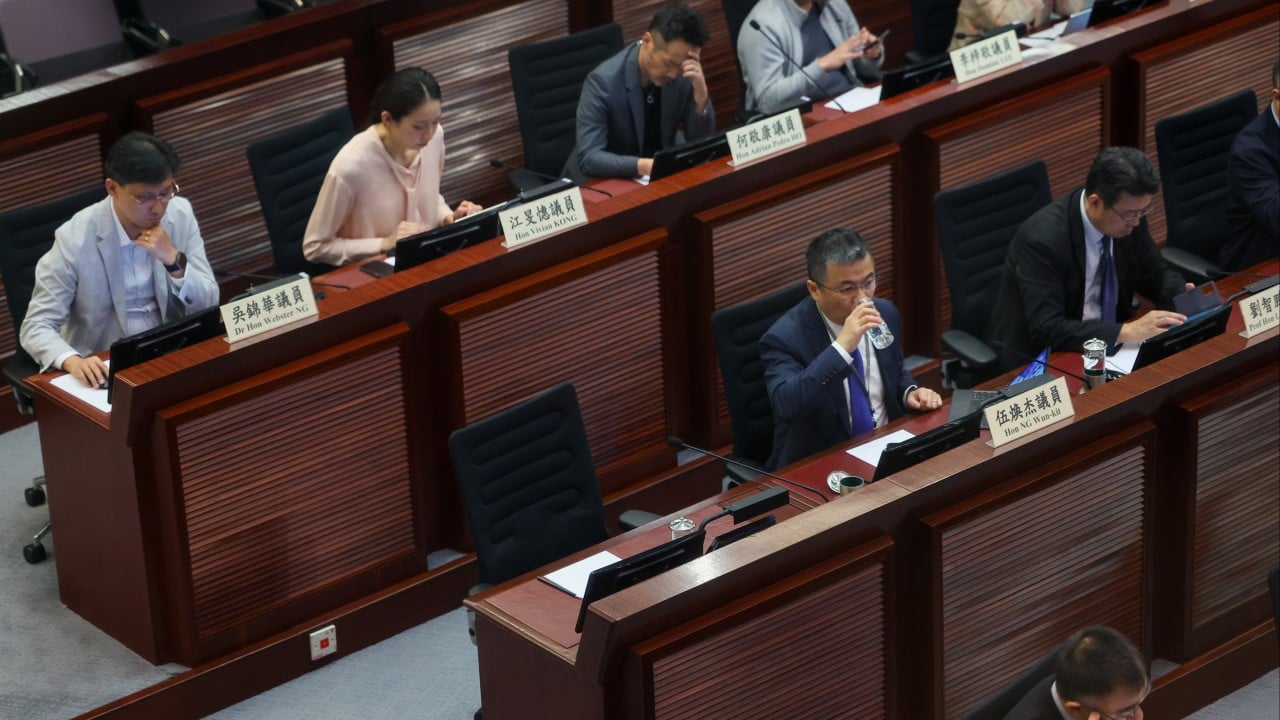
The mahogany is exactly the same as the others. If you ran your fingers along its edge, you would feel the same polished, expensive grain that catches the harsh fluorescent lighting of Hong Kong’s Legislative Council. But this desk is different. It is empty.
No papers are stacked on its surface. No tablet glows with amendment texts. No staffer rushes over to hand its occupant a last-minute briefing on municipal waste or regional transport budgets.
To the casual observer, an unassigned seat in a government building is a bureaucratic footnote, a minor administrative delay to be sorted out by the secretariat whenever the schedule permits. But a legislative vacuum is never just empty space. It is a leak in the hull of civic representation. Every week that a seat remains vacant is a week where thousands of real people find themselves entirely voiceless in the room where their futures are decided.
Consider a hypothetical citizen named Ming. He runs a small, multi-generational tea shop in a densely packed district of Kowloon. When local zoning laws change, or when new small-business taxes are proposed, Ming does not have the time to march into government headquarters. He relies on his district's elected representative to sit in that chamber, look at the fine print, and speak for him.
Right now, Ming has no one. The desk is empty. The machinery of government keeps grinding forward, passing laws and allocating billions in public funds, while a massive chunk of the population watches from the sidelines, entirely unrepresented.
Political analysts often get bogged down in the dry mechanics of electoral law. They debate proportional representation, remainder votes, and the logistical friction of organizing a by-election. They treat the issue like a math problem.
It is not a math problem. It is a human contract.
When citizens stand in line to cast a ballot, they are participating in a fundamental agreement: we give you our trust, and in return, you ensure our reality is accounted for when decisions are made. When a lawmaker leaves office—whether through resignation, disqualification, or illness—the contract does not pause. The needs of the community do not go on hiatus.
A vacant seat fractures the balance of the legislative body. In any parliament, laws are not just passed; they are forged through friction. Diverse viewpoints clash, compromise is reached, and the resulting policy is stronger because it had to survive scrutiny from all sides. When you remove a seat and leave it empty, you remove a specific perspective from the equation. The debate becomes lopsided. The decisions lose their institutional weight.
There is a dangerous temptation within governance to view an empty seat as a relief. Less debate means faster voting. Fewer dissenting voices mean a smoother legislative session. But efficiency is a terrible substitute for legitimacy.
Imagine a bridge built with one crucial support beam missing. It might stand for a week, or even a month, while the weather is calm. But the internal stress is accumulating. Eventually, the structure fails because the load was not distributed the way it was designed to be.
The argument for delaying the filling of a legislative vacancy usually comes down to cost and convenience. Running an election is expensive. It takes time, money, and immense logistical coordination. But democracy was never designed to be cheap or convenient. Its very messiness is the point.
When a government fills a vacancy promptly, it signals to the public that their participation matters. It says that the system respects the voter enough to fix a broken link immediately. Conversely, allowing a seat to gather dust sends a chilling message to the neighborhood: We can do this without you.
The longer the desk in Chamber Three remains unoccupied, the more the invisible stakes multiply. Trust in public institutions is an incredibly fragile resource. It takes decades to build and only a few moments of perceived indifference to shatter. When people look at their parliament and see a ghost town where their representative should be, they stop believing in the process entirely.
The solution is not complex, nor does it require a radical rewriting of constitutional frameworks. It simply requires a commitment to urgency. It demands that those in power treat an empty seat not as a minor inconvenience to be scheduled at leisure, but as a civic emergency.
Ming’s tea shop will open tomorrow at dawn. He will boil the water, sweep the storefront, and pay his taxes. He will fulfill his end of the civic bargain. The least the government can do is ensure that his seat at the table is waiting for him.


