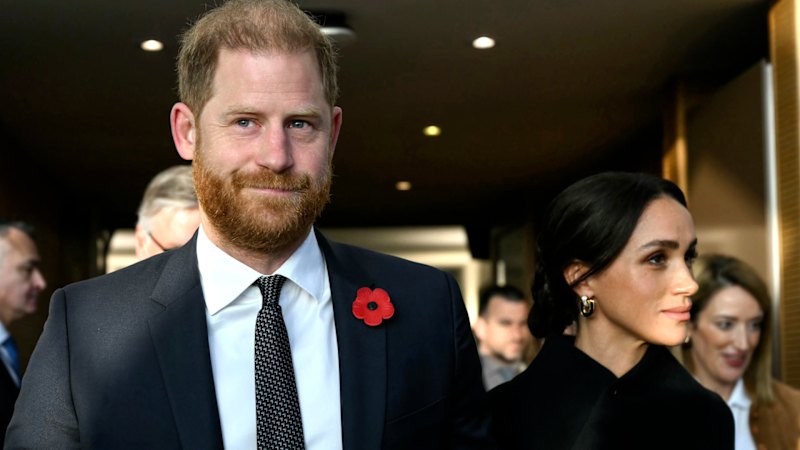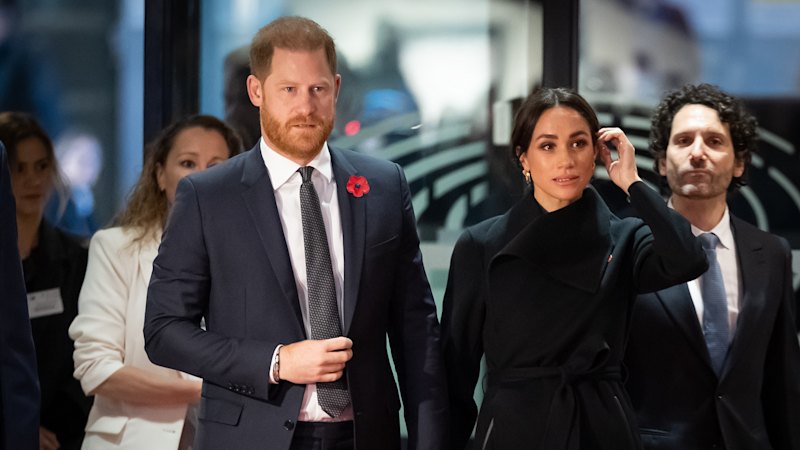
Media pundits love a tidy, tragic irony. The reigning narrative around Prince Harry and Meghan Markle goes something like this: the Duke and Duchess of Sussex are noble crusaders fighting to protect children from the toxic machinery of the internet, yet they remain permanently haunted—and hypocritically undermined—by the ghost of Meghan’s estranged father, Thomas Markle, and their own fractured family dynamics.
It is a neat, lazy piece of commentary. It relies on the surface-level contradiction between preaching digital kindness while airing dirty family laundry on global streaming platforms. If you liked this piece, you should check out: this related article.
And it completely misses the actual business strategy at play.
Harry and Meghan are not victims of Thomas Markle’s shadow. They are not helplessly haunted by the tabloid circus he helped ignite in 2018. In reality, the Sussexes looked at the attention economy, studied the exact mechanics that turned Thomas Markle into a household name, and industrialized the process for their own philanthropic and commercial survival. For another perspective on this event, see the latest coverage from Wall Street Journal.
The Lazy Consensus on Royal Hypocrisy
To understand why mainstream royal commentary gets this wrong, you have to look at the premise they start from. Critics operate under the assumption that Harry and Meghan want two incompatible things: absolute privacy and global relevance. When the couple launches initiatives like The Parents’ Network through the Archewell Foundation—aimed at supporting families whose children have suffered from social media harm—commentators immediately point to the couple's estrangement from Thomas Markle, or Harry’s scorched-earth memoir, Spare, as proof of moral bankruptcy.
The logic is simple: How can you lecture the world on healthy communication and protecting youth when you cannot even pick up the phone to reconcile with an aging father in Rosarito, Mexico?
This framing treats public relations like a family therapy session. It assumes the Sussexes’ primary goal is moral consistency.
It isn't. Having spent over a decade watching high-net-worth individuals and legacy brands burn millions trying to "correct the record" in the press, I can tell you that moral consistency does not move the needle in modern media. Attention does. And in the attention economy, unresolved conflict is the highest-yielding asset on the balance sheet.
The Thomas Markle Blueprint
Cast your mind back to May 2018. Days before the royal wedding, news broke that Thomas Markle had collaborated with paparazzi to stage photos of himself getting fitted for a suit and reading books about British history. He suffered a heart attack, missed the wedding, and subsequently embarked on a years-long tour of paid television interviews, leaked private letters, and public pleas to his daughter.
The royal establishment viewed Thomas Markle as an unmitigated disaster—a rogue variable that shattered the carefully curated fairytale of Meghan’s entry into the House of Windsor.
Yet, strip away the aristocratic pearl-clutching, and look at what Thomas Markle actually achieved. A retired television lighting director with zero institutional backing hijacked the global news cycle for half a decade. How? By weaponizing personal grievance. He understood intuitively that the public does not care about policy, charity work, or ribbon-cutting ceremonies. The public cares about blood feuds. They care about betrayal, estrangement, and the intimate details of a broken home.
Thomas Markle proved that in the modern media ecosystem, vulnerability paired with accusation is an unbeatable currency.
When Harry and Meghan stepped back as senior working royals in 2020, they faced an existential crisis. Stripped of the Crown’s centuries-old PR apparatus and sovereign funding, they needed a way to command eight-figure deals from Netflix and Penguin Random House. If they had launched a quiet, strictly policy-driven foundation focused on youth mental health from day one, their commercial value would have evaporated within six months. Nobody pays $100 million for a documentary about digital literacy.
They needed an engine to drive traffic to their platform. So, they adopted the exact mechanics Thomas Markle used against them, scaling it up with Hollywood production values. Oprah. The Netflix docuseries. Spare. Every single one of those projects relied on the exact same formula: intimate family grievance packaged as a broader societal lesson.
Grievance as a Funnel for Philanthropy
This brings us to the core misunderstanding surrounding their child safety advocacy. Critics view Harry and Meghan’s work on online harms as a pivot away from their family drama—or worse, a hypocritical distraction from it.
In digital marketing, this isn't a contradiction; it is a top-of-funnel acquisition strategy.
Consider the mechanics of modern advocacy:
- The Hook (Personal Trauma): A celebrity shares a deeply personal, polarizing story of betrayal, isolation, or media persecution. This generates massive earned media, outrage clicks, and algorithmic dominance.
- The Bridge (Universalization): The personal grievance is reframed not as a petty family squabble, but as a symptom of a systemic crisis—toxic media, institutional cruelty, or unregulated tech platforms.
- The Conversion (The Initiative): Once all eyes are locked on the drama, the subject introduces a philanthropic foundation or policy initiative designed to "protect" others from suffering the same fate.
Harry and Meghan did not fail to escape Thomas Markle’s shadow; they monetized the darkness. When Meghan speaks about the cruelty of online trolls or the importance of protecting children from digital exploitation, the emotional weight of her argument rests entirely on the public's pre-existing awareness of her own trauma—trauma that began in earnest with her father’s public betrayal and the subsequent media firestorm.
Media theorists like Marshall McLuhan famously argued that "the medium is the message." In the 2020s, the trauma is the marketing. By keeping the wounds of their family estrangement fresh in the public consciousness, the Sussexes ensure that every time they step up to a podium to discuss child safety, the cameras actually show up.
The Fatal Flaw in the "Protect the Children" Narrative
If you want to dismantle the real problem with Harry and Meghan’s child-protection crusade, stop looking at Thomas Markle and start looking at their own brand architecture.
The true contradiction isn't that Meghan won't speak to her father while preaching family values. Estrangement is sometimes a necessary, healthy boundary, and nobody is obligated to maintain a relationship with a parent who repeatedly sells their private correspondence to the tabloids.
The real flaw is that you cannot dismantle the attention economy while simultaneously relying on its most toxic incentives to fund your lifestyle.
Harry and Meghan routinely condemn social media algorithms for profiting off outrage, division, and the exploitation of human vulnerability. They warn parents about the dangers of digital platforms that reward extreme behavior and destroy mental health. Yet, their entire post-royal business model is built on those exact same algorithmic triggers.
Look at the anatomy of their media output since 2020:
- Outrage Farming: Every major release has been timed and edited to maximize friction with the British Royal Family, guaranteeing days of furious debate on X, TikTok, and cable news.
- Parasocial Exploitation: By sharing hyper-intimate details of private conversations, text messages, and emotional breakdowns, they invite millions of strangers into a parasocial relationship—the exact psychological mechanism that makes social media so addictive and damaging to young minds.
- Victimhood as Moral Authority: In online culture, claiming the status of the ultimate victim grants immunity from criticism. Harry and Meghan have perfected this posture, using it to shield their commercial ventures from scrutiny.
Imagine a scenario where a tech CEO launches a non-profit dedicated to curing gambling addiction, while financing that non-profit entirely through profits generated by a chain of high-stakes casinos. You wouldn't criticize the CEO because his estranged father had a gambling problem. You would criticize him because his business model actively manufactures the exact disease he claims to be curing.
That is the trap Harry and Meghan are actually caught in. It has nothing to do with Rosarito, Mexico, and everything to do with Montecito, California.
Why the Public Isn't Buying the Pivot
Search data and media engagement metrics tell a brutal story that PR spin cannot hide. Whenever Harry and Meghan release content focused strictly on corporate philanthropy, sustainable travel, or youth mental health, public engagement craters. The articles get polite, low-traffic pickups in trade publications and friendly lifestyle outlets, followed by digital silence.
Whenever a headline mentions King Charles, Prince William, or Thomas Markle, traffic explodes.
The audience has been trained to view the Sussexes through the lens of interpersonal conflict. You cannot spend four years selling tickets to a heavyweight prize fight and then expect the crowd to sit quietly through a seminar on conflict resolution. The market simply won't allow it.
This creates a dangerous feedback loop for their child safety initiatives. To keep Archewell relevant and attract high-level partners, Harry and Meghan need massive visibility. To get massive visibility, they have to feed the media beast with personal drama. Every time they feed the beast, they reinforce the exact culture of public shaming, algorithmic outrage, and privacy invasion that harms the children they are trying to save.
The Hard Truth About Institutional Protection
There is a massive downside to this contrarian reality, and it cuts straight to the heart of why Harry and Meghan left the UK in the first place.
The British Royal Family operates on a centuries-old survival mechanism: Never complain, never explain. Critics—including Harry—have rightly pointed out that this silence can be suffocating, cold, and psychologically damaging to individuals trapped inside the institution. When Thomas Markle went rogue in 2018, the Palace’s refusal to aggressively litigate or publicly counter his narrative left Meghan feeling completely abandoned.
By walking away, Harry and Meghan traded institutional protection for individual autonomy. They gained the freedom to tell their side of the story, sue the tabloids, and build their own narrative.
What they failed to calculate is that autonomy in the modern media landscape requires constant feeding. The monarchy survives because it is an institution; it doesn't need to trend on social media every week to justify its existence. A celebrity brand, however, dies the moment it becomes boring.
Thomas Markle didn't cast a shadow over Harry and Meghan. He held up a mirror. He showed them what happens when ordinary family dysfunction is fed into the modern media grinder—and, whether they admit it or not, they liked the leverage it gave them.
If Harry and Meghan genuinely want to protect children from the toxic incentives of the digital age, they don't need another foundation, another summit, or another carefully worded statement about online harms. They need to starve the algorithm that made them rich. They need to stop selling their personal grievances as public entertainment, step off the global stage, and let their name disappear from the trending tab for five years.
Until they are willing to sacrifice their own relevance, their crusade to save the next generation from the attention economy is just another content strategy.