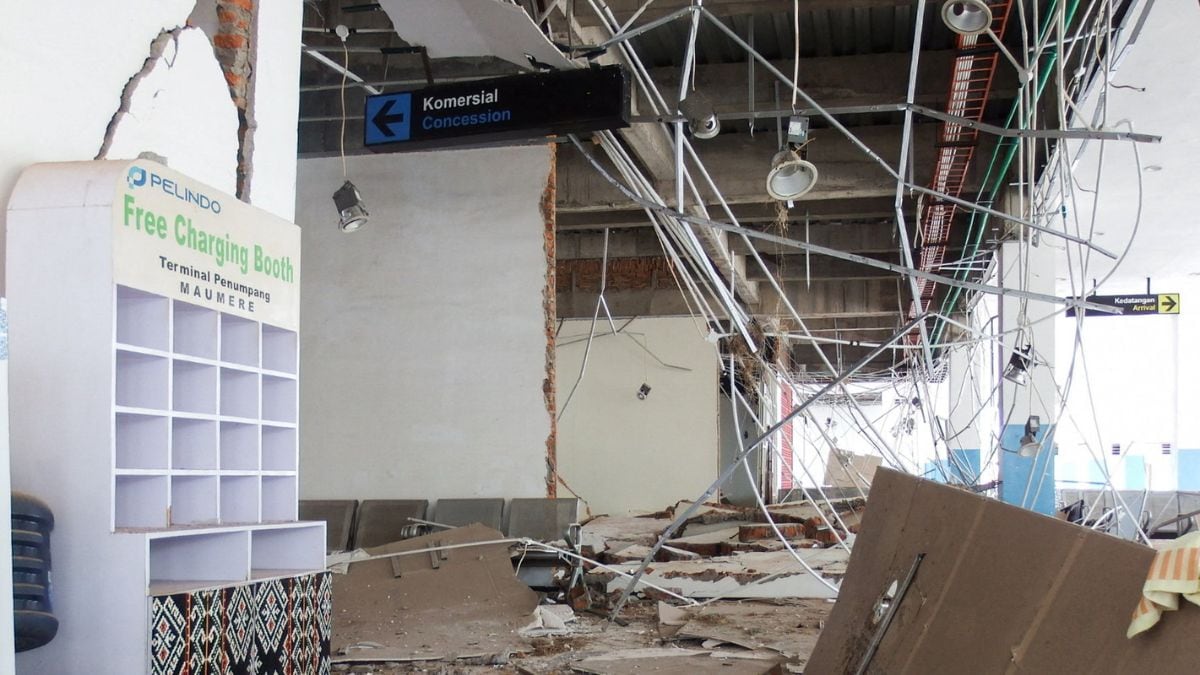
Ground doesn't just shake during a major seismic event; it shatters the baseline of daily survival. When a magnitude 7.7 earthquake struck off the coast of eastern Indonesia, centering near Flores Island, the immediate aftermath revealed a familiar, brutal reality for communities living along the Pacific Ring of Fire. Buildings folded into piles of concrete, highways fractured under massive landslides, and tens of thousands of lives were thrown into sudden chaos.
We talk endlessly about the raw numbers when disaster hits, but the actual mechanics of what happens in the hours and days following a catastrophic tremor dictate whether communities survive the recovery or descend into protracted suffering.
The Chaos of the First Few Hours
When the earth heaves at nearly five in the morning, sleep turns into a scramble for open ground. In places like Sikka and Ende on Flores Island, families woke to violent shaking that lasted for an agonizing minute. Homes, warehouses, and government buildings sustained heavy damage. Hospitals were forced to roll patients and equipment outdoors, setting up makeshift treatment areas under the open sky because structural safety was entirely unknown.
Communications went dark almost immediately. Power lines snapped, and cellular towers failed, creating a blackout of information that leaves central disaster agencies guessing at the true scale of destruction. For local officials, the first priority isn't accounting for property loss; it is figuring out which districts are completely cut off.
Landslides and Logistical Nightmares
An earthquake of this scale never acts alone. Shallow tremors trigger destructive secondary hazards, most notably massive landslides that tear down hillsides and bury entire stretches of infrastructure.
The Trans-Flores highway, a critical seven-hundred-kilometer ribbon connecting Labuan Bajo to Larantuka, suffered severe blockages from tumbling earth and rock debris. When roads are choked with mud and fallen boulders, heavy rescue machinery cannot reach the epicenters. Emergency responders are forced to rely on ferries or helicopters just to scout affected regencies like Nagekeo, where thousands of residents fled to temporary shelters.
This geographical isolation turns standard search-and-rescue operations into a logistical puzzle. Volunteers and local teams often have to dig through rubble with bare hands or basic tools while waiting for heavy equipment to clear paths through blocked mountain passes.
The Tsunami Panic and Evacuation Reality
Few threats spark immediate terror quite like a tsunami warning. When authorities issued alerts for coastal communities across East Nusa Tenggara and surrounding regions, thousands of residents faced an immediate choice: scramble inland or climb toward higher ground.
While monitoring agencies eventually lifted the warnings after recording waves of under a meter, the psychological toll of those initial hours is immense. Evacuating thousands of people overnight into makeshift inland camps strains local resources instantly. Clean water, temporary sanitation, and basic medical supplies become scarce commodities within hours. People are left sleeping on tarps or sharing crowded community spaces, wondering if their homes will be standing when the aftershocks finally stop.
Dealing with Relentless Aftershocks
The main shock is rarely the end of the ordeal. A magnitude 7.7 quake unleashes a cascade of dozens—sometimes hundreds—of aftershocks that keep traumatized populations on edge.
These secondary tremors complicate rescue efforts significantly. Every time the ground shakes again, unstable walls risk collapsing further on top of trapped survivors or rescue workers. It also prevents hospital patients and evacuated families from returning indoors. Living in a state of hyper-vigilance wears down communities that are already dealing with the grief of lost family members and destroyed livelihoods.
Managing the aftermath requires immense coordination between national disaster management bodies like the BNPB, local police, medical personnel, and volunteer networks. As search teams shift from finding survivors to stabilizing displaced populations, the focus turns toward rebuilding shattered infrastructure with better resilience against the next inevitable tremor.