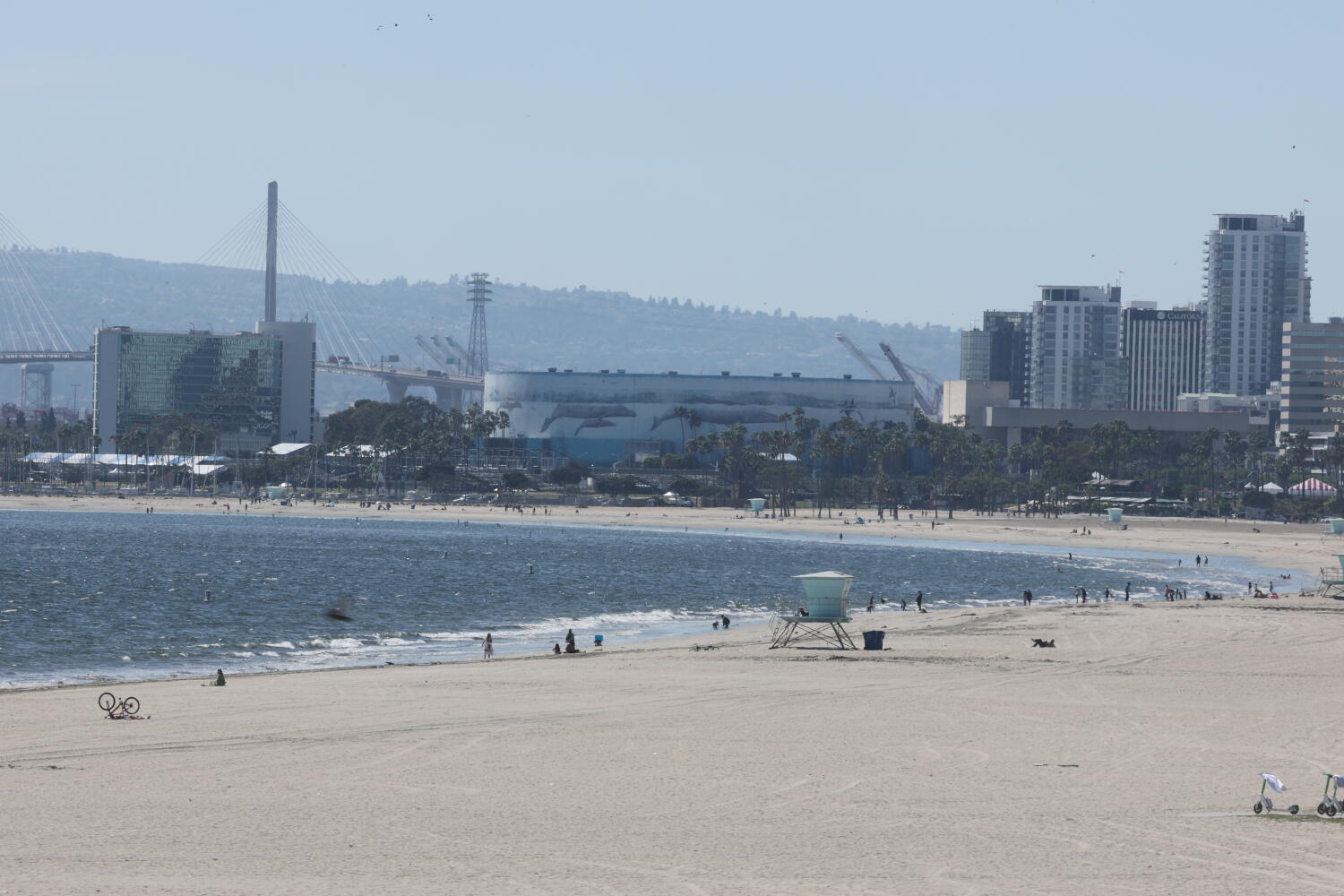
Stay out of the water. That's the blunt directive issued by local health officials whenever a massive sewage main break triggers a full closure of all coastal waters off Long Beach.
You probably think a beach closure is just a mild inconvenience for weekend surfers or families planning a picnic near the Belmont Pier. It's not. When millions of gallons of raw wastewater spill into the Dominguez Channel or the Los Angeles River, the entire coastal ecosystem turns into a biohazard zone within hours.
I've watched Southern California coastal infrastructure struggle with aging pipes for decades, and the pattern is always the same. Heavy rains or corroded trunk lines push an outdated system past its breaking point, leaving public health agencies scrambling to post yellow warning signs across seven miles of shoreline.
Why Long Beach Coastal Waters Close So Fast
Long Beach sits at the bottom of a massive urban watershed. Unlike other beach cities that only deal with their own local runoff, Long Beach catches whatever flows down the Los Angeles River and the San Gabriel River.
When an upstream sewer main ruptures—like the notorious Carson trunk line collapse that dumped over eight million gallons of untreated sewage into the Dominguez Channel—gravity does the rest. The contamination doesn't stay localized. Tidal currents and harbor geography push that plume directly along the Long Beach coastline, protected from quick ocean dilution by the federal breakwater.
The Long Beach Health and Human Services Department doesn't wait around for lab results to confirm the obvious. Under California Assembly Bill 411 standards, city health officers issue immediate blanket closures whenever known sewage spills threaten recreational waters.
You'll see closures stretch from the Los Angeles River mouth all the way down to the San Gabriel River, impacting popular spots like Alamitos Bay, Mother's Beach, and the Peninsula. The harbor breakwater makes things worse. Because it blocks heavy ocean swells, it also traps polluted water inside the bay, slowing down natural flushing for days or even weeks.
The Real Health Risks of Swimming in Contaminated Ocean Water
People ignore the yellow signs all the time. They see clear blue waves, assume the danger has passed, and paddle out anyway. That's a massive mistake.
Raw sewage carries a nasty cocktail of pathogens that you can't see or smell once the initial plume disperses. State water quality regulators test for indicator bacteria—specifically Enterococcus, fecal coliform, and total coliform—because their presence signals that far worse organisms are likely floating nearby.
If you swallow even a mouthful of contaminated water, or let it get into an open cut, you're exposing yourself to several acute illnesses:
- Gastroenteritis: Severe stomach cramps, nausea, vomiting, and diarrhea that can hit within 24 hours of exposure.
- Skin and Soft Tissue Infections: Rashes, cellulitis, and dangerous staph infections caused by bacteria entering minor scrapes.
- Respiratory and Ear Illnesses: Sinus infections, pink eye, and painful swimmer's ear triggered by polluted water trapped in the ear canal.
- Hepatitis A: A viral liver infection transmitted through fecal-oral routes, which remains a documented risk during major untreated wastewater discharges.
The Southern California Coastal Water Research Project (SCCWRP) has extensively studied surfers and swimmers exposed to urban runoff and sewage spills. Their epidemiological data consistently shows that illness rates spike dramatically in the first 72 hours following a major discharge event.
How Water Quality Testing Actually Works
Many beachgoers wonder why the ocean stays closed long after utility crews patch the broken pipe. Fixing the mechanical failure is only half the battle.
Once sanitation districts stop the flow of raw sewage, environmental health specialists have to collect daily water samples from multiple monitoring stations along the coast. They aren't looking at the water under a microscope and counting viruses in real time. Standard culture-based lab tests require incubating water samples for 18 to 24 hours just to see how much bacteria grows.
That built-in lag time means today's "all clear" sign is actually based on yesterday's water sample.
Health officials require at least two consecutive days of safe bacterial readings before they'll lift a sewage-related closure. If a single sampling site from Seal Beach to Cabrillo Beach comes back above state thresholds, the closure stays active.
The Infrastructure Problem Nobody Wants to Fund
Spills like the ones impacting Long Beach aren't freak accidents. They're the predictable result of burying concrete and cast-iron pipes underground in the mid-20th century and deferring maintenance until something bursts.
Hydrogen sulfide gas naturally forms inside sewer lines as waste breaks down. Over decades, that gas converts into sulfuric acid, which literally eats away the crown of concrete pipes from the inside out. Eventually, the structural integrity vanishes, and the street above caves in.
Municipalities across Los Angeles County spend hundreds of millions of dollars on liner rehabilitations and pipe replacements every year. Still, the network spans thousands of miles. Upgrading massive interceptor lines beneath dense urban neighborhoods is slow, disruptive, and eye-wateringly expensive. Until those vulnerable trunk lines are completely relined, coastal closures will remain a recurring reality.
What You Should Do During a Long Beach Beach Closure
If you live near the coast or plan to visit Long Beach after a sewage main break, don't rely on guesswork or visual checks of the surf.
Check the Long Beach Water Quality website or call the city's dedicated water quality hotline before heading to the sand. You can also consult the Heal the Bay Beach Report Card, which aggregates real-time water quality grades across California beaches and flags active sewage advisories.
Keep your dogs off the wet sand and out of the shorebreak, too. Pets ingest ocean water when they retrieve balls or lick their paws, making them just as vulnerable to bacterial poisoning as humans. If you accidentally make contact with closed coastal waters, wash off immediately with soap and fresh hot water, and monitor yourself for any gastrointestinal or skin symptoms over the next three days.
Respect the closure signs, give the tides time to flush the harbor, and wait for two straight days of verified clean lab tests before getting back in the water.


