Humidity clings to everything in Pabna before dawn. It sits heavy on mango leaves, beads along corrugated tin roofs, and coats the skin of anyone walking down to the Padma River while the sky is still the color of a bruised plum.
Listen closely on a muggy July evening in a garment workshop outside Dhaka or a quiet living room in Rajshahi. For years, the rhythm of daily life has been punctuated by a familiar, exasperating click. The ceiling fan slows. The air conditioner sighs and dies. A kerosene lamp or a rechargeable lantern flickers awake in the corner. Voltage drops turn bulbs into dim orange embers, and sewing machines in small factories sit idle while orders pile up against tight shipping deadlines.
Power cuts. Load shedding. A phrase so ordinary in Bangladesh that people measure their days around it—cooking before dusk, doing homework while the current holds, wiping sweat in the dark and wondering how long the grid will stay quiet.
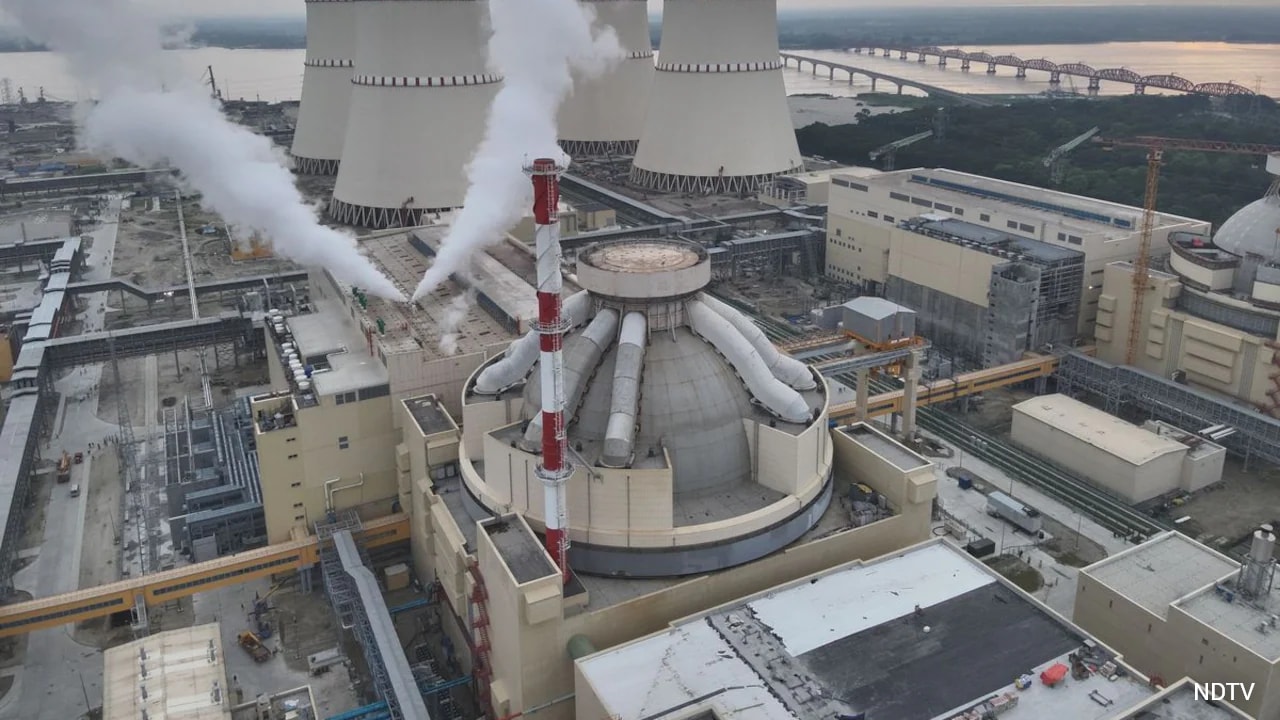
Now, rising along the banks of the Padma River at Rooppur, stands something that changes the math of that evening. A nuclear power project. Two VVER-1200 pressurized water reactors designed to add roughly 2,400 megawatts of baseload electricity to the national grid once both units reach full commercial operation.
On paper, those numbers look like a dry press release. Megawatts. Gigawatt-hours. Financing agreements. Reactor vessels.
Off paper, they are about whether a student can finish reading under a steady lamp during monsoon season. They are about whether a delta nation of more than 170 million people—one of the most densely populated places on earth—can keep its factories humming and its hospitals running without mortgaging its future to volatile imported fuels.
I have spent years reporting on energy transitions across South Asia, standing in sweltering control rooms, walking beside flooded embankments, and listening to engineers argue over grid stability with the intensity of surgeons discussing a delicate operation. What strikes me most about nuclear energy isn't the physics alone, though uranium fission is extraordinary. It is the sheer emotional weight people attach to it. Fear and hope live right next door to each other whenever a reactor dome rises above farmland.
The Weight of Every Watt
To understand why Bangladesh is turning to atomic power, you have to feel the squeeze of its energy equation.
For decades, domestic natural gas carried much of the load. Gas fields powered turbines, fertilized crops, and fired up brick kilns and kitchen stoves. Yet easily accessible reserves dwindled even as electricity demand surged alongside economic growth and rapid urbanization. Bridging the gap meant leaning harder on imported liquefied natural gas, coal, and furnace oil—fuels priced in dollars on global markets that swing wildly whenever geopolitical shocks hit shipping lanes or winter arrives early in Europe and East Asia.
When global fuel prices spike, a country with tight foreign exchange reserves feels it immediately. Expensive power plants sit idle because buying fuel costs too much, or electricity tariffs climb in ways that pinch households and squeeze small manufacturers.
Think of a national power grid like a tightrope walker carrying a heavy pole across a canyon. Every generator on the line is a shift of weight. Too little supply and the walker wobbles into blackouts. Too much reliance on pricey imported fuel and the financial strain pulls the rope taut.
That is the practical case for Rooppur. Unlike solar or wind—which are clean and valuable, yet rise and fall with weather and daylight—a large nuclear plant is built to run steadily around the clock, rain or shine, night or monsoon. Two 1,200-megawatt units represent a massive block of dependable, low-carbon baseload capacity in a country where land is scarce and every square meter of dry ground has competing claims.
Still, numbers alone don't quiet a worried mind.
When people hear the word nuclear, history rushes in uninvited. Chernobyl in 1986. Fukushima in 2011. Images of exclusion zones, hazmat suits, and quiet towns left behind. It is completely fair—and necessary—to ask: Is this safe here? What happens in a river delta with heavy monsoons, seismic risks, and millions of people living close by?
I don't pretend those questions are small. Anyone who shrugs off public anxiety around nuclear power hasn't stood in a village tea stall and listened to parents ask what happens to their children if something goes wrong.
Inside the Question of Safety
Modern pressurized water reactors like the VVER-1200 design being built at Rooppur are generations removed from the flawed RBMK design at Chernobyl. They use multiple layers of containment and passive safety systems designed to cool the reactor core without relying solely on active electrical pumps or human intervention during an emergency.
Even so, engineering perfection is a goal, not a magic spell. Safety in nuclear power is a daily habit—training operators until muscle memory takes over, maintaining backup cooling systems, testing valves, and keeping regulatory oversight independent and unforgiving.
To make the stakes tangible, let's trace a hypothetical scenario—strictly a thought experiment to illustrate how grid operators think, not a prediction of any real event. Suppose a severe summer heatwave pushes air conditioning demand to a record peak across Dhaka and Chattogram just as a regional transmission line trips offline. A sudden drop in grid frequency can force power plants to trip automatically to protect themselves. If too many plants drop off at once, a cascading blackout sweeps across millions of homes.
A steady baseload station anchored into the high-voltage transmission network helps stabilize frequency and inertia, acting like a heavy flywheel that resists sudden jerks. At the same time, engineers have to plan for extreme weather, river dynamics, and grid integration so that bringing massive new capacity online strengthens the whole system rather than overwhelming older transmission lines.
Consider what happens next when a megaproject of this scale moves from construction toward operation:
- Fuel loading and cold/hot testing verify that pressure boundaries, cooling loops, and control systems behave as designed before fission begins in earnest.
- Gradual power ascension brings the reactor up in stages while engineers monitor thermal performance, radiation shielding, and grid response.
- Long-term waste management and decommissioning plans must be funded and executed over decades—not treated as an afterthought.
That last point is the one critics rightly push hardest on. Spent nuclear fuel remains radioactive for a very long time and requires secure, engineered storage and clear governance stretching across generations. A country taking on nuclear power isn't signing up for a five-year ribbon-cutting cycle. It is committing to a multi-decade discipline of engineering, regulation, and transparency.
Hypothetical Voices Along the Line
Abstract policy debates often miss the people standing closest to the concrete. To see how this shift feels on the ground, picture three composite characters—fictional composites drawn from real conversations across South Asia rather than specific individuals.
First, there is Tariq, a shift supervisor at a mid-sized knitwear factory near Gazipur. Tariq knows the exact cost of a two-hour afternoon outage. When power cuts mid-run, machines stop, tempers fray, and the night shift has to stay later to hit a shipment window. To him, Rooppur isn't an geopolitical talking point between Dhaka and Moscow, where technical and financing support for the project originates. It is a prayer for steady voltage so his workers can finish on time and go home to their families.
Second, there is Dr. Farhana, a hydrologist who has spent fifteen years studying river sediment and monsoon floods in Bangladesh. She isn't reflexively anti-nuclear, nor is she blind to risks. Her mind goes straight to water—how cooling water is drawn and returned, how river channels shift over decades, and how climate extremes test infrastructure built for yesterday's averages. For Farhana, trust is earned through published data, independent audits, and honest answers when conditions change.
Third, there is Nila, a college student in Pabna studying electrical engineering. Five years ago, she barely imagined working on a nuclear facility in her own district. Now she watches classmates train in reactor physics, radiation protection, and grid operations, hoping domestic talent will steadily take a larger share of technical leadership over time.
Notice how each of them holds a piece of the truth. Tariq feels the economic cost of energy scarcity. Farhana guards the ecological and physical realities of a living delta. Nila sees a doorway opening into high-skill technical work.
The Invisible Stakes Beneath the Headlines
Why does a single nuclear project in South Asia matter beyond Bangladesh's borders?
Because energy choices in high-growth, densely populated economies shape both regional stability and global climate math. Every megawatt generated from low-carbon nuclear power instead of coal or heavy fuel oil avoids carbon dioxide emissions while delivering continuous power. At the same time, large-scale nuclear projects carry steep upfront capital costs, long build timelines, and complex supply-chain dependencies—from enriched fuel to specialized components and technical expertise.
There is also a quieter geopolitical reality. Energy infrastructure ties countries together for decades. Building, fueling, and servicing a nuclear plant requires steady technical cooperation, safety standards aligned with international norms like the International Atomic Energy Agency, and financial arrangements that don't trap a nation in unsustainable debt.
Bangladesh is walking that line with high stakes. The country has already achieved remarkable milestones over the past few decades—lifting millions out of poverty, expanding rural electrification dramatically, and building a globally competitive apparel sector. Moving into nuclear power is a bolder, more unforgiving chapter. It demands institutions strong enough to say "no" or "slow down" whenever a safety or technical threshold isn't met.
We should be candid about the tension here. A nation hungry for affordable, reliable electricity faces a genuine dilemma: stick with expensive fossil imports and recurring power shortages, or take on the heavy technical and financial responsibilities of nuclear power while still strengthening grid infrastructure and renewable integration.
There is no painless shortcut. Every energy path comes with trade-offs—land use, emissions, import exposure, debt, or long-lived waste. Pretending nuclear power is a cure-all is reckless. Pretending a growing country can power modern life on wishful thinking is equally unrealistic.
Where the River Meets the Grid
Step back outside in Pabna as dusk settles over the Padma. Water ripples dark and wide under a fading sky. Somewhere upriver, snowmelt from the Himalayas has traveled thousands of miles to reach this delta, carrying silt, life, and history.
A few miles away, steel and concrete hold the quiet, immense energy of split atoms—waiting to turn heat into steam, steam into rotation, and rotation into current flowing down high-tension lines toward towns and cities miles away.
When that current reaches a home at nightfall, nobody thinks about neutrons or steam turbines. A switch flips. A light comes on without a shudder. A child opens a notebook at a desk.
The true measure of Bangladesh's atomic leap won't be found in a ceremony or a headline. It will be written in quiet, ordinary evenings—years from now—when the lights stay on, the river keeps flowing, and a generation looks back knowing the power was built to last.