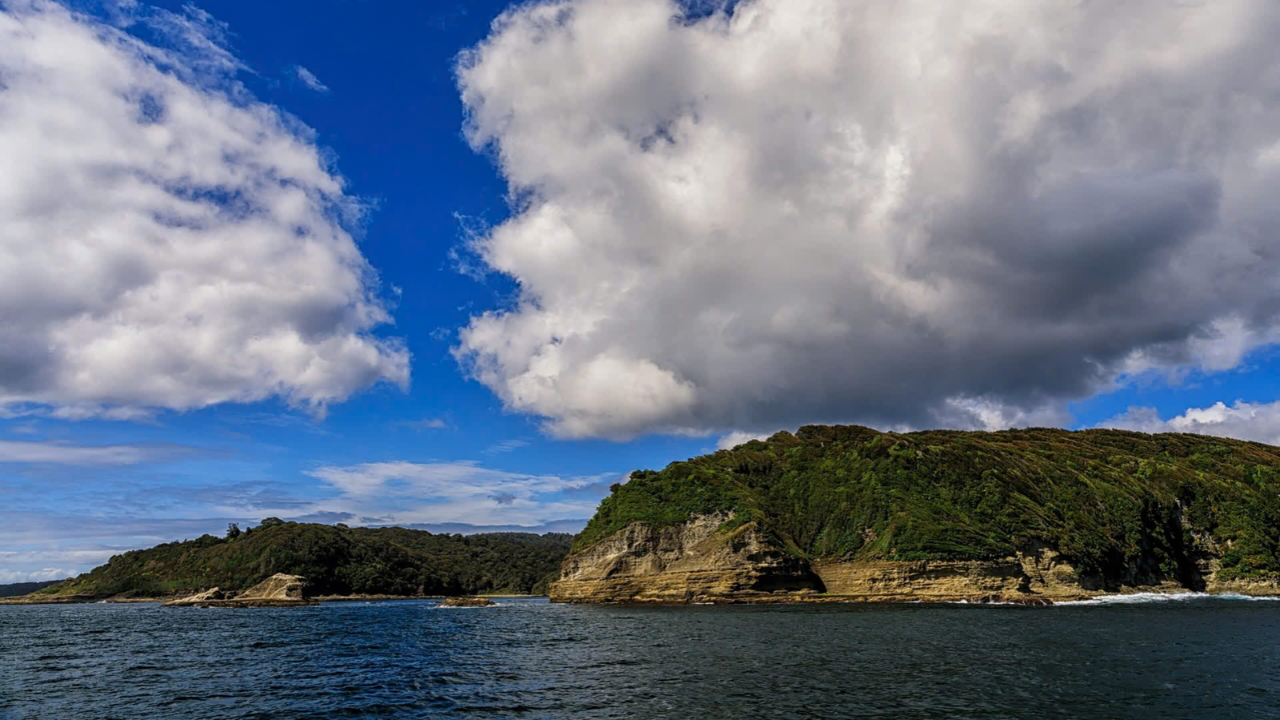
Cold salt spray stings the eyes before sunrise off southern Chile. If you stand on the deck of a small boat crossing from Chiloé toward Guafo Island, the ocean does not look like a press release. It looks like a living lung—heaving, dark, ancient, indifferent to human headlines.
Four million sooty shearwaters rise from the island's rain-soaked slopes in seasonal waves, turning the sky into a dark, rushing river of feathers and muscle. Below them, blue whales slip through nutrient-rich waters near the Gulf of Corcovado. Sea lions bark along rocky ledges. For a conservation group linked to Leonardo DiCaprio—Re:wild, alongside partner funders—buying more than 52,000 acres on Guafo in 2025 looked like a triumph. Check signed. Bulldozers kept out. Coal mining and timber harvesting stopped before they could carve up the cliffs. For a closer look into this area, we recommend: this related article.
Except buying land is only the opening scene.
A year later, Guafo's permanent legal future is still being hammered out. A deed is paper. A national park, or an Indigenous coastal marine area, or a shared stewardship pact requires patience, law, politics, and trust—none of which move at the speed of a wire transfer. To get more context on this issue, detailed reporting can also be found on The New York Times.
A Title Deed Does Not Speak Whale
When people hear that wealthy donors or celebrity-backed conservation groups buy tens of thousands of acres of wilderness, two instant reactions collide. One group cheers: at least it isn't a mine. The other group frowns: who gave outsiders the right to carve up Patagonia?
Both reactions miss something crucial. Ownership changes who holds the key to the gate; it does not automatically settle what the gate is for, who walks through it, or who watches the fence when the cameras leave.
(Note: The following portrait of a local fisherman and a conservation planner is a composite hypothetical scenario built from documented realities in southern Chile—Mapuche-Williche coastal traditions, artisanal fishing economies, and post-acquisition conservation negotiations—to show what those negotiations feel like on the ground.)
Picture Mateo, a small-boat fisherman working out of Quellón on Chiloé Island. His hands are calloused from hauling lines and sorting shellfish in wet wind. For generations, his family has read the swell, the kelp beds, and the weather fronts around these waters. To Mateo, a foreign foundation buying 52,000 acres is neither a fairy tale nor a conspiracy—it is a question mark. Will a new park close off coves where his neighbors gather food? Will rules be written in offices hundreds of miles away by people who have never waited out a Patagonian gale?
Now picture Camila, a project coordinator trying to turn a private purchase into durable public protection. She knows the urgency. A single signature in 2025 blocked extractive threats like coal and logging on the landward side, yet an island does not end at the high-tide line. Seabirds feed at sea. Whales travel through currents that answer to no property line. If the surrounding waters are degraded or overfished, an island sanctuary becomes an island of ghosts.
Imagine conservation like building a house on stilts over shifting sand. Buying the plot pours a temporary pad, while legal protection, local governance, and community consent are the pilings that keep the house standing through winter storms.
Why Slow Negotiations Are Not Always a Failure
Headlines love clean endings. Island saved. Deal closed. When a story drags into a second year of negotiations over protected status, readers often assume something broke behind closed doors.
Sometimes negotiations stall because of bureaucracy, shifting political priorities, or competing interests. That frustration is real. I have watched enough public debates over land and water to know how exhausting endless meetings can feel when an ecosystem is right there, exposed to weather, boat traffic, and climate stress.
Yet speed is a double-edged sword in conservation. Rush a designation without genuine consultation, and you risk planting resentment that lasts decades. Mapuche-Williche communities have long sought formal recognition of a Coastal Marine Area for Indigenous Peoples—an ECMPO—to protect marine spaces and traditional ties around Guafo. Re:wild has voiced support for that effort and stayed in dialogue with community representatives.
Pause and think about what that means. Real protection here isn't just about keeping industrial extractors out; it is about deciding how humans and wild creatures coexist without one erasing the other.
Still, let's be honest about the tension. Good intentions do not automatically bridge centuries of history or solve practical questions about funding, enforcement, and management. If agreements take too long, uncertainty lingers. If they are rushed, trust fractures. Walking that tightrope is messy, unglamorous work.
The Invisible Stakes Beneath the Waves
Why should someone sitting thousands of miles away care whether a remote Chilean island's legal status takes months or years to lock in?
Because islands are planetary barometers. When migratory birds vanish from a breeding ground, or whale feeding corridors lose prey, the damage ripples far beyond one coastline. Guafo sits like a sentinel off northern Patagonia, where cold ocean currents stir up life and millions of birds gather to breed.
A purchase stops a threat today; a durable legal and community framework protects a living system for our grandchildren.
When you buy a piece of wild land through philanthropy, you are borrowing time. Time to keep chainsaws and drills away. Time to sit at tables with local leaders, regional authorities, and Indigenous communities. Time to turn a bold financial move into a permanent shield.
That is the part dry news briefs gloss over. They treat the purchase as the climax and the unfinished negotiations as an afterthought. In truth, the real test begins after the ink dries.
Out on the water, gray swells keep rolling toward the cliffs, carrying kelp, krill, and wind. Four million birds still wheel above the rain forest, waiting—not for a press release, not for a celebrity name, not for a committee vote—but for a home that stays whole long after the headlines move on.


